Ending plastic pollution
WWF activists on why they want to keep plastics out of nature

© Shutterstock / Wonderful Nature
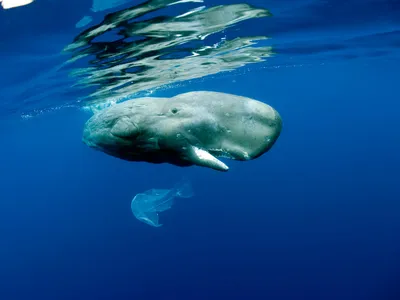
Every day, plastic is flowing into our environment at an alarming rate, harming and killing wildlife and polluting nature and communities. Eleven million tons end up in our oceans alone each year—the equivalent of more than a dump truckload every minute. Plastic production has doubled in the last 20 years, yet only 9% of plastic waste is recycled globally.
This is a problem that is affecting us on a local, national, and global scale. We need to change the ways we source, use, recycle, and dispose of plastic.
Fortunately, with collective action from the public, the private sector, and governments, we can achieve the shared goal of a future where there are no plastics in nature. WWF is working to transform our systems so the plastics we discard become plastics we use again and build a world in which our oceans teem with life and communities breathe fresh air.
We spoke with WWF activists from across the United States who are advocating for practical solutions to the plastic pollution crisis about what motivates them to build a world with no plastics in nature.
Listen to their stories.
© naturepl.com / Franco Banfi / WWF
An ambitious treaty on plastic pollution
Send a message to world leaders asking them to chart a path to a future with less plastic in nature.
Take action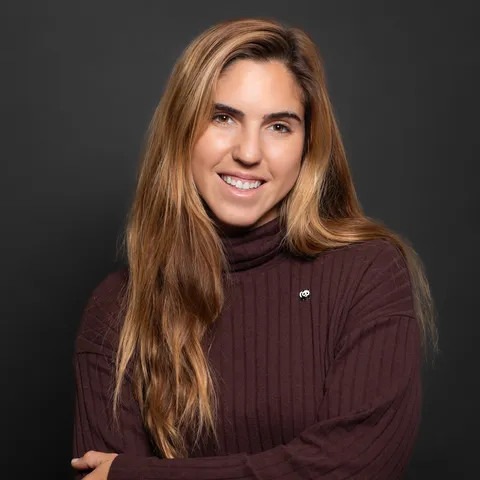
Carissa Cabrera | Hawai'i
"Plastic pollution is one of those issues that impacts people and planet, and if we're not addressing plastic pollution, we're missing the mark on so many other issues that impact the environment that we live in."
© WWF-US/Keith Arnold

Olive Kabeya | Maryland
"One thing I would like to emphasize is the impact plastic pollution has on marginalized communities. This problem is not lived as equally on each side of the globe."
© WWF-US/Keith Arnold

Matheu Martell | Illinois
"We really just need a better plan and a better national infrastructure to ensure that our recyclables are actually getting recycled."
© WWF-US/Keith Arnold

Jaimi McPeek | Florida
"We need to act urgently on the plastic pollution crisis. Because that's what it is. It is a crisis."
© WWF-US/Keith Arnold

Christopher Pham | Oregon
"I'm forever the optimist when it comes to thinking about the future. And in 10 to 20 years, I really hope to see more collaboration again with governments, with people just pitching in, knowing that this pollution really affects us all."
© WWF-US/Keith Arnold

Kyra Sadat Ruben | Missouri
"We need to act urgently on plastic pollution because it intersects every aspect of our lives."
© WWF-US/Keith Arnold
Conner Youngblood | Texas
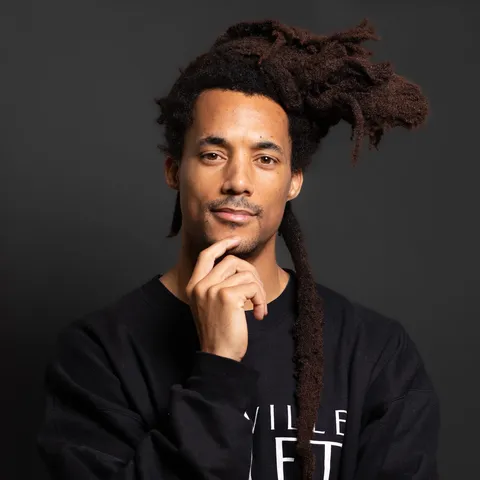
"Local politics leads to national politics. National politics, the US as a world leader, hopefully, leads to international politics, and changes start."
© WWF-US/Keith Arnold
How you can help
© WWF-US/Clay Bolt
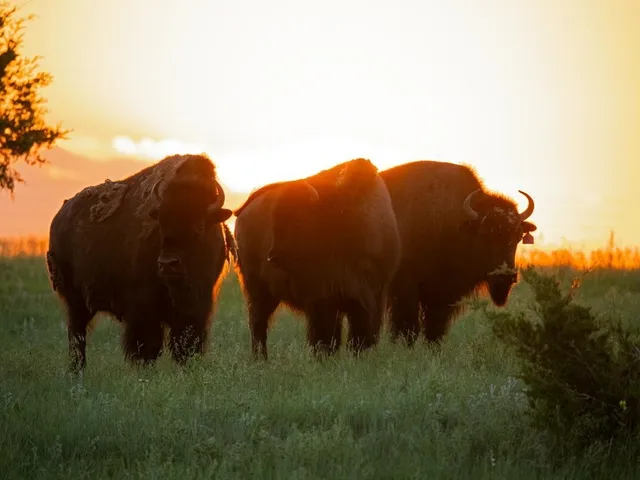
Support Tribes restore buffalo to the Great Plains
The Indian Buffalo Management Act would strengthen support for Tribal Nations who are working to bring buffalo back from the brink of extinction.