Seagrass: the lesser-known superstar in the fight against climate change
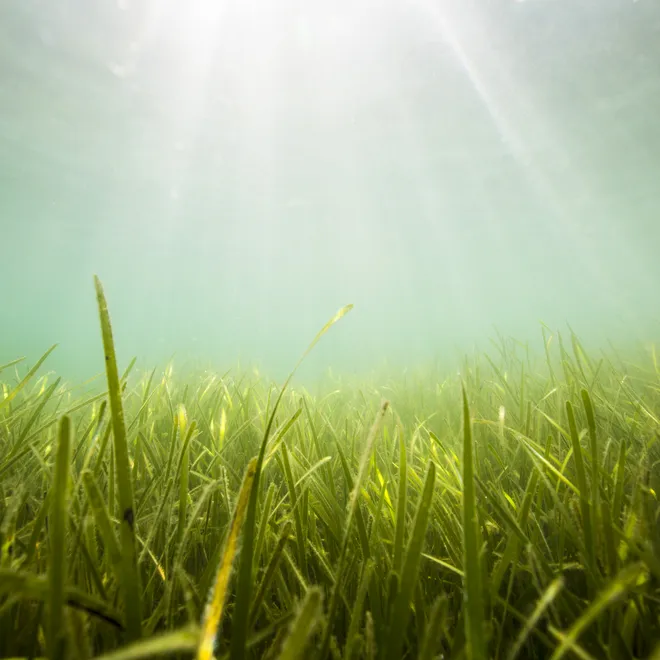
© Lauren Simmonds / WWF-UK
One of the most incredible natural tools in the fight against climate change lives underwater.
Seagrass is a wonder plant that lives in shallow, salty waters around the world and can form vast underwater meadows. Seagrass beds are crucial to the health of our ocean and provide food and shelter for animals such as sea turtles, manatees, and a variety of fish. They also serve as important nurseries for endangered wildlife such as seahorses. About 2.5 acres of seagrass bed can support 80,000 fish.
But this leafy green marvel’s real superpower is the rate at which it captures carbon—a heat-trapping gas that plays a major role in climate change. Seagrass captures up to 35 times more carbon per acre than tropical rainforests. Despite covering only 0.2% of the ocean floor, the plant absorbs an extraordinary 10% of the ocean’s carbon each year.
Seagrass—and mangroves and coral reefs
We can’t just protect seagrass alone; they’re connected with other coastal ecosystems that need to stay healthy, too, like mangroves and coral reefs. Animals often move among these various habitats through the course of their lives.
And these coastal ecosystems provide crucial services for many developing countries and often underpin coastal communities’ livelihoods. These ecosystems act as a natural first line of defense, protecting from coastal erosion, wave action, and major storm surges. Tropical coasts also support many small-scale and commercial coastal finfish and shellfish fisheries.