WWF's Enrique Prunes on restoring the Rio Grande
By
-
Laura Paskus

© WWF-US/Diana Cervantes
Today in Albuquerque, the Rio Grande has once again run dry, the third time in just four years, leaving stretches of the riverbed exposed and cracked. For many residents, the sight of a dry Rio Grande is a jarring glimpse into the region’s deepening water crisis, prompting urgent calls for help and change.
In some places along the Rio Grande in New Mexico, communities still divert water through traditional acequias. These small, hand-dug irrigation canals date back to the 1500s, when Spanish colonizers conquered and settled the region.
Indigenous communities had long employed dryland farming, river flood irrigation, and small ditches to grow crops, but the Spanish expanded irrigation as they sought to establish colonies and cultivate valley bottomlands.
In the late 19th and early 20th centuries, the U.S. government enticed Anglo farmers to settle the region by building bigger and more complex engineering feats. That infrastructure, along with new schemes of managing and allocating waters, supplanted acequias. But traditional acequias persist, particularly in northern New Mexico. And even today, they are still maintained communally: Everyone is responsible for caring for the canals, and in drought, everyone shares what water there is.
It’s a culture close to the heart of Enrique Prunes, WWF US’s Rio Grande Manager and Freshwater Lead Specialist.
Growing up in Chihuahua City, Mexico, Prunes spent summers, holidays, and weekends with his mother’s family in Valle de Allende, a centuries-old Spanish missionary town along the Rio Valle de Allende, where some of the region’s first acequias were established—and are still used and cared for today.
“I grew up there, diverting water with my uncle and my grandma, to the pecan tree orchards and green chiles and potatoes,” Prunes says. “I think that’s a big part of how I ended up in river conservation.”
© Enrique Prunes
© PAUL TASHJIAN
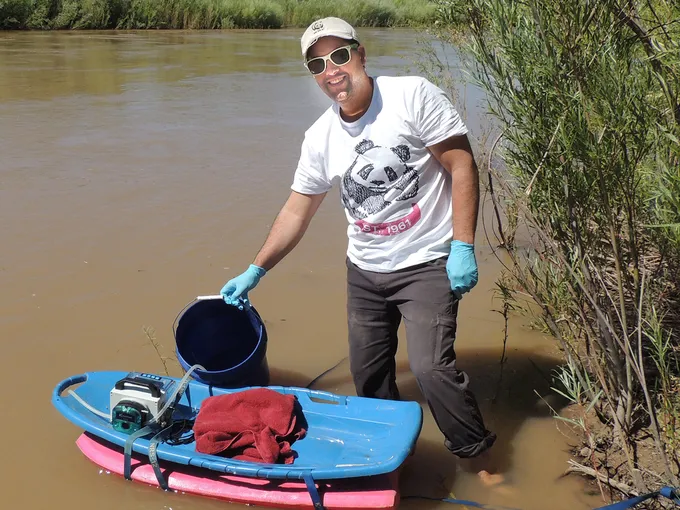
Prunes has worked for WWF for 16 years, leading programmatic work on the Rio Grande/Rio Bravo with a focus on integrating surface water, groundwater, and agricultural water use into conservation on the binational river, which spans 1,900 miles from its headwaters in Colorado, through New Mexico, Texas, and Mexico. Within the past few years, his work has gained momentum in New Mexico, but still focuses on advocating for the entire river as a holistic, living system.
“Throughout my career, I have always been very respectful and conscious about understanding the local context and the local communities and what the river means for that region,” he says. “At the same time, the river is a system, and it’s all connected.”
Prunes was the key architect of the Report Card for the Upper Rio Grande Basin. Based on input from scientists and stakeholders, in 2022, WWF and its partners released that report, which evaluates challenges and identifies opportunities to restore the river and its reaches. That report card shows that despite the demands from agriculture and cities and the impacts of climate change, the Rio Grande still nurtures critical ecosystems and wildlife.
Now, WWF and its partners, including Audubon Southwest, have quantified river flows and losses within six stretches of the Upper Rio Grande, and its tributary the Rio Chama in New Mexico, and developed seasonal environmental flow recommendations for each. The goal is to use locally based restoration, conservation, and management strategies to restore water to reaches suffering from too little water.
“Environmental flows are a core piece of what WWF is doing because it’s about connectivity and resilience,” Prunes says, adding that his background in civil engineering and hydrology primed him for this work.
© WWF-US/Diana Cervantes
© WWF-US/Diana Cervantes
In early 2025, Prunes moved with his family to Albuquerque, and project partners are happy he’s here in the watershed. It’s not just the scientific and technical expertise he brings, says Paul Tashjian, Director of Freshwater Conservation at Audubon New Mexico. It’s Prunes’ energy, patience, and collaborative spirit—a sentiment echoed along the Rio Grande whenever his name arises.
Prunes continues to revisit WWF’s conservation strategy along the Rio Grande/Rio Bravo and build relationships all along the river, while always balancing local needs and local restoration work with the whole of the river system. “There’s value in thinking about the whole basin, how different sets of problems and solutions translate to different regions, and how we can learn from what people are doing in New Mexico to inform what is happening in the bi-national stretch, and vice versa,” he says.
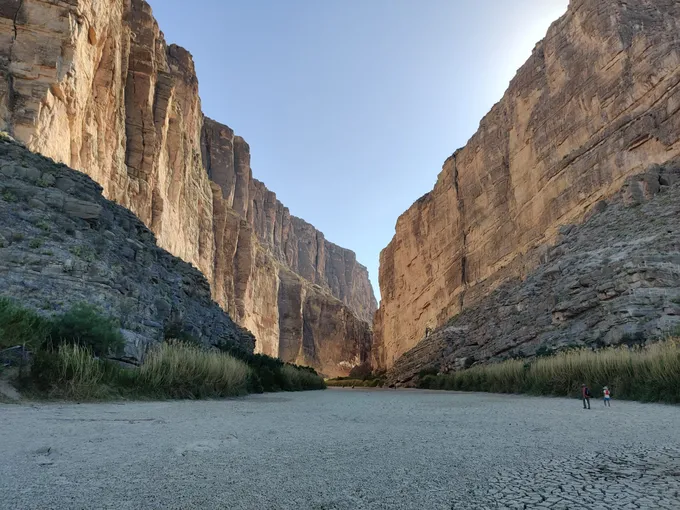
The river Prunes’ family irrigates from, the Rio Valle de Allende, is a tributary of the Río Conchos. That river meets the Rio Grande/Rio Bravo in Ojinaga, Chihuahua, restoring the US river’s flows—which have dried in the “forgotten reach,” a 200 mile stretch of river downstream of El Paso, Texas. It’s thanks to the flows of the Río Conchos that the Rio Grande flows through the Big Bend region along the US-Mexico border.
Just as he learned about water from his family’s acequia, Prunes knows that local communities in New Mexico have a lot to teach everyone across the basin. “In New Mexico, there are a lot of opportunities for WWF to help, to add value to what everyone is already doing in water conservation.”