Kung Fu Panda 4

© _
If you protect Po and his home, you’re protecting so much more for people and nature
In celebration of the new chapter in DreamWorks Animation’s beloved action-comedy franchise, Kung Fu Panda 4, WWF and DreamWorks Animation have teamed up to raise awareness about the plight of the real wildlife depicted in the film. Kung Fu Panda 4 tells the story of the giant panda Po, who is the Dragon Warrior and has now been tapped to become the Spiritual Leader of the Valley of Peace. Po is joined by Master Shifu (a red panda), Tai Lung (a snow leopard), and Zhen (a corsac fox) in this hilarious, butt-kicking new film!
Just as Po takes on the role of Spiritual Leader, real-life animals like giant pandas, snow leopards, and more contribute to the health of their natural ecosystems. In fact, all organisms play a valuable role in keeping their native ecosystems balanced and thriving. When we protect one species, we’re helping to protect them all for the benefit of people and nature.
When you protect pandas, you protect so much more
Check out some of the unique characteristics of these species and ways they support their natural habitats. Also, since Po loves to eat, find out what each animal eats in the wild. Do you like the food they munch on?
© naturepl.com/Aflo/WWF
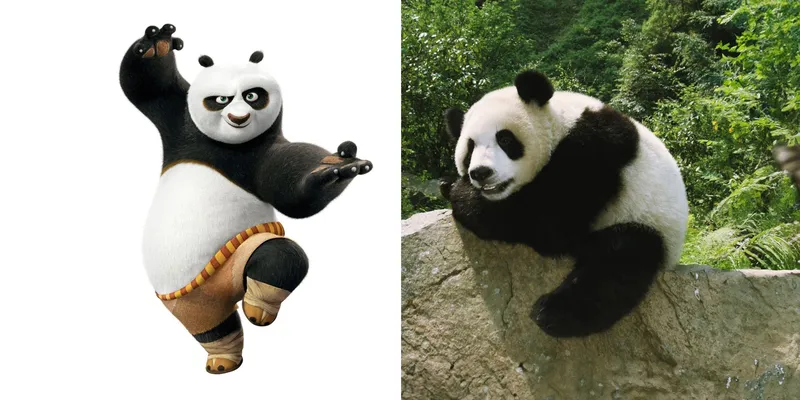
Giant panda
Giant pandas live in the bamboo forests of China and play a crucial role within that forest habitat by spreading seeds and helping vegetation to grow. The ecosystems that pandas help to sustain are also important for the livelihoods of local communities, who depend on them for food, income, fuel for cooking and heating, and medicine. The mountains where pandas live form the watersheds for both the Yangtze and Yellow rivers, which are the economic heart of China. Giant pandas love bamboo.
© naturepl.com/Reinhard/ARCO/WWF
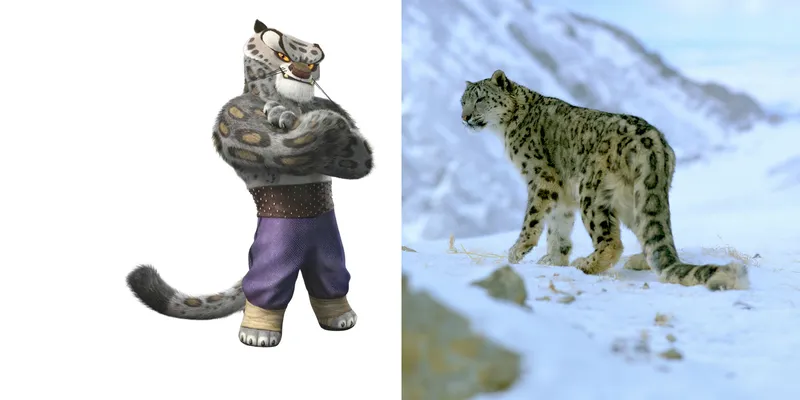
Snow leopard
Because of their incredible natural camouflage, making them almost invisible in their surroundings, snow leopards are often referred to as the ‘ghost of the mountains.’ Snow leopards are capable of eating prey up to three times their weight, including wild sheep and wild deer. They also have one of the longest tails of any large cat species. As a changing climate increasingly affects the resources and habitats that both snow leopards and local communities share, WWF is working to help communities and species adapt.
© Ola Jennersten/WWF-Sweden
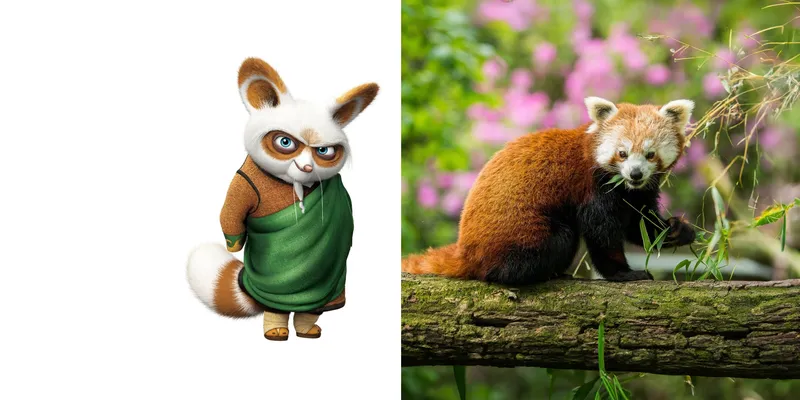
Red panda
Primarily an herbivore who eats bamboo like giant pandas do, the red panda is slightly larger than a domestic cat, with a bear-like body and thick russet fur. Red pandas live at high altitudes within bamboo forests and are mostly an arboreal species, often living close to water sources. But the loss of their nesting trees and bamboo is causing a decline in red panda populations, which is why it’s so critical to protect red panda habitats.
© WWF-Sweden/Ola Jennersten
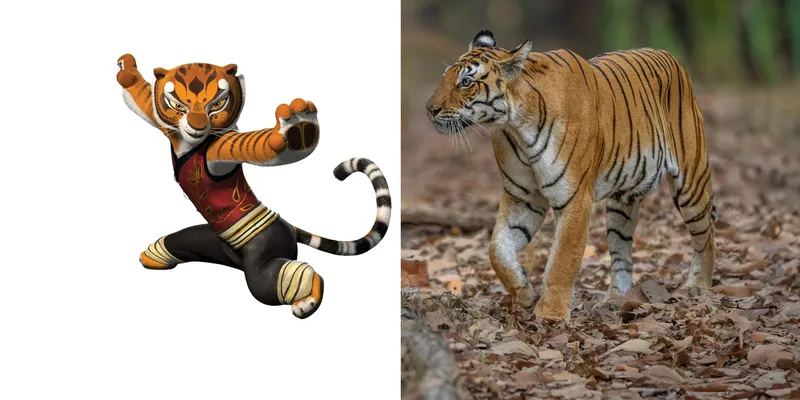
Tiger
After a century of decline, wild tiger populations are starting to recover worldwide—and are stable or increasing in China and other countries in Asia. As large predators, wild tigers play a key role in maintaining a healthy ecosystem for both nature and people. Tigers prefer to eat hoofed animals such as wild deer and wild pigs. Tiger conservation projects can directly help local communities by providing alternative livelihoods like tourism, as well as income from investing in tiger-friendly practices and non-timber forest products.
© Dr. Sanjay K. Shukla /WWF-INTL
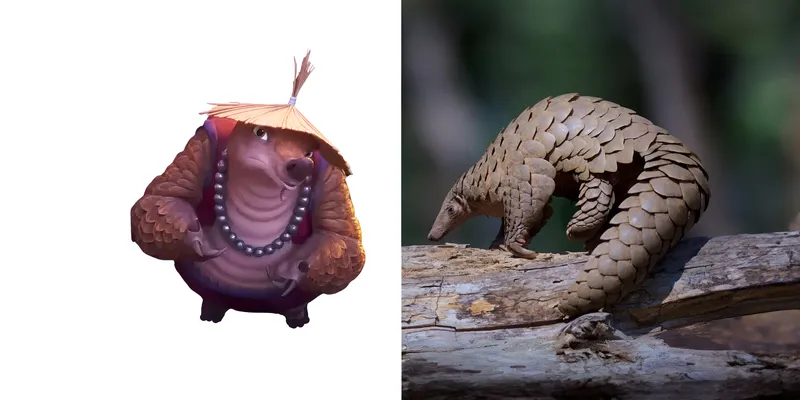
Pangolin
Pangolin comes from penggulung, the Malay word for roller – the action a pangolin takes in self-defense. Pangolins love to eat termites and ants. The pangolin is the most trafficked mammal in the world, as their scales and meat are highly valued for certain medicine practices and as a delicacy in some cultures. WWF and partners are working to stop wildlife trafficking and are actively trying to reduce demand for illegal wildlife products.