What should I plant? Native wildflowers by region
© WWF-US / Clay Bolt
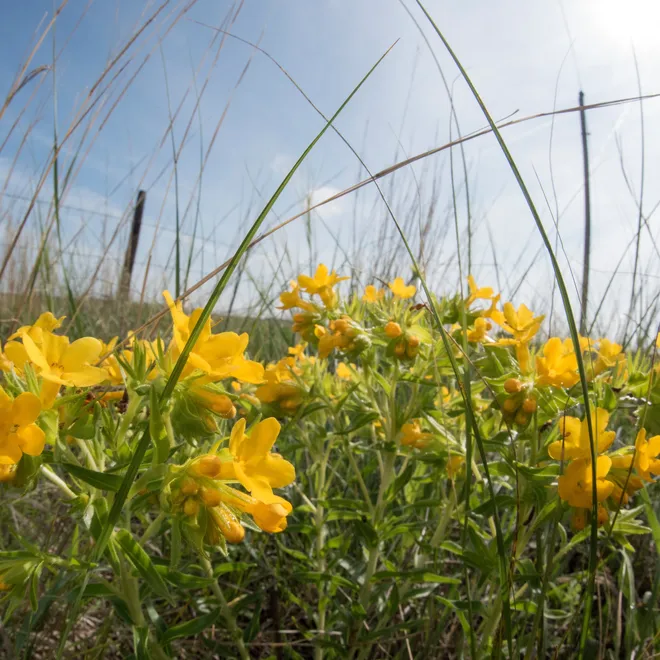
WWF + Air Wick’s One Square Foot Campaign aims to provide food and shelter for pollinators, grassland birds, and the many other species that are native to the region. We are also encouraging everyone to plant their own One Square Foot of native wildflowers to help healthy ecosystems flourish. Small actions add up to a big difference.
And as winter melts into spring, many start thinking about what to plant in their gardens and planters to brighten their outdoor spaces. But gardening can do more than beautify—it can help creatures both big and small to thrive. And gardening with native plants is the best way to create natural, interconnected corridors for a whole host of wildlife.
What are native plants?
Native plants grow naturally in a given area and are therefore best adapted to that region’s typical weather patterns. This means they’ll survive with minimal maintenance and will not require excessive watering or care—a boon for both the gardener and the environment!
What should I plant?
Native plants in a specific region can include mosses, ferns, trees, shrubs, wildflowers, and more. Wildflowers, in particular, help pollinators—essential critters such as bees, butterflies, and bats—that make possible nearly one-third of food produced worldwide. If you'd like to offer pollinators a helping hand, you can do so by planting wildflowers in your yard or in pots on your patio or balcony. Even a single square foot can provide food for bumble bees, butterflies, and hummingbirds. Whenever possible, it is a good idea to plant wildflowers that are native to your part of the country and to choose a mix of plants that bloom throughout the season.
To get you started, we've put together a list of plants that are great for pollinators by region.
Native West mix
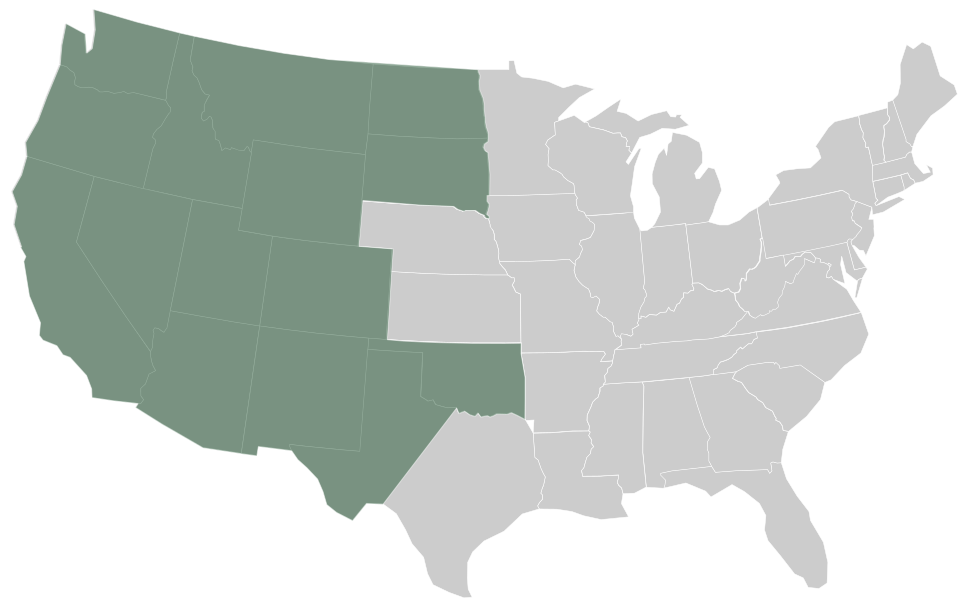
States include Washington, Oregon, California, Nevada, Idaho, Montana, Wyoming, North Dakota, South Dakota, Utah, Colorado, New Mexico, Arizona, Oklahoma, the Texas panhandle, as well as the far West region of Texas.

© Shutterstock/Robert John Campbell
Botanical name: Aster tanacetifolius
Common name: Prairie aster
Life cycle: Annual
Color: Yellow
Height: 18"
Bloom season: Mid/late summer

© Shutterstock/aSuruwataRi
Botanical name: Cleome serrulata
Common name: Rocky Mtn. Bee Plant
Life cycle: Annual
Color: Pink
Height: 48"
Bloom season: Summer

© Shutterstock/OlgaOtto
Botanical name: Gaillardia aristata
Common name: Blanket Flower
Life cycle: Perennial
Color: Yellow
Height: 30"
Bloom season: Summer, fall

© Shuttestock/Kira Volkov
Botanical name: Linum perenne lewisii
Common name: Blue Flax
Life cycle: Perennial
Color: Blue
Height: 24"
Bloom season: Summer, fall

© Shutterstock/Dreamers Lil Dream Shoppe
Botanical name: Oenothera pallida
Common name: White evening primrose
Life cycle: Perennial
Color: White
Height: 24"
Bloom season: Spring, summer

© Shutterstock/In This Instance
Botanical name: Ratibida columnaris
Common name: Mexican hat
Life cycle: Perennial
Color: Red, yellow
Height: 36"
Bloom season: Summer, fall

© Shutterstock / Viktoriya A
Botanical name: Rudbeckia hirta
Common name: Black-eyed susan
Life cycle: Perennial
Color: Yellow
Height: 30"
Bloom season: Summer, fall
Native Midwest mix
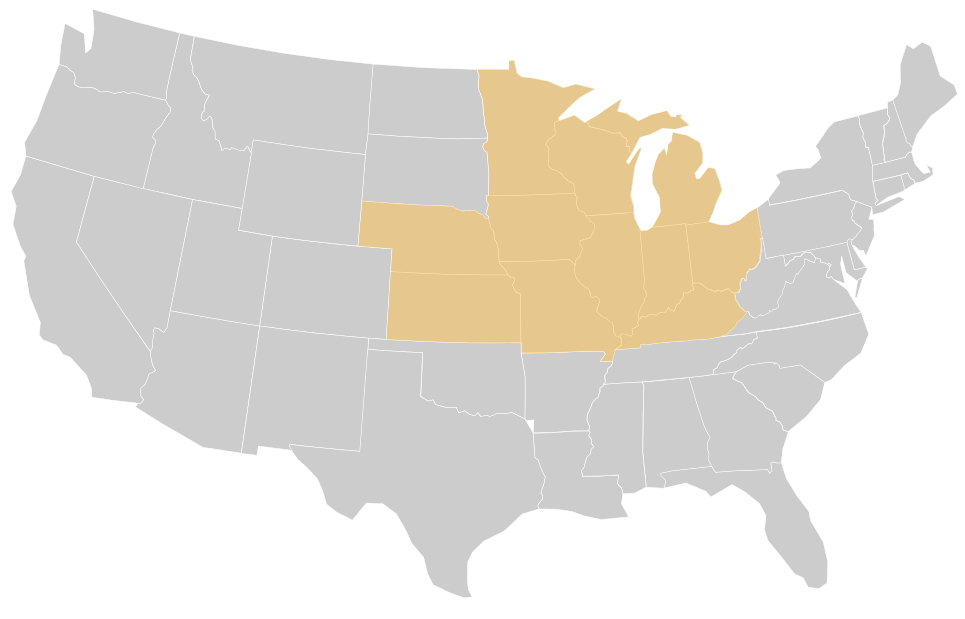
States include Nebraska, Kansas, Minnesota, Iowa, Missouri, Illinois, Wisconsin, Indiana, Michigan, Kentucky, and Ohio.

© Shutterstock/helga_sm
Botanical name: Asclepias tuberosa
Common name: Butterfly weed
Life cycle: Perennial
Color: Orange
Height: 36"
Bloom season: Summer
© Shutterstock/Robert John Campbell
Botanical name: Aster tanacetifolius
Common name: Prairie aster
Life cycle: Annual
Color: Yellow
Height: 18"
Bloom season: Mid/late summer

© Shutterstock/Audrey Wilson1
Botanical name: Echinacea purpurea
Common name: Purple coneflower
Life cycle: Perennial
Color: Purple
Height: 36"
Bloom season: Summer, fall

© Shutterstock/Bryan Neuswanger
Botanical name: Liatris pynostachya
Common name: Prairie blazing star
Life cycle: Perennial
Color: Purple
Height: 48"
Bloom season: Summer, fall

© Shutterstock/APugach
Botanical name: Rudbeckia triloba
Common name: Brown-eyed susan
Life cycle: Annual
Color: Yellow
Height: 60"
Bloom season: Fall
Native Southeast mix
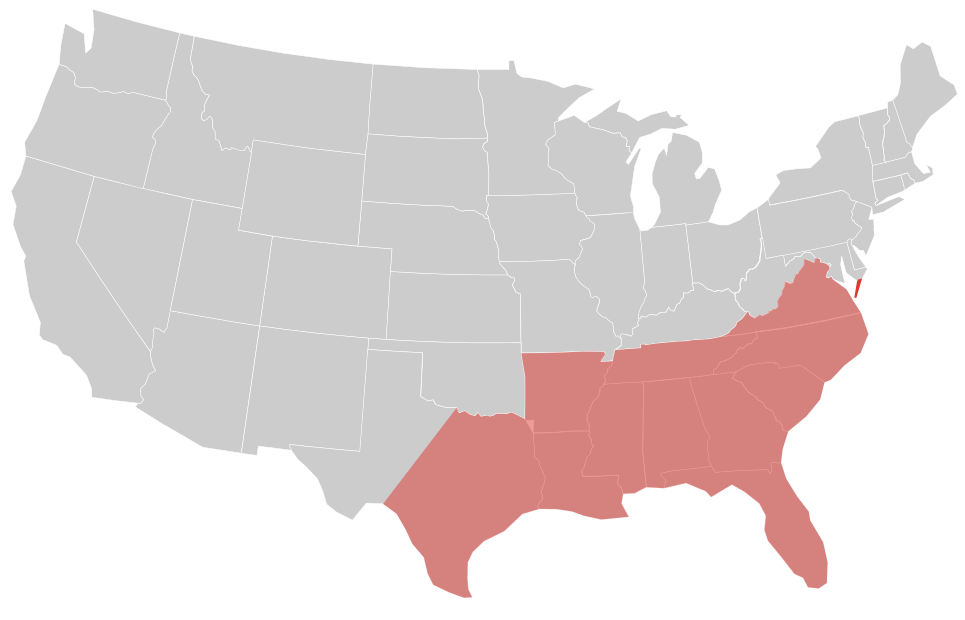
States include Louisiana, Arkansas, Mississippi, Alabama, Tennessee, Georgia, Florida, South Carolina, North Carolina, Virginia, and the Central, Eastern, and Coastal regions of Texas.
© Shutterstock/helga_sm
Botanical name: Asclepias tuberosa
Common name: Butterfly weed
Life cycle: Perennial
Color: Orange
Height: 36"
Bloom season: Summer
© Shutterstock/Audrey Wilson1
Botanical name: Echinacea purpurea
Common name: Purple coneflower
Life cycle: Perennial
Color: Purple
Height: 36"
Bloom season: Summer, fall

© Shutterstock/Kamrad71
Botanical name: Liatris spicata
Common name: Blazing star or gayfeather
Life cycle: Perennial
Color: Purple
Height: 48"
Bloom season: Summer, fall

© Shutterstock/sashartua
Botanical name: Monarda citriodora
Common name: Lemon mint
Life cycle: Annual
Color: Pink
Height: 31"
Bloom season: Summer
© Shutterstock / Viktoriya A
Botanical name: Rudbeckia hirta
Common name: Black-eyed susan
Life cycle: Perennial
Color: Yellow
Height: 30"
Bloom season: Summer, fall
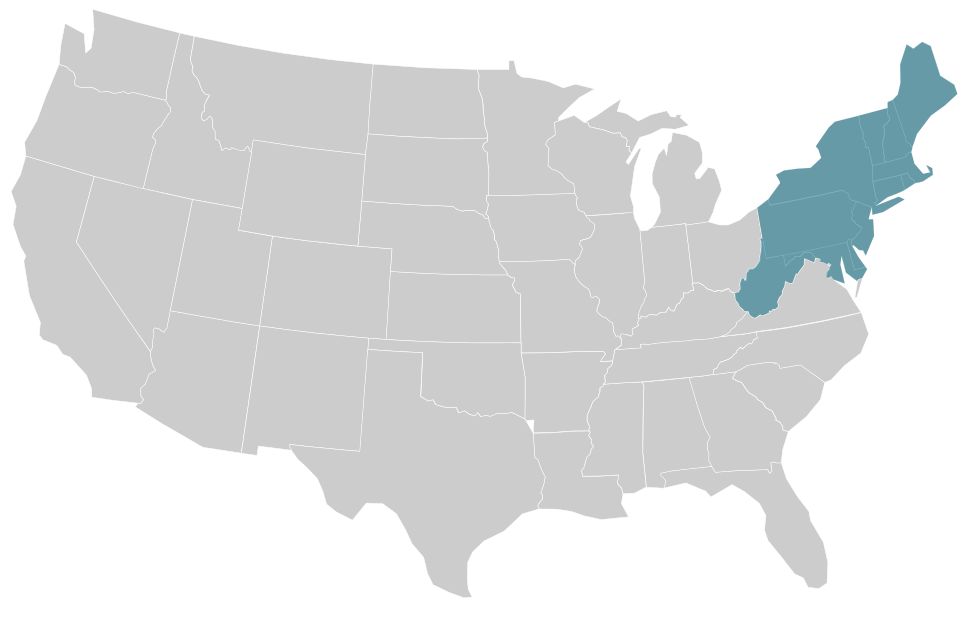
Native Northeast mix
States include West Virginia, Maryland, Delaware, New Jersey, Pennsylvania, New York, Connecticut, Rhode Island, Massachusetts, New Hampshire, Vermont, and Maine.

© Shutterstock/Courtney A Denning
Botanical name: Asclepias incarnata
Common name: Swamp milkweed
Life cycle: Perennial
Color: Pink
Height: 48"
Bloom season: Summer

© Shutterstock/guentermanaus
Botanical name: Aster novae angliae
Common name: New England aster
Life cycle: Perennial
Color: Purple
Height: 48"
Bloom season: Summer, fall

© Courtney Celley / USFWS
Botanical name: Eupatorium maculatum
Common name: Spotted Joe Pye weed
Life cycle: Perennial
Color: Pink
Height: 96"
Bloom season: Summer, fall

© Shutterstock/nnattalli
Botanical name: Monarda fistulosa
Common name: Wild bergamot
Life cycle: Perennial
Color: Pink
Height: 48"
Bloom season: Summer, fall

© Shutterstock/Alena Charykova
Botanical name: Oenothera biennis
Common name: Evening primrose
Life cycle: Biennial
Color: Yellow
Height: 48"
Bloom season: Summer
© Shutterstock / Viktoriya A
Botanical name: Rudbeckia hirta
Common name: Black-eyed susan
Life cycle: Perennial
Color: Yellow
Height: 30"
Bloom season: Summer

© Morgan Heim / Day's Edge Productions
Botanical name: Solidago rigida
Common name: Rigid goldenrod
Life cycle: Perennial
Color: Yellow
Height: 60"
Bloom season: Summer
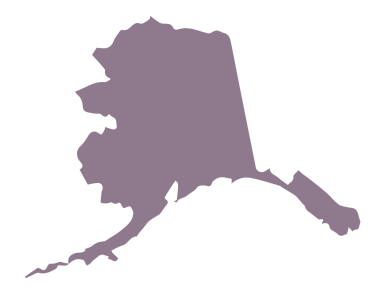
Alaska species
Wildflower species you can find in the Alaskan region.

© Shutterstock/Real Moment
Botanical name: Chamerium augustifolium
Common name: Fireweed

© Shutterstock/Kimberly VanNoStrand
Botanical name: Arnica agustifolia
Common name: Narrowleaf arnica

© Shutterstock/Ioana Rut
Botanical name: Geranium erianthum
Common name: Northern geranium

© Shutterstock/Xuanlu Wang
Botanical name: Aquilega formosa
Common name: Western columbine

© Shutterstock/Sundry Photography
Botanical name: Mimulus guttatus
Common name: Yellow monkey flower

© Shutterstock/Ienic
Botanical name: Doronicum orientale
Common name: Leopard's bane
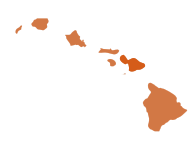
Hawai'i species
Wildflower species you can find in the Hawai'i region.

© Shutterstock/vaivirga
Botanical name: Bacopa monnieri
Common name: Aeae

© Creative Commons/David Eickhoff
Botanical name: Bidens ssp
Common name: Koo-Koolau
Bloom season: Summer, fall

© Creative Commons/Bahamut Chao
Botanical name: Boerhavia glabrata
Common name: Alena

© Shutterstock/X.Tian
Botanical name: Ipomoea indica
Common name: Koaliawa

© Creative Commons/Forest and Kim Starr
Botanical name: Jacquemontia sandwicensis
Common name: Pauohiiaka
Puerto Rico species
Wildflower species you can find in Puerto Rico.


© Shutterstock/Zulashai
Botanical name: Boerhavia erecta
Common name: Erect spiderling

© Shutterstock/Young Swee Ming
Botanical name: Centrosema virgianum
Common name: Spurred butterfly pea

© Creative Commons/Peter Gorman
Botanical name: Tehphrosia cinerea
Common name: Slender goat's rue

© Shutterstock/Linda Kusuma Dewi
Botanical name: Ludwigia octovalvis
Common name: Mexican primrose-willow
If you're interested in learning more about the wildlife that visits your wildflower patch download the Seek app. With this free app you’ll be able to identify any living thing in your patch—plants, flowers, insects, fungi, birds, and animals. It’s like having a naturalist in your pocket! When you identify a species you’ll be able to find out all about it, and see how common or rare it is for your area and the time of year.