Restoring the flow of the Rio Grande

© WWF-US/JOEL KIMMEL
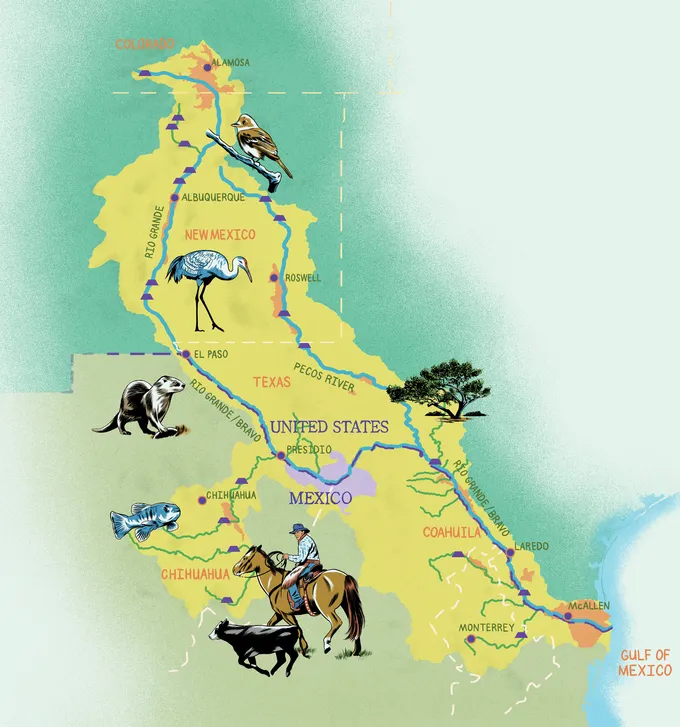
The 1,900-mile Rio Grande, known in Mexico as the Rio Bravo, snakes from southern Colorado to Mexico’s Gulf Coast. It’s a life-giving source for 16 million people and thousands of species. Yet North America’s fifth-longest river increasingly runs dry, owing mainly to climate change and irrigation for agriculture. WWF is working to restore the amount of water flowing in the river during different seasons to support communities and nature.
© WWF-US/JOEL KIMMEL
© WWF-US/JOEL KIMMEL
1 - Science shows the way
WWF is assessing the amount of water flow needed to sustain a healthy river and helping local nonprofit groups and farming communities incorporate that information into water management and policy throughout the basin. Climate change models project further loss of water in the future, which would lead to increased water stress. WWF and partners also launched the first-ever Upper Rio Grande Basin Health Report Card, which can help with adaptation plans.
2 - Bringing beavers back
Beaver dams filter sediments and pollutants and slow the release of water, allowing it to collect in ponds and percolate into the ground. But in the upper Rio Grande, decades of animal trapping and habitat degradation have decimated local beaver populations. WWF is supporting local partners in revitalizing riverside habitats to increase the mammal’s numbers and constructing human-made “beaver dam analogues” to replicate the benefits of these mammalian inventions.

© WWF-US/JOEL KIMMEL
3 - Uprooting non-natives
Invasive plants, including salt cedar trees—which consume hundreds of gallons of water per day—abound along the river corridor. WWF has worked in protected areas in the Big Bend region to remove the trees, and plans to analyze the potential for replacing invasive vegetation with native plants to reduce water consumption along the Rio Grande in New Mexico.

© WWF-US/JOEL KIMMEL
4 - Replenishing groundwater
Drought and demand increasingly stress the Rio Conchos, a major Rio Grande tributary in Mexico that irrigates important farmland and provides freshwater for millions. WWF-Mexico constructed four filtration dams to recharge aquifers and improve groundwater availability. A similar project is underway in Cumbres de Majalca National Park, a strategic aquifer recharge zone.

© WWF-US/JOEL KIMMEL
5 - Water-resilient farming
Eighty-five percent of the total water use in the river basin is consumed by agriculture, mainly thirsty crops like alfalfa, cotton, and pecan. WWF-Mexico has helped farmers in the Delicias district install more efficient irrigation systems to minimize water waste. WWF has also recently supported innovative research, such as optimizing crop mixes in the US portion of the basin, to alleviate water scarcity.

© WWF-US/JOEL KIMMEL

© ANDY ROUSE/NATUREPL.COM
Explore more
Keep reading this issue of World Wildlife magazine