The Rio Grande is running dry—here’s why
Last winter you probably heard about the lack of snow in the western US, and how that might impact everything from ski resorts to farmlands and freshwater supplies. News coverage of this drought most-often invokes impacts on the Colorado River. But there’s another system—the Rio Grande—that’s facing just as much pressure.
With
Find Nature Breaking on Apple Podcasts, Spotify, YouTube, and more.
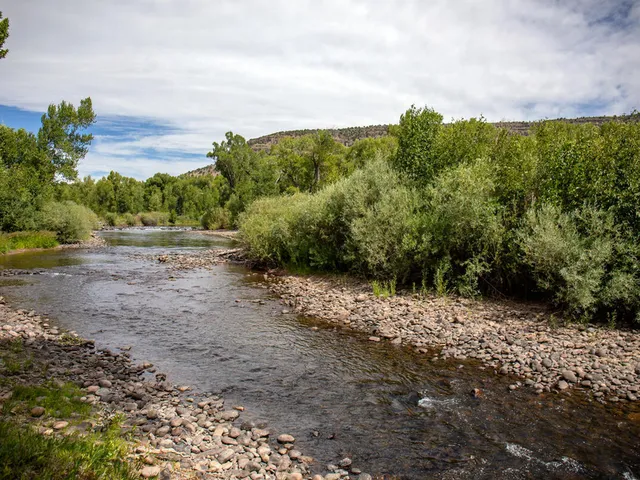
Stretching from Colorado to the Gulf of Mexico, the Rio Grande – or the Rio Bravo as it’s known in Mexico – supports millions of people, vast acres of farmland, and diverse ecosystems that support an array of wildlife. But the river has lost roughly 85% of its historic flows due to overuse and a years-long megadrought. And this summer could bring the worst conditions yet thanks to the lack of snowpack in the mountains that feed the river.
In this episode of Nature Breaking, we explore why the Rio Grande is running dry—and what that means for communities, wildlife, and the future of water in the region. Host Seth Larson is joined by Enrique Prunes, WWF’s Rio Grande Manager and Freshwater Lead Specialist, to break down the crisis and explain what needs to change to secure a brighter future for the river.
Links for More Info:
© WWF-US/Diana Cervantes
Keep our water flowing
Freshwater systems across the US are increasingly in crisis. Ask your members of Congress to invest in programs that restore rivers, lakes, wetlands, and watersheds.
TRANSCRIPT:
Seth Larson: What if a river that once flowed year-round is now running dry? In the Rio Grande, that's already happening, and it's not just because of the historic drought you might've heard about in the news.
Simply put, we're using water from the river basin faster than it can be replaced, which could pose big problems to both people and wildlife.
So what would it take to bring this river back into balance? Stay tuned to find out.
Welcome to Nature Breaking a podcast produced by World Wildlife Fund. I'm Seth Larson. In recent months, you've probably seen headlines about the lack of snow in the Western US and how that might impact everything from ski resorts in the winter to farmlands and freshwater supplies for people for months to come.
These stories most often invoke impacts on the Colorado River, but there's another system, the Rio Grande, that's facing just as much pressure. Stretching from Colorado to the Gulf of Mexico, the Rio Grande, or Rio Bravo, as it's known in Mexico, supports millions of people, vast acres of farmland and diverse ecosystems that support an array of wildlife. But today, it's under stress. In some places, the river now runs dry and more than half of the water used in the basin is being consumed faster than nature can replenish it.
So what's driving this imbalance and what would it take to fix it? Today I'm joined by Enrique Prunes, Rio Grande Manager and Freshwater Lead Specialist at WWF, to help answer that question.
Before we get started, don't forget to subscribe to Nature Breaking on YouTube, Apple Podcasts, Spotify, or wherever you listen. And now here's my conversation with Enrique.
Enrique Prunes, welcome to Nature Breaking.
Enrique Prunes: Thank you for having me, Seth, in your podcast, and I'm happy to be here to share more about the work that I'm doing and the program in the Rio Grande/Bravo.
Seth Larson: Yeah. This is going to be a fun conversation. It's really timely, I think. There's been a lot of news coverage over the last six months or so about the state of water supplies out West in the United States, and I think it's going to just continue to be more important as the months go by. So I want to get started with a quick 101 on the Rio Grande, and I'd love for you to tell our audience just basically where it is, what kind of water resources it provides to communities, and basically why we should care about it.
Enrique Prunes: Sure. So the Rio Grande, or Rio Bravo, how it's called in Mexico, it's a binational river, a binational basin between the US and Mexico. Half of the area of the basin is in the US, and half of the area is in Mexico. It is the fourth longest river in the US...
Seth Larson: Wow
Enrique Prunes: ... if it flows freely, and I will get to the- If it flows, yeah ... if it flows, freely, and is the fifth longest river in North America.
Seth Larson: Wow.
Enrique Prunes: The river runs through 1,900 miles, and for about 1,000 miles it forms the border between the US and Mexico. It provides water to 16 million people.
Seth Larson: Wow.
Enrique Prunes: Around 10 million people in the Mexican side, around 6 million people on the US side. It provides water for 19 different irrigation districts and other irrigated areas for farmland that account to close to 2 million acres...
Seth Larson: Wow.
Enrique Prunes: ...of irrigated farmland. And then why we care about or why WWF has been working in the area for...
Seth Larson: Yeah
Enrique Prunes: ... over 20 years is because it is at the heart of the Chihuahuan Desert. The Chihuahuan Desert is one of the three most biodiverse deserts in the world.
Seth Larson: Okay.
Enrique Prunes: It also encompasses other important ecoregions like the Great Plains, so the southern part of the Great Plains, where some intact grasslands still remain. It is home or very important for the flyway of over or close to 500 bird species. Half of the fish species in the basin are endemic. And then just to locate the people listening to us, this river runs from Colorado all the way to the Gulf. It crosses all New Mexico, and then it forms a border between the US and Mexico, as I said, in between Texas and Mexico, and there are a few other tributaries, on five states and Mexico.
The Rio Grande is also home to 22 tribal nations and pueblos in New Mexico and four different Indigenous groups in Mexico.
Seth Larson: Yeah.
Enrique Prunes: So I think that cultural aspect is also very important...
Seth Larson: Absolutely.
Enrique Prunes: ... on top of the farming and ranching communities.
Seth Larson: Yeah, basically it's covering a huge territory. It's providing a lot of important resources to a lot of different people and wildlife and ecosystems. I'm mindful that when we hear about water scarcity in the American West, we hear a lot more often about the Colorado River. But what you just talked about and a lot of the research you've done over the years has shown that the Rio Grande is in a similarly difficult situation to the Colorado River.
So I'm curious why you think the Rio Grande hasn't gotten quite as much attention, and I'd love for you to tell us what exactly is happening with the Rio Grande that's putting it under pressure.
So yes, water scarcity and the megadrought that we've been hearing about in the west is impacting the Colorado River, the Rio Grande, and other rivers. But we mostly hear, you're right, about the Colorado River. And the thing is, you know, there is less water flowing in the Rio Grande compared to what is flowing in the Colorado River. The states, there's the Colorado River serves I think 40, close to 40 million people. And I think the GDP of the sta- the different basins, also plays a role.
Yeah.
Enrique Prunes: But in general, the... what is happening with the Colorado River is very similar what is happening in the Rio Grande. The thing with the Rio Grande that is in an equal or probably more dire situation, the Rio Grande has lost 85% of it, of its historic natural flows.
Seth Larson: Wow.
Enrique Prunes: So imagine what the river used to be, now only 15% or less remains.
Seth Larson: That's really terrifying to hear. I actually remember reading that the Rio Grande ran dry in or around Albuquerque, New Mexico, not just once, but two or three times over the last handful of years. And there's been a ton of news coverage just in the... this past winter about lack of snowpack and snow coverage in western mountains and the Rocky Mountains. My Instagram feed last winter was filled with video images of people on their ski vacations in Utah and Colorado, and there was just no snow on the mountain. They were going up these chairlifts with no snow underneath their skis. But the lack of snow means that there's no snow to melt to feed into these river systems. And so I'm guessing that this year is going to be similarly, if not more dire, than what we've already seen. So I'm just curious, what's the state of the river now, and what are we expecting to see just in the next few months?
Enrique Prunes: Yeah. So the 2026, it's so far, at least for the Rio Grande, but I think it's similar to other areas in the west... but for the Rio Grande, it is the worst snow drought on record so far.
Seth Larson: Wow.
Enrique Prunes: So think about the most snow that has been in the last 30, 40 years, recorded- and the lowest one. 2026 is breaking all of the historic records.
Seth Larson: Wow.
Enrique Prunes: And that's a very tangible thing everyone is grappling with. But when you add up that this has been an ongoing megadrought for the last, at least, the worst in millennia, but for the last 20 years, and then on the last three years have been one after another breaking records of snowpack, river flows, higher temperatures, and that's going to be the new normal, probably. And that's the scary part because we are starting to see stretches of the river that historically never run dry. And we're starting to see the river drying more often in longer stretches and for longer periods. And that happened in Albuquerque, and that's one that's been covering the news. But that's also happening in other places, like in the Big Bend. So we're seeing a river that used to be perennial turning intermittent, so that means that it doesn't flow throughout the year anymore. And we're starting to see this aridification process, where it's no longer the usual drought and that it will recover, but we're starting to see a pattern of consistent river drying more often, again, for longer periods and more recurring.
Seth Larson: Yeah.
Enrique Prunes: And the projections are that temperatures are going to increase. The question is by how much, and they are increasing. And this is going to lead to some climate experts project that it will be 25% less water of what's left in the river so far...
Seth Larson: Wow.
Enrique Prunes: ... by 2050.
Seth Larson: Wow, that's really scary.
Enrique Prunes: So it's current year worst in record on top of 20 years of very intense drought and water overuse.
Seth Larson: Yeah. So you just... you just talked briefly about some of the underlying causes of that, from warming temperatures to agriculture and lots of different things. Can you hone in on the causes of this problem a little more and talk about what's really driving this water loss? What... I'm sure climate change is a big factor. Are we using too much water in the region? Are there other factors that I may not even be thinking of?
Enrique Prunes: Yeah, so the megadrought, the drought or the changes in climate that we're seeing with increasing temperatures and more difficult to predict rain patterns, it's exacerbating the situation.
But the underlying condition that exists, regardless of changes in climate or reduction in water supply, is that this basin has been overexploited. So water has been overused for, for decades now. And we recently did research on trying to assess the... to complete the first-ever water accounting for the entire basin.
So when I say water accounting is understand the consumptive use of how much water is actually being lost in each part of the basin for different uses.
And this is showing that in that research we accounted for the different water uses, what we call indirect and direct water uses. So indirect water uses are the riparian evap- evapotranspiration, so how much water the riparian plants consume. And the reservoir evaporation, so how much water evaporates in the reservoirs when water is stored there. And that's uses that we don't account for human consumption.
Seth Larson: Sure, just natural occurring things.
Enrique Prunes: And then you have agriculture, right? And then you have agriculture, and then cities, and power generation.
Seth Larson: Okay.
Enrique Prunes: So riparian water uses are about 40% of that, reservoir evaporation about 10% of that, agriculture 40% of that, and then the rest is between municipal, commercial, industrial, and power generation. But when you break down the direct water uses, so what we use for human purposes, agriculture accounts for 80 to 90% of...
Seth Larson: Wow.
Enrique Prunes: ... the water use, depending on the area. And then municipal is about 10%, and then, municipal and power generation is just a small portion of that. And then we further broke down the agricultural piece into which crops are using that water, right? And we assessed 33 different crops, and based on that, the most dominant kind of crops is what we call cattle feed crops.
Seth Larson: Yep.
Enrique Prunes: So the crops that are used for cattle. And that's alfalfa, hay, and pasture. And that accounts for around 60 to 70% of the agricultural water use. And then the next most dominant crops are pecans and cotton.
Seth Larson: Gotcha.
Enrique Prunes: So that's what driving the water overuse of the, and that the underlying condition. And then we further assess, okay, so how much of that water that is being used in the basin is coming from renewable water sources? So the snow melt or the rain, river flows, or the w- what is naturally recharged in the aquifers.
Seth Larson: Yep.
Enrique Prunes: And for the entire basin, we assessed that, we estimated that 50% of the water that is currently being used, or that it was being used in the last 20 years, is coming from those renewable water sources. And 50% is coming from depleting aquifers, the water that is stored in the reservoirs, and that's what we call unsustainable.
So 50% of the water that is being used is coming from unsustainable sources. So that's the scale that we showed in this paper, and that's what's driving all of these problems.
Seth Larson: Yeah.
Enrique Prunes: On top of, ex- climate change exacerbating...
Seth Larson: Yeah.
Enrique Prunes: ...things.
Seth Larson: So I just want to try to summarize all that if I can. So basically, when it comes to the human-driven contributors to water loss, agriculture is contributing 80% to 90% of water use for the region. The biggest portion of that is for ag- crops that are being grown to feed cattle.
Enrique Prunes: Yes.
Seth Larson: Which we're growing to then feed ourselves. And the other big crops you listed are things that we're growing to feed ourselves. And more than 50% of the water resources, the groundwater recharge resources, are being overexploited more than they can be restored. Is that basically right?
Enrique Prunes: That's correct, yeah.
Seth Larson: I'm not surprised that agriculture is a huge contributor here. You think about the amount of water that needs to be deployed to grow crops on a big scale, and that just makes sense. At the same time, people rely on the food that comes from those agricultural production cycles, and people rely on jobs in the agricultural sector to provide livelihoods for their families. So I'm curious if you can talk a little bit about how we should think about that balance between: we need agriculture for a lot of different reasons to just keep ourselves sustained, but we also need agriculture to coexist more sustainably with nature and the resources of the river.
Enrique Prunes: Yeah. So agriculture is the cultural essence of these regions, right? And the Rio Grande Bravo is no exception. People have been farming for millennia, the native nations and the pueblos, and for centuries these other kind of communities that have been ranching and farming in the area. So it's a big part of the culture. It's part of the local economy for sure. And I think we need to find a way to keep farmers farming.
Seth Larson: Yeah.
Enrique Prunes: Because we need to protect our farmers because they do provide food, and they're stewards of the land, same as ranchers. And we need to find a way to keep them going with less water, and maintain the cultural essence and the heritage of these communities without disrupting that legacy...
Seth Larson: Yeah.
Enrique Prunes: ...too much. But the reality is that there is a transition happening, whether we like it or not. In the research that I talk about, we also estimated that there's, there has been a loss of irrigated farmland in the last 20 years. It's already happening in New Mexico and in Colorado and in Texas, somewhere between 20% to 40% of loss of irrigated farmland. So there's a transition happening, and a lot of that is driven by water shortages. Not all of it. Farmers are aging. There's also sometimes of lack of market incentives for them to try new things.
So I think we need... we're going to have to find ways to make agriculture more efficient.
Okay. So we need to improve irrigation efficiencies, but we need to improve irrigation efficiencies that will yield water savings that either will stay in the river or in the aquifer. We need to find ways to test alternative or new crops that can be grown in the region with less water while providing a profit for farmers. We did this analysis too about crop mixes, like what crop mixes could maintain farmers' revenue but reduce water use. And there are a couple of options there, but I think they need to be accompanied by investment in markets, investment in local economies, in supply chains. Because whatever is left of agriculture, I think, is going to have to be very productive.
Seth Larson: Yeah.
Enrique Prunes: And... but unfortunately, again, this is, there's a transition happening. There's going to be probably a continuing trend of loss of irrigated farmland that is going to transition to somewhere else. But I think we need to find a way to support those producers.
Seth Larson: Yeah. Yeah. I want to talk some more in a minute about some of the more, some of the other solutions that you and your team are working on to address some of these challenges. But first, I also just want to touch briefly on another sort of unique aspect of the Rio Grande that can make some of this stuff a little bit more difficult to manage, which is just the fact that it's a river shared by two countries. It crosses the border between the US and Mexico, and so it's not subject to the jurisdiction of just one country or the other. I'm curious if that makes things more difficult or just how that reality affects conservation in the Rio Grande basin.
Enrique Prunes: So one thing to know, one thing about that element of being a transboundary river basin is that... and I'm going to get to the binational...
Seth Larson: Yeah
Enrique Prunes: ... piece in a minute. But there are water sharing agreements that dictate how water is going to be distributed among the states and the two countries. So there is an international treaty between the US and Mexico that was signed in 1944. And that treaty is overseen by a diplomatic agency that exists for the US and Mexico. So in the US it's the International Boundary and Water Commission, and in Mexico it's a counterpart, the Mexican part of that agency. But there are also compacts, water... interstate water compacts between Colorado, New Mexico, and Texas, and then another one between New Mexico and Texas. So all of this, all of those water-sharing agreements are in place to ensure that water gets to the downstream users.
Seth Larson: Yep. Okay.
Enrique Prunes: And every water management decision, adaptation, everything needs to abide with those water sharing agreements, internationally or at the interstate...
Seth Larson: Gotcha
Enrique Prunes: ...level. The binational work we do, it falls into that context of the international treaty between the two countries, between the US and Mexico. So that, that's an opportunity to do things, but it's also a challenge because there is some diplomacy to navigate. And then the other element of that is that in Mexico, water management is centralized. So that's the federal government in Mexico who manages and oversees water rights and water management. And in the US, it's different because it's a state-by-state or, and sometimes county-by-county or district-by-district.
Seth Larson: Yeah.
Enrique Prunes: So it's two countries, but in the US, really water management is different in Colorado than in New Mexico than in Texas.
Seth Larson: Yep.
Enrique Prunes: So that's another part of the transboundary nature of the basin that makes it interesting, challenging, but fun.
Seth Larson: Yeah. Yeah. I know you and your team are really deep into all of those challenges, but you're working on some really cool solutions too, and I want to turn to a bit of a happier note and talk about some of that work. So I know from just reading about some of the work you've done and talking to some of your teammates, you're working on all sorts of things from restoring wetlands that have dried out but were historically in place, to even recreating the function that beavers provide in nature by building dams that can create floodplains around streams and restore groundwater. I'd love for you to talk about those and any other solutions that you're really excited about, and tell us a little bit about what kind of role they can play in restoring the Rio Grande for the future.
Enrique Prunes: Yes, and just before I get into that, to provide more context, the way we have structured our conservation strategy for the Rio Grande/Bravo basin is in three main pillars.
Seth Larson: Okay.
Enrique Prunes: Restoring degraded ecosystems, and we're going to talk about that. What I call optimizing available water, or is like how do we ensure that there are some environmental considerations in how water is managed for the treaties, for irrigation deliveries, and that's all the work to incorporate environmental flows, and that falls into this complex binational or transboundary water management and water resilient farming, and that is the agricultural, part of the work we do. But we start with the restoring degraded ecosystems because the headwaters of the basin in the forested areas, in the mountain areas is where most of the water is captured from snow melt or from rain.
Seth Larson: Yeah.
Enrique Prunes: And that's the sponge, the first sponge that captures water in the soil, in the sediment, in the wetlands, and in the stream, and that's headwaters restoration. And there are multiple ways to go about that. And that, in the nature-based solutions argot is called natural distributed storage. So-
Seth Larson: Natural distributed storage.
Enrique Prunes: Okay ... so instead of storing water in a reservoir, manmade reservoir, ecosystems act like the, like a sponge...
Seth Larson: Yeah
Enrique Prunes: ...that store water.
Seth Larson: Yeah.
Enrique Prunes: So a lot of the work we're doing is to implement restoration efforts in these riparian areas, in these wetland areas, in the headwaters that can act as the first pass of adaptation for a future with less water. And there are multiple ways to go about that, multiple interventions. One that is gaining more momentum, because it is cheap, because it is successful, and it's easy to replicate and scale up is what they call low-tech process-based restoration.
Seth Larson: That's a lot of words.
Enrique Prunes: That's a lot of words.
Seth Larson: You're going to tell us what that means.
Enrique Prunes: And yeah, that low-tech process-based restoration is... includes what you mentioned, which is the beaver dam analog. So it's just replicating what beavers do, building a dam that slows down the runoff of the stream, promotes infiltration, and expands the area that is inundated in a wetland that creates habitat for many species. But that also stores water temporarily and then release it throughout the year.
Seth Larson: Yep.
Enrique Prunes: So these are... imagine a beaver building a dam. We humans are doing the same, just putting together sticks and rocks and mud to recreate what beavers do. And it's very interesting, and it's been very successful. And it also provides the habitat for beavers to move into those areas again. So it's not reintroducing beavers, but you create a habitat and then beavers come back, and along...
Seth Larson: Yeah
Enrique Prunes: ...with beavers, other species.
Seth Larson: I think our social media team put a video out a week or two ago on our social channels showing your team out doing this. And it was super fascinating to watch. I think they did it on like a time lapse. It was one of those time lapse videos where you see over the course of a minute what I'm sure it was eight hours of work. But you see just a group of people piling sticks and mud and rocks together, and at first you're like, "How is this going to add up to anything?" But by the end, the whole area around where they've been working is flooded with water that wasn't there before, and it's pretty amazing to see.
Enrique Prunes: Yeah, and the thing is that you add hundreds of these structures to a stream...
Seth Larson: Yeah
Enrique Prunes: ... and that's what adds up. And for that work, I will mention that we are also partnering with local groups and other NGOs that are doing this kind of work. And we're supporting those projects through our corporate water stewardship programs, or other programs where we attract funding opportunities or fundraise to expand that work. And just as a note, so far in the most recent three years, we have implemented five projects of these kinds of restoration efforts that have replenished, so meaning storing in this natural distributed storage scheme, close to 5 billion gallons a year. We have restored 148 acres so far.
Seth Larson: Wow.
Enrique Prunes: This has improved close to 400 miles of streams and benefited 90 native species.
Seth Larson: That's amazing work. So Enrique, I have just one last question for you. And basically given the complexity of this challenge and all the things we've been talking about here today, from climate change to the challenges that large scale agriculture puts on the region, the pressures it puts on the region, and things like different policies crossing different borders, all these things are really complicated, and these are real challenges that we need to work through. But what leaves you hopeful? What makes you feel confident that we'll be able to chart a more sustainable path forward for the Rio Grande into the future?
Enrique Prunes: I'm always optimistic. And despite the challenges, I remain optimistic and positive that we're going to find solutions to this. One thing that gives me hope is that there have been already multiple successful efforts to scale up restoration with the beaver dam analogs and other kinds of intervention, to implement best agricultural practices to make every... agriculture more efficient or more resilient to, and different schemes that are now compensating farmers to lease water or improve their irrigation efficiencies to leave some water available for the river.
And also there are a lot of efforts to better understand the water management in the system. How can you tweak some infrastructure operations like dam releases or releases for this interstate or international water treaties to incorporate environmental considerations for the river. So all of that is happening and is getting momentum. I think the challenge is going to be that we haven't been able to respond as fast as the changes are happening, so we're not catching up. And I think there... gives me hope that there are very good things going on, going in the right direction. I think the challenge is going to be how do we invest and leverage and scale up all of those things at the scale needed to alleviate water scarcity, to adapt fast to a future with less water, with warmer temperatures, and to support the ecosystems in the face of those, all of those adversities.
The other thing that, that gives me hope is that communities have been living here for millennia.
Seth Larson: Yeah
Enrique Prunes: In this region.
Seth Larson: Yeah.
Enrique Prunes: And we're talking about Native Nations, time immemorial, and they have traditional and ancestral ways to live and manage the land that I think there's a lot to learn from them.
I also want to say that we've been working with such great partners on the NGOs, the communities, the state and federal agencies, private sector. And I think there is this collective action of people working on this, and we've been supporting them. They have been partnering with us and I just want to say that we are really thankful for all the great partnerships we have to continue working on this.
And I think the other thing that gives me hope is that, as I said previously, there's a transition happening. And...
Seth Larson: Yeah.
Enrique Prunes: ...and it's going to happen.
Seth Larson: Yeah.
Enrique Prunes: And... either we let things take its course or we influence.
Seth Larson: Yeah.
Enrique Prunes: What do we want to see at the end, on the other side of this? And there's little things, but not so little, but there's different efforts that are going in the right direction are trying to address just that. So the challenge is big, but there are very good, promising innovation and efforts and investments happening that are going in the right direction. So I just hope we can catch up as fast as we need to.
Seth Larson: Yeah, I think that's a great note to end on. It's so important to remember that we do have agency in this, in these situations. We can't necessarily control whether there's going to be a drought or not, but there are things we can do to have an impact. And you and your team are doing a lot of that right now, so thank you for all the work you're doing. Thank you for sharing that work with us here today. I really appreciate your time, Enrique.
Enrique Prunes: Thank you very much for having me, and I hope this is educational and productive for your audience and that, gives them hope too.
Seth Larson: Absolutely.
That's all for today's episode. Thanks to Enrique for joining the show today. This year's historic drought in the Western US is a big problem to keep an eye on this summer with potential implications for more wildfires and water shortages in the region. The state of the Rio Grande will be an important part of that story. But as Enrique said today, the river has been under pressure for decades due to long running drought trends and over exploitation of water resources in the river basin.
With so many factors contributing to the diminishment of the river, we'll need an array of solutions to help it rebound. Enrique and his team are leading the way in that important work and their success should matter to all of us. I'll look for opportunities to keep you updated on how they're doing, but for now, thank you for listening and let's keep building a more sustainable future.