A baby dugong sighting shows success of seagrass meadow conservation in Indonesia
The heartwarming story of how a dugong family inspired a community to protect an important bay
By
-
Emma Barnes

© WWF-Indonesia/Dede Walter
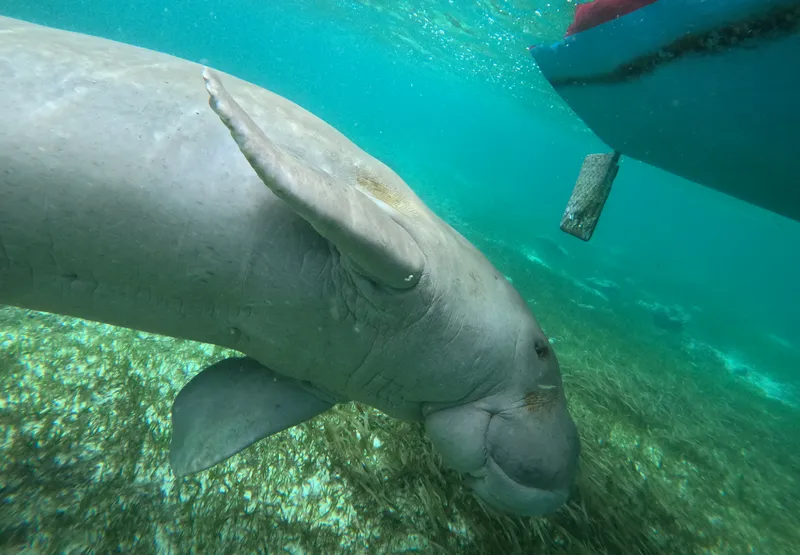
A rare and encouraging wildlife sighting is making waves around a coastal community in Indonesia’s central Alor archipelago: a baby dugong swimming alongside its parents! Fishers spotted the calf in the bay of Mali Beach last October. Its presence is an indication of the success of more than a decade of community-led conservation efforts in these waters to protect and expand seagrass meadows.
© WWF-Indonesia/Dede Walter
© WWF-Indonesia/Dede Walter
Named Mawar (“Rose” in Indonesian) by the local fishers, he became a beloved part of the community, often grazing on seagrass in the bay and swimming slowly around and under boats. The regular appearance of Mawar inspired community action to further improve the bay’s seagrass meadow and put measures in place to minimize boat-strike risk. In 2013, WWF began focusing on seagrass conservation by working with local seaweed farmers to identify meadows to formally protect and encouraging fishers to transition to eco-tourism ventures for visitors interested in seeing the dugong around the bay. Little by little, the underwater grasses spread, helping to store carbon and nutrients, reduce acidification of a nearby coral reef, and build up fish populations.
Indonesia integrated the bay into the Alor Islands Marine Protected Area, one of the 411 marine protected areas throughout the nation’s many islands. Now, eight different species of seagrass grow in the bay, and the underwater meadow is considered “very dense” following a WWF survey in 2024.
This rich seagrass buffet is ideal for dugongs, and over the years, people began occasionally spotting a second dugong, a female named Melati, meaning “Jasmine.”
Dugongs have been documented to live over 70 years, so long-term conservation work is needed to keep Mawar, Melati, their baby, and future generations of these gentle “sea cows” happy and healthy. This includes implementing stricter codes of conduct for visitors in the protected area and encouraging any community and visitor activities to be respectful of the space that the dugong family needs to thrive. The growing tourism sector and coastal towns also must adopt practices to ensure that the bay’s water remains healthy, so that the seagrass meadows can continue to flourish.

© WWF-Indoensia/Juraij
The good news for Indonesia’s dugongs expands beyond Alor. WWF recently completed a biodiversity survey in the Southwest Maluku region of eastern Indonesia and unexpectedly spotted over 30 dugongs in the area. WWF plans to expand these surveys to additional regions, including Alor. “These surveys will strengthen the scientific basis for marine mammal habitat management in protected areas such as Alor by linking population data and behavior of dugongs and other marine mammals to the condition of seagrass meadows as their primary habitat," said Ranny R. Yuneni, the national coordinator of the Protected and Endangered Marine Species Program at WWF Indonesia.
How you can help
© WWF-US/Clay Bolt
Support Tribes restore buffalo to the Great Plains
The Indian Buffalo Management Act would strengthen support for Tribal Nations who are working to bring buffalo back from the brink of extinction.