© Robet Delfs / WWF-Canon
Southwest Pacific Ocean and Indonesia
With a staggering number of coral reefs, the region hosts six marine turtle species and more than 2000 species of reef fish.
The Southwest Pacific region includes the coral triangle and islands and waters of Indonesia, Papua New Guinea, Solomon Islands, and Fiji. With a staggering number of coral reefs, the region hosts six marine turtle species and more than 2000 species of reef fish. The Southwest Pacific also supports large populations of commercially important tuna, fueling a multi-billion dollar global tuna industry. Over 120 million people live in the region and rely on its coral reefs and mangrove forests for food, income and protection from storms.
Within these delicate landscapes and seascapes, unsustainable resource use, development, and climate change are pushing nature to the brink and further exacerbating human vulnerability. The challenge ahead is to develop sustainable solutions for the Southwest Pacific’s inhabitants and protect one of the most diverse marine habitats on Earth. Together with conservation partners and the region’s governments, WWF works to safeguard this important region for its people and the world.
Wildlife of the Southwest Pacific Ocean and Indonesia

© Jürgen Freund / WWF-Canon
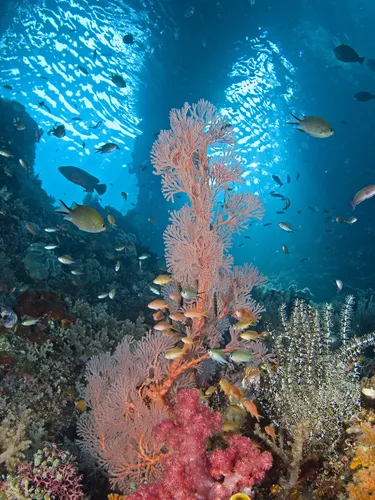
The Southwest Pacific hosts an astonishing amount of marine life and is widely regarded as one of the most biodiverse places on earth. Seventy-five percent of the world’s coral species are found within the region’s Coral Triangle—nearly 600 different species—including some of the world’s most climate resilient reefs. Over 2000 types of reef fish find refuge in these dazzling underwater gardens, and this is an important place for tuna to spawn. Whales, dolphins, porpoises, dugongs and whale sharks feed, breed and migrate through these blue corridors and the Southwest Pacific is home to six of the world’s seven species of marine turtles.
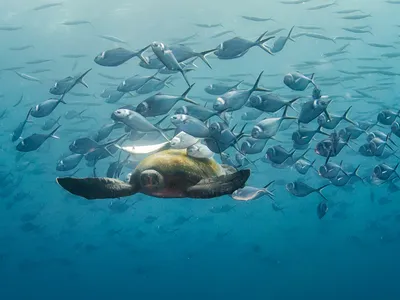
Sea turtles
Seven different species of sea (or marine) turtles grace our ocean waters, from the shallow seagrass beds of the Indian Ocean, to the colorful reefs of the Coral Triangle and the sandy beaches of the Eastern Pacific.
© Antonio Busiello / WWF-US
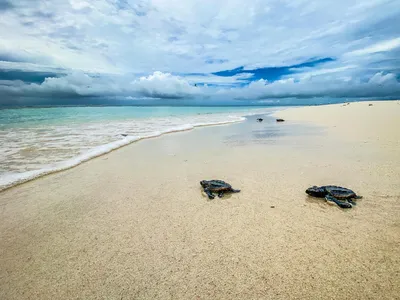
Loggerhead turtles
Loggerhead turtles are named for their large heads that support powerful jaw muscles, allowing them to crush hard-shelled prey like clams and sea urchins.
© Bastien Preuss / WWF France
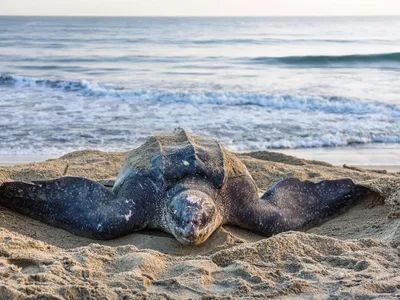
Leatherback turtles
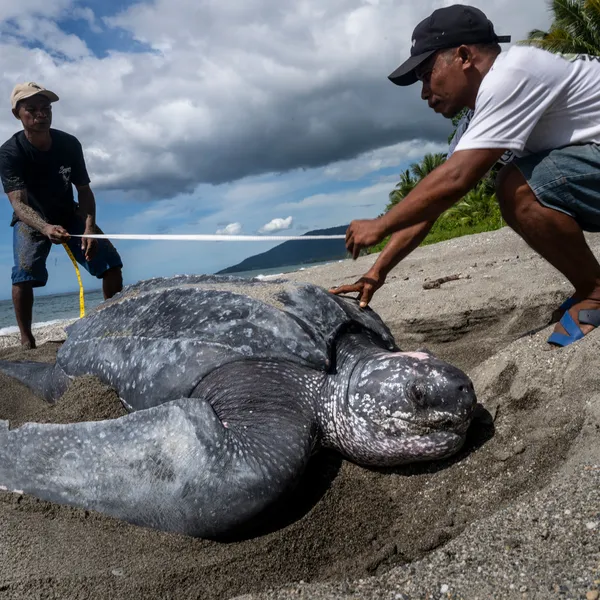
Leatherback turtles are the largest sea turtle species and also one of the most migratory, crossing both the Atlantic and Pacific Oceans.
© naturepl.com / Konrad Wothe / WWF
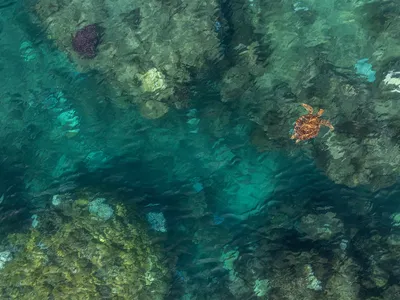
Green turtles
The green turtle is one of the largest sea turtles and the only herbivore among the different species.
© Tom Vierus / WWF Papua New Guinea
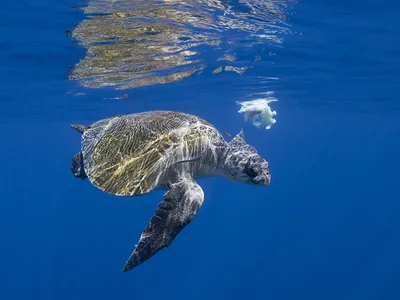
Olive Ridley turtles
The name for this sea turtle is tied to the color of its shell—an olive green hue. They are currently the most abundant of all sea turtles.
© naturepl.com / Doug Perrine / WWF
People and communities of the Southwest Pacific Ocean and Indonesia

© Jürgen Freund / WWF
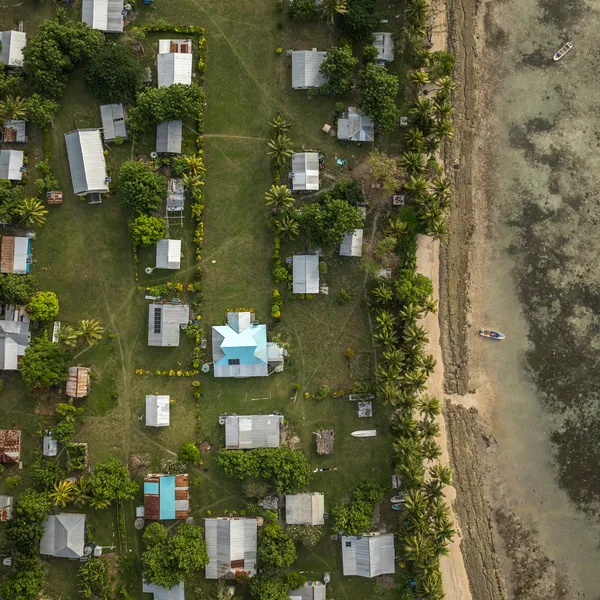
The Southwest Pacific’s marine resources support the livelihoods of over 120 million people and provide food to local coastal communities and millions more worldwide. The region also holds incredible cultural diversity. There are over 2000 languages spoken across the region and cultures share a strong connection to the sea with environmental management approaches that are integrated into their cultural traditions.
Southwest Pacific Ocean and Indonesia under threat

© Tom Vierus / WWF-US
Environmental degradation
The Asia Pacific region experienced a shocking 55% decline in wildlife populations between 1970 and 2018. Despite these countries’ collective significance as a global biodiversity hotspot, numerous human actions are continuing to drive major degradation of nature. Lack of enforced management and governance alongside subsidized degradation is leading to unsustainable natural resource use and development, including overfishing and deforestation. In addition, significant human development needs are outpacing policy and regulatory efforts at local, national and international scales and there is a lack of capacity, financing and/or incentives for smallholder producers, Indigenous peoples and local communities to practice sustainable management.
Human vulnerability
People in the Southwest Pacific suffer from high rates of poverty, including livelihood and food insecurity. Fiji, Papua New Guinea, and Solomon Islands are all Small Island Developing States with limited livelihood opportunities due to a number of factors, including relatively underdeveloped and undiversified economies, extreme climate vulnerability, gender inequality and gender-based risks under many of the customary governance systems, high rates of social and economic needs, and a large dependence on natural resources. Geographic isolation, poor economies of scale, geopolitical tensions from larger, nearby nations, and heavy reliance on imports worsen these impacts.
Climate change
Pacific Island leaders have declared climate change ‘as the single greatest existential threat facing the Blue Pacific’. The region is experiencing increasing intensity and impacts from storms, cyclones, fires, droughts, flooding, and sea level rise, all of which are forcing communities to relocate. Additionally, the degradation of coral reefs and other critical ecosystems is rising, threatening the livelihoods, food security, and well-being of millions of Pacific Islanders and Indonesians.

© Jürgen Freund / WWF
WWF is taking action to protect the Southwest Pacific Ocean and Indonesia
© Tom Vierus / WWF-US
Climate adaptation and mitigation
Fiji, Indonesia, Papua New Guinea, and the Solomon Islands are embracing nature-based solutions to mitigate and adapt to climate change impacts. WWF collaborated with local communities of Fiji’s Nadogo District to declare a new 160-acre mangrove protected area called “Nukuvadra” in 2023. The capacity of mangroves to store carbon — up to five times more than upland tropical forests — makes them a powerful natural solution to climate change impacts. The protected area is located in a customary iTaukei fishing area, known as a qoliqoli, and will also contribute to safeguarding local livelihoods and food security.
Area based conservation and protection
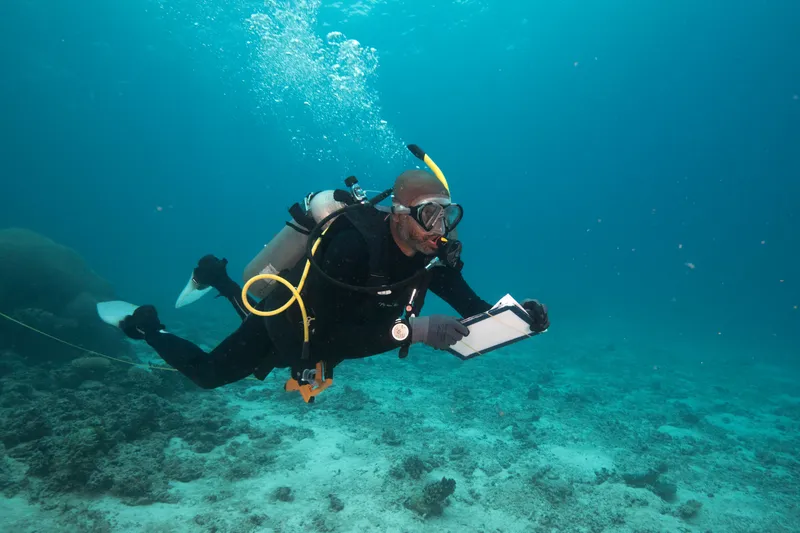
WWF’s scientific expertise helps inform effective conservation across the region through marine protected area (MPA) monitoring and coral reef surveys. In Indonesia, WWF has helped develop 18.6% of all MPAs and continues working with thousands of local leaders on effective community-based conservation and resource management. In Fiji, WWF led the first Great Sea Reef survey in 16 years and worked with a local management committee to design a shark sanctuary for endangered species in Fiji’s Dreketi river. WWF also advances ocean conservation efforts through Community Based Fisheries Management plans in Papua New Guinea and the Solomon Islands.
Sustainable business and resource use
Across the region, WWF supports sustainable businesses that benefit people and biodiversity. Through collaboration with the private sector and governments, WWF strengthens fishing regulations and compliance and improves fishery management plans, particularly in partnership with Fiji’s industrial tuna fleet, which includes mitigating shark bycatch and improving traceability. In Indonesia, we also promote market transformation towards sustainable fisheries practices and towards production of reef fish from sustainable aquaculture sources to ease the strain on endangered wild stocks. Tourism fuels a large volume of business in the region and WWF focuses on maintaining ecosystems to ensure responsible economic development, growth, and resilience.
Addressing turtle poaching
In central Indonesia’s Buru Island, WWF’s technical assistance and capacity building efforts targeting illegal poaching of leatherback turtles resulted in a 100% reduction in poaching of nests. In addition, the take of free-swimming leatherbacks in western Indonesia’s Kei Islands has been reduced by more than 70% through education and public outreach.
Start your monthly gift
Become a WWF monthly member and help conserve our world's oceans as well as wildlife and wild places around the world.
© ISTOCK/MARTIN HRISTOV