Conservation starts with farmers: lessons from New Mexico’s acequias
By
-
Madalen Howard

© WWF-US/Diana Cervantes
In northern New Mexico, community irrigation ditches known as acequias have shaped agriculture, settlement, and local identity for centuries. The technology is simple: long earthen channels, dug with shovels and elbow grease, that move river water into fields. They represent one of the oldest continuously operating water-management systems in the United States. Today, as climate change squeezes water supplies across the West, acequias offer a rare model of democratic governance and shared responsibility in an incredibly water-scarce region.
The acequia tradition and technology began as a melting pot of knowledge from many cultures. The system of canals that exists today merges Native American Pueblo water-sharing practices and Spanish and Moorish irrigation techniques brought to New Mexico in the 1600s by Spanish colonists.

© WWF-US/Diana Cervantes
The importance of community and water
Today, the acequia remains the backbone of local agriculture. For Emilio Borrego, a young farmer working land irrigated by acequias, it is more than just a job.
“In acequia communities, I think that's why you even hear the term acequia community,” Borrego said. “It's so central to what the community is and why it's here. And that's typically people that are just doing like subsistence lifestyles, whether it's raising animals or crops or whatever. And their whole life revolves around the water.”
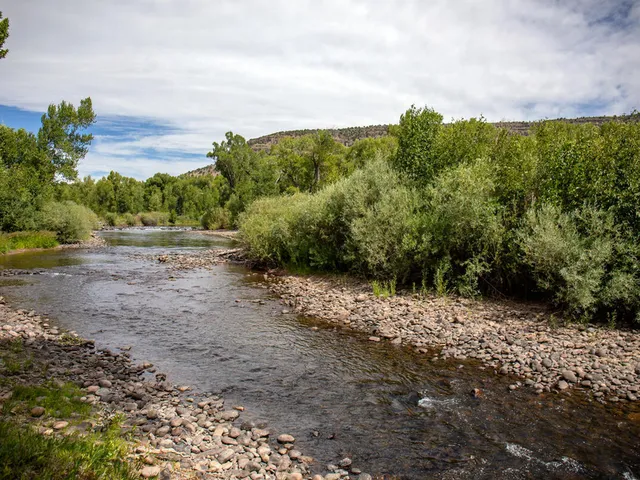
People clean the system annually and run water back through it to water fields and gardens. Borrego’s farm sits below the Río Quemado, where water is typically released in spring and continues through summer, depending on snowmelt, monsoon rains, and neighbors’ cooperation.

© WWF-US/Diana Cervantes
But Borrego has also seen clear changes in water availability during his lifetime.
“Every year, it’s just a little less water,” he said.
Despite the long-standing strength of the acequia system, he’s had to adjust what he grows and how he grows it. He has shifted toward crops with deeper cultural and ecological roots in the region, including corn, beans, and squash, and away from water-intensive vegetables designed for quick farmers-market sales. He’s also experimenting with native and perennial species, seed-sharing networks, and agroecological practices that boost resilience in hot, dry years.
An old water system built for the future
For Don Bustos, a well-known farmer and staple of the community in the Santa Cruz Valley, the changes in climate and water scarcity represent the next step in a system built to evolve. Bustos grew up with acequia labor as part of daily life. He learned how water moved through the community from his mother and aunts, who taught him the rules, expectations, and negotiations that made the system work.
Bustos’s generation remembers when neighbors regularly coordinated timing, volume, and emergency repairs, long before Zoom existed. What mattered was communication and a shared recognition that water had to be distributed fairly so everyone could farm.
That ethos—transparency, shared sacrifice, and collective decision-making—still distinguishes acequias from modern industrial agriculture. Where large-scale systems often prioritize the highest bidder or the most powerful water user, acequias require unanimous agreement and emphasize community over profit. It is understood that water is not infinite and that individual choices have direct consequences for their neighbors.

© WWF-US/Diana Cervantes
As shortages worsen across the American Southwest, this model has gained renewed attention from researchers and policymakers. Acequia communities have already implemented water-sharing agreements, prioritized food-security crops, and adopted rotational schedules that shift water use throughout the growing season.
WWF and the University of New Mexico are currently conducting surveys of farmers in New Mexico who utilize Rio Grande water. Farmers’ input about water conservation methods will help ensure water supplies remain sustainable and resilient, keeping in mind the livelihoods of water users themselves.
At the same time, younger farmers like Borrego face pressures that older generations did not. Drought conditions have forced experimentation and adaptation at a faster pace, pushing farmers to weigh tradition against practicality. Yet both farmers view innovation as compatible with acequia values, not a departure from them.
“The system still works,” Borrego says. “We just have to adjust to the water that’s actually there.”
People at the heart of water conservation
The infrastructure of acequias—ditches, headgates, hand-built diversion structures—remains largely unchanged. But the people managing them have always been the real system. In a region where water scarcity is now the norm, their approach offers a counter-narrative to the idea that water conflict is inevitable.
For Bustos, Borrego, and their communities, the question shaping the future is the same one that guided their predecessors: How do we distribute water so everyone can survive the season? Their answer, grounded in centuries of practice, hasn’t shifted.
You do it together.
How you can help
© WWF-US/Diana Cervantes
Keep our water flowing
Freshwater systems across the US are increasingly in crisis. Ask your members of Congress to invest in programs that restore rivers, lakes, wetlands, and watersheds.