eDNA reveals snow leopard presence in Bhutan’s mountain rivers
Scientists uncover the presence of rare wildlife during high-elevation river sampling
By
-
Danielle Brigida

© DOFPS, MOENR BHUTAN
WWF scientists knew that hiking through snow leopard territory didn’t guarantee a sighting. These elusive cats are masters of camouflage, often invisible even in places they’re known to live. This is why monitoring them and other elusive wildlife is such a challenge.
On a mission to explore biodiversity near Mt. Jomolhari in Bhutan’s Eastern Himalayas, the team trekked through rugged terrain above 14,000 feet. Along the way, they encountered blue sheep, yaks, and Himalayan marmots—but no snow leopards. That wasn’t surprising. But what came next was.
The river that revealed the invisible
After environmental DNA (eDNA) sampling from the high-elevation waters of the Paa Chhu River, the team collected many liters of water. What they found was astonishing.
From those samples, scientists detected the presence of 19 mammal species. They found snow leopards and Pallas’s cats for the first time ever via river-based eDNA in this region! These findings represent a breakthrough in monitoring wildlife in remote, high-altitude landscapes that are nearly impossible to access by traditional means.
Beyond their wildest monitoring dreams
eDNA relies on animals actively passing through a landscape, leaving behind invisible fragments such as fur, skin cells, and waste. Detecting snow leopards this way was a long shot, but that was the point. But if detecting snow leopards were possible, it would be a game-changer for how we can reliably monitor biodiversity. Sampling at high elevation and close to likely snow leopard habitat increased the odds—and it worked. The results didn’t just confirm the presence of snow leopards. They also revealed:
- Sambar deer at the highest elevations ever recorded
- Leopard cats at the upper edge of their known range
- A probable tiger detection at one of the highest altitudes ever
- Himalayan wolf and Himalayan red fox
- Woolly flying squirrel—one of the world’s rarest mammals
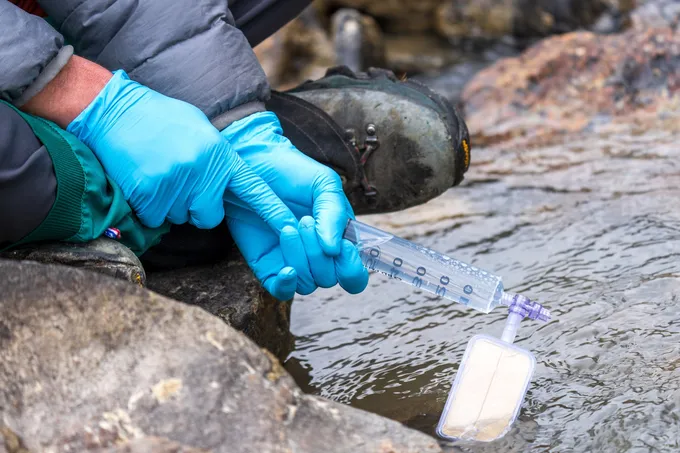
© WWF-US/Danielle Brigida
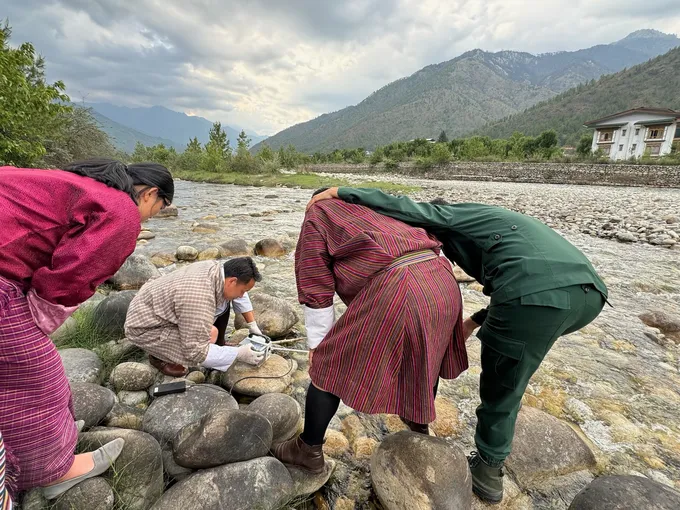
© WWF-US/Danielle Brigida
Why it matters
Finding the presence of the snow leopard in the data demonstrates the remarkable power of eDNA to uncover biodiversity in places where it's challenging to monitor. It offers a non-invasive, safer, more efficient, and cost-effective way to monitor elusive species, creating new possibilities for conservation across the Himalayas and in other remote areas.
eDNA lab opens, a major milestone for Bhutan
Bhutan has officially opened its first environmental DNA (eDNA) laboratory. The lab was made possible by ETH Zurich and is hosted by the College of Natural Resources, which brought together the Department of Forests and Park Services, WWF-Bhutan, the Bhutan Trust Fund for Environmental Conservation, and WWF-US. This new facility marks the beginning of a new era of monitoring and research possibilities for the region’s natural history.
Rivers, it turns out, don’t just carry water—they carry stories, species, and signs of hope.

© WWF-US/Danielle Brigida
How you can help
© WWF-US/Clay Bolt
Support Tribes restore buffalo to the Great Plains
The Indian Buffalo Management Act would strengthen support for Tribal Nations who are working to bring buffalo back from the brink of extinction.