Environmental DNA
WWF utilizes eDNA technology in multiple forms of biodiversity and species monitoring. WWF uses eDNA techniques to study the ecology and biodiversity of a geographic area by determining the species living in a given habitat, via eDNA traces present.
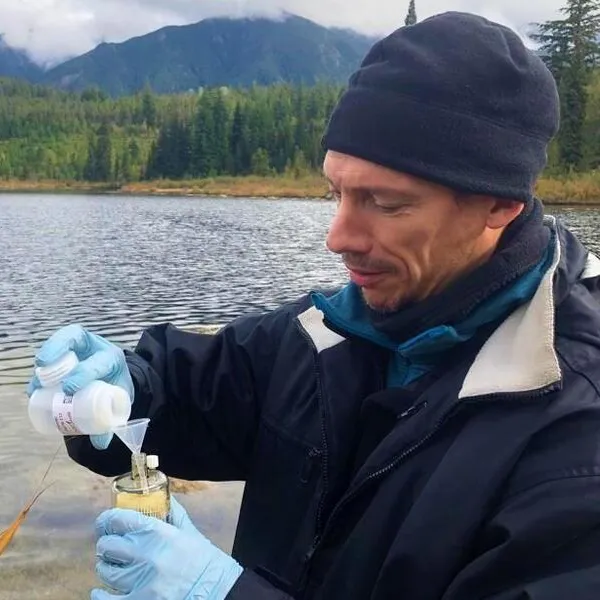
© WWF-US / Robin Naidoo
What is environmental DNA?
The challenge of monitoring biodiversity
There is an enormous diversity of life on earth. It is estimated that approximately 8.7 million species live on this planet; however, 86% of species on land and 91% of species in the ocean still await discovery.
Inventorying the world around us can be challenging and costly. Traditional methods for monitoring biodiversity, such as camera traps or aerial surveys, are labor-intensive and often costly.
With threats to biodiversity mounting, it is now more important than ever to monitor ecological systems quickly and efficiently, to help us protect and conserve the planet for nature and people.
The power of environmental DNA
If you have watched a true crime documentary, you may have realized that DNA is all around us. From a strand of hair to a fingerprint, we frequently leave traces of our genetic signature in our surroundings.
Animals also naturally shed DNA through their feces, skin, and hair as they move throughout their environment. By sampling soil, water, snow, or even air, we can access this environmental DNA (or eDNA).
An eDNA sample carries the genetic code of tens, maybe hundreds, of animals and can provide us with all kinds of information about the species living in an ecosystem.
A single sample containing eDNA can be used to detect endangered species, study the impacts of climate change, alert us to invisible threats such as pathogens, and assess the overall health of aquatic and terrestrial ecosystems.
“eDNA has the power to revolutionize biodiversity monitoring. A single sample can potentially identify everything from flagship species to insects, plants, and even viruses and bacteria.”
Arnaud Lyet WWF Senior Conservation Scientist
How WWF is using eDNA for conservation
Searching for rare aquatic and terrestrial species in water
Since 2013, WWF, together with its scientific partners, has been developing new eDNA applications to improve the monitoring of species facing extinction. For example, we demonstrated the effectiveness of eDNA in cataloguing aquatic biodiversity in the Mekong River and in confirming the presence of extremely rare and threatened species such as the giant catfish and the Irrawaddy dolphin. In addition, our pioneering studies in the Amazonian forest of Peru and in British Columbia, Canada, demonstrated the potential of eDNA from water samples to quickly and effectively catalogue terrestrial mammal diversity in both tropical and temperate ecosystems, from small rodents to large carnivores.

© Diego Pérez / WWF Peru
Monitoring wildlife recovery in restored forests
Ecosystem management and restoration strategies needed to support wildlife recovery in reforested landscapes call for comprehensive biodiversity monitoring data. To evaluate the power of eDNA in monitoring terrestrial wildlife, researchers from ETH Zurich, in collaboration with WWF and project partners, will collect water samples from rivers in reforested watersheds in Colombia. Inhabited by many ecologically important species, Colombian forests present a great opportunity to harness the power of eDNA in a landscape-scale wildlife assessment. Advancing the use of eDNA in monitoring terrestrial wildlife will help guide restoration and conservation projects in reaching their biodiversity objectives.

© WWF-Peru/Enrique Castro-Mendívil
Identifying individual polar bears from eDNA in their tracks
Current methods for studying polar bear populations are challenging to execute and can be invasive for the bears. WWF and partners are testing and refining a new way to collect and analyze eDNA from polar bear tracks in the snow as an exciting new alternative. This non-invasive technique may allow us to identify individual polar bears from afar and better understand polar bear subpopulations.

© WWF-US / Elisabeth Kruger
Counting tiger prey in Bhutan
Adult tigers need more than 10 pounds of meat per day, so abundant populations of prey species — primarily deer — are critical to tiger population recovery. In the forests of Bhutan, WWF will test eDNA to help assess tiger prey populations. This information can be used to better predict how many tigers can live in a given area and determine whether there is sufficient food to maintain or increase tiger numbers.

© WWF-Nepal
Scaling eDNA through global collaboration
WWF is a founding partner of WildinSync, a global collaborative initiative that brings together governments, academic institutions, conservation organizations, Indigenous Peoples and local communities, practitioners, and private-sector partners to advance biodiversity monitoring through eDNA. By fostering collaboration, building scientific and technical capacity, and supporting standardized approaches to biodiversity monitoring, WildinSync helps generate the evidence needed to guide conservation, natural resource management, and policy decisions to support people and nature.

© WWF-US/Danielle Brigida