In Kenya, women draw purpose and financial security from nature
Hear from four local women about their work as part of the Sowing Change program

© Faith Tanui/WWF-Kenya
Sowing Change is a livelihood-to-leadership program from the CARE-WWF Alliance that helps women identify and lead solutions to climate-induced challenges in Kenya's Amboseli landscape. As part of the program, women are connected to the resources and information they need to develop nature-based livelihoods—such as agroforestry and native species nurseries—that will increase economic, ecological, and climate resilience for their communities. With training and collaboration, participants are restoring the landscape while building a sustainable business that supports entire communities.
Here are four stories from women participating in Sowing Change:
Joy Santayian
From dreams to purpose: My journey with bees and hope
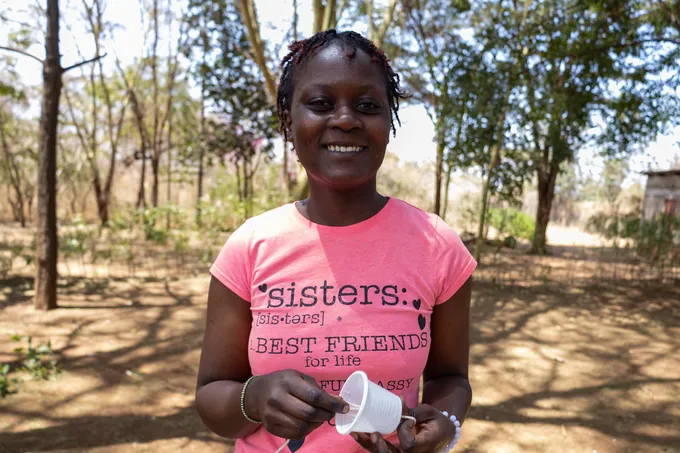
My name is Joy Santayian. I am 19 years old, and I recently completed college, an achievement I am proud of, considering the many challenges young people like me face today. After school, I started a small salon business. It doesn’t bring in much, but it keeps me going. It gives me something to wake up to every morning, something I can call mine.
Life after school hasn't been easy. In Kenya today, jobs are hard to come by, especially for youth. The dream of getting a white-collar job is no longer guaranteed, and many of us are left wondering what’s next. But I believe that with the right mindset and skills, we can create our own paths.
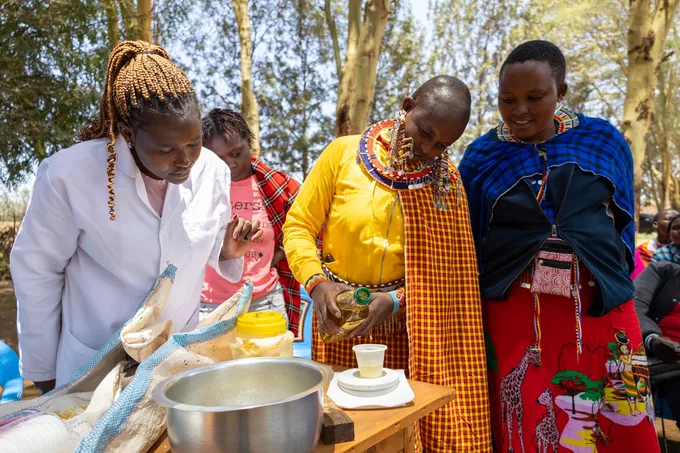
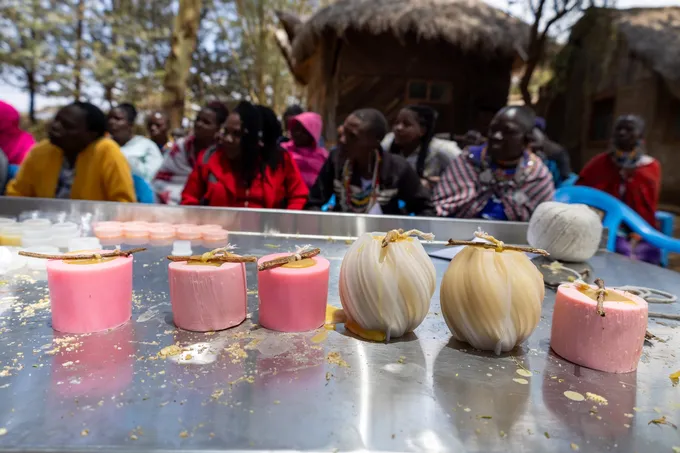
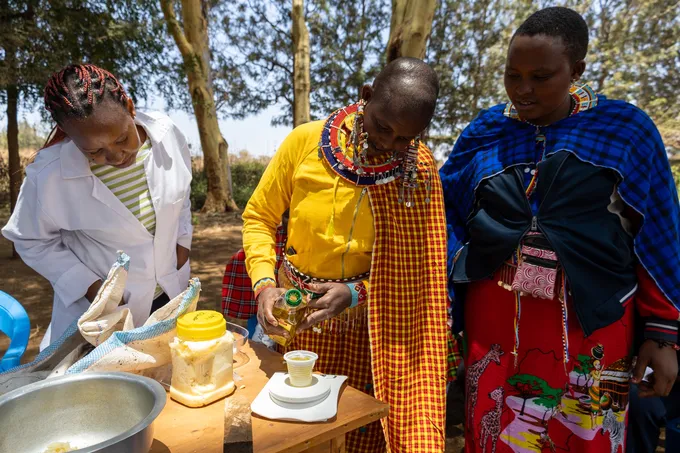
That’s why this training on value addition of bee products has meant so much to me. It came at a time when I was searching for more knowledge, more hope, and more ways to build a better future. Through this program, I have learned how to make soap, lip balm, candles, and lotion all using products from bees. I had no idea that something so small, like a bee, could bring so much potential.
But this training has given me more than just technical skills. It has given me purpose. I now see a future where I can expand beyond my salon, where I can start a line of natural, locally made products. I can already imagine my shop bright, full of beautiful scents, and built from the work of my own hands.
More importantly, I now feel responsible to share what I’ve learned. I want to go back to my community and teach my fellow youth these skills. I want to tell them: We are not powerless. We do not have to wait for opportunities we can create them. We have the resources all around us; we just need the knowledge and the courage to use them.
This training reminded me that I have value, that I have something to offer, and that I can dream again.
© Faith Tanui/WWF-Kenya
© Faith Tanui/WWF-Kenya
Nonkota Kaleiya
My name is Nonkota Kaleiya. A story of strength, soil, and hope
My name is Nonkota Kaleiya. I come from Osupuko-Alooca, a place where the land speaks, and the wind carries stories of generations. I am a mother of eight. I am a widow. And I am a woman who refuses to give up.
Two years ago, my world shattered. My husband, my partner, my friend left this earth. His passing was sudden, and the silence he left behind was deafening. I had eight children looking up at me, the eldest preparing for university, the youngest still learning how to say full sentences. I didn’t know how I would manage. But I knew I had to.
Every morning, I rise before the sun. I walk the land, touch the soil, and whisper prayers to God. I believe the environment is sacred, a gift entrusted to us. It feeds us, shelters us, and listens when no one else does. I’ve always believed that if I care for the land, it will care for my children.
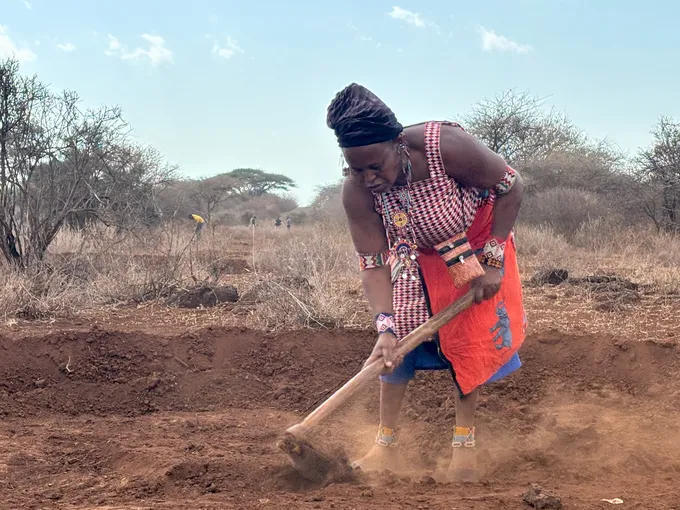
Then came this project, a project that didn’t just bring training, but brought light into my life. They taught us how to restore our rangelands, how to dig earth smiles that hold water and bring back life to the soil. I have since seen the once barren land begin to breathe again, hope sprouting from the ground.
Through this work, I earn money. Not much, but enough to buy food, pay school fees, and clothe my children. Enough to remind me that I am not alone. I joined a merry-go-round with other women, strong women like me. We lend each other small loans, share laughter, and hold each other up when the days get heavy.
Restoring the land has also helped reduce the conflict between humans and wildlife. When the land is healthy, there is enough for all, no need to fight, no need to fear. It’s peace, growing from the ground up.
This partnership has given me more than income. It has given me skills, confidence, and a voice. I am no longer just surviving, I am rebuilding. I am teaching my children that even in loss, there is life. Even in brokenness, there is beauty.
© Faith Tanui/WWF-Kenya
© Faith Tanui/WWF-Kenya
Grace Mmboto Parsahi
Grace in the rangelands
My name is Grace Mmboto Parsahi, and I live in Lepolos-Alooca Conservancy. I’m a mother to seven wonderful children, all of them in school. My youngest is just six months old, still so small, still needing me close. Life here isn’t always easy, but I wake up each day with hope and determination.
I feel proud to be part of the team restoring the rangelands. It means a lot to me, not only because it helps the land, but because it helps my family too. The money I earn goes toward feeding my children, buying clothes, and keeping them in school. It brings a sense of purpose and relief, knowing I can provide for them.
What makes this project truly special is how welcoming and inclusive it is. I come to the field with my baby, and I never feel like a burden. The women I work with, and the leadership, are kind and supportive. We take turns looking after my child, making sure she’s safe and cared for while I do my part. It’s comforting to know we are in this together.
Each day, I see small but meaningful changes, in the land, in our lives, and in our hearts. We’re helping the earth heal, and in doing so, we’re also healing ourselves. We’re raising our children with love, supporting one another, and slowly building something better. And while the journey isn’t always easy, I believe it begins with us, with care, with courage, and with community.
© Faith Tanui/WWF-Kenya
© Faith Tanui/WWF-Kenya
Lucy Pateri
From cows to honey: My journey of hope — Lucy Pateri, Naretoi Lemongo Women Group
My name is Lucy Pateri. I am a proud mother of five children and a member of the Naretoi Lemongo Women Group, which brings together 15 strong, determined women from our pastoralist community. For generations, our lives revolved around cattle. Cows were our livelihood, our pride, and our security. But with changing climates, shrinking grazing lands, and increasing challenges, we began to realize we needed something more, something sustainable.
Three years ago, our lives took a beautiful turn. Through Nature Kenya, we were gifted 35 beehives. At first, we didn’t know what to expect. Bees? We had never imagined them as a source of livelihood. But we embraced the opportunity with open hearts.
WWF-Kenya (Sowing Change), through the Bee Hub, came in and helped us maintain the hives. They even built a structure to house all 35 beehives, making harvesting easier and safer. That was the beginning of something truly special.
We started harvesting honey and thought that was it, the golden liquid was all we needed. We sold it, used it at home, and felt proud. But we were throwing away the rest of the hive products, not knowing their value. Little did we know, we were sitting on a goldmine.
Through recent trainings we’ve learned that every product from the hive has value. The wax, which we used to discard, can be turned into soap, lip balm, candles, and so many other products. We’ve learned how to make them ourselves. It’s like discovering a new world one filled with opportunity, creativity, and empowerment.
Now, with this knowledge, we are building businesses. We are cascading this training to other women in our community. I believe that when women are empowered, entire communities thrive. I see a future where our daughters won’t have to rely solely on cattle. They will have choices. They will have hope.
Beekeeping is dignity, unity, and a sense of purpose, we are entrepreneurs, creators, and changemakers. And this is just the beginning.
How you can help
© WWF-US/Clay Bolt
Support Tribes restore buffalo to the Great Plains
The Indian Buffalo Management Act would strengthen support for Tribal Nations who are working to bring buffalo back from the brink of extinction.