In rural South Africa, rangeland restoration is community-based and collaborative
By
-
Dianne Tipping-Woods

© Dianne Tipping-Woods
The lanky young man in skinny joggers grew up in the town of Pietermaritzburg, South Africa, but after completing school in 2018, Tukulo “TK” Mtshayelo returned to his mother's rural home in Black Diamond village, located in South Africa’s Eastern Cape in an area called Matatiele. It wasn’t an easy transition. The small, remote village and open landscapes felt unfamiliar, and worse—he felt like an outsider in his community. There were no job opportunities, running water, or internet access, and few people shared their experiences.
"One of the first things I had to do when I moved back was learn to ride a horse," TK said, explaining that it's a way of life here in the rural Eastern Cape, a point of pride, and often the most practical way to get from A to B. "And if you don't ride, nobody takes you seriously."
Today, he owns two horses, chickens, cows, goats and sheep, cultivates a thriving home garden, and helps his community practice better rangeland management and livestock herding, all while studying remotely at the University of South Africa. TK built his skillset and farm with support from local Matatiele NGO Environmental and Rural Solutions (ERS) in partnership with WWF’s Climate Crowd.
"ERS changed my life," TK explains. When the organization visited his village to talk about rotational grazing and rangeland restoration, it gave him a glimpse of a future for himself in his village. "I could see how environmental work and farming can build a foundation for me and my community," he said.
Increasing the water supply
Villages like Black Diamond have no bulk water supply, and people and livestock in the area depend on about 45 natural springs. In addition to being life-giving water sources, these springs are sacred sites and cultural landmarks. Walking with TK to the Black Diamond spring, he noted how much easier it is to farm now that he and his mother don’t have to collect water daily, thanks to their rainwater tank provided by Climate Crowd. For others, especially for the women assigned to this task, collecting water takes up a significant part of each day.

© Dianne Tipping-Woods
The area around the spring is beautiful, with displaying widowbirds, ringing cowbells, and dancing dragonflies. A large Rinkhals snake slithered through the grass. Even the town's name, derived from the Sesotho phrase matata aile, meaning "the ducks have gone", is a nod to nature – it references the migratory birds that rely on this lush landscape. We spotted a flock of gray-crowned cranes, red bishops, and a group of sacred ibis. The area is also the last stronghold of bearded vultures; there are less than 350 left.
Before ERS convened crews to clear invasive black wattle trees, there was much less water flowing through the land. These thirsty trees sapped the groundwater; filling a 20-litre container took hours. Now, it's a much quicker job, and the water quality has improved too. Traditional healers still collect untreated spring water for ceremonies, but the water for human consumption is regularly tested and closed off to animals.
Livestock and ecosystem health
"I love that my work has helped bring clean water to thousands who once shared with livestock. We've restored water and dignity," said Yonela Sipeka, an ERS project manager. Beyond water access, Yonela works to improve rangeland management, so grazing supports both livestock and ecosystem health. He explained that the area they work in is known as the Maputaland Albany Pondoland Hotspot, stretching from southern Mozambique in the north to the border with the Western Cape in the south. It is an area of high biodiversity, but only 3% is currently protected in South Africa.
Unlike many young professionals who leave rural areas searching for opportunities, Yonela wanted to stay close to home. He values seeing his family every day. "Migration doesn't work. We leave with little and come back with less," he said. Then, he was distracted by some grass species. "This is Themeda triandra (red grass); it's very palatable and grows quickly in areas where grazing pressure is balanced." He's also excited about the Panicum coloratum (buffalo grass), a hardy species with deep roots that are quite drought-resistant and valuable for soil conservation. He loves what he does, and by blending passion, the traditional knowledge and practices of his elders, and modern conservation techniques, he and the ERS team help farmers see that sustainable practices improve economic outcomes, too.
Livestock remain the backbone of the rural economy here. While fewer than 7% of the economically active population earned more than R1,600 (US$80) per month as recently as five years ago, between 50% and 82% of households own cattle, which are often held as a form of financial security and play a crucial role in lobola (bridewealth), ceremonies, dowry rituals, and social status.
Collaborative and community-led
The benefits of these projects—for both people and the landscape—have not gone unnoticed. Influential tribal authorities across multiple villages in the area have applied for formal conservation status for their lands: the proposed Maloti Thaba Tsa Metsi Protected Environment covering approximately 120,000 acres (48,500 hectares) would preserve biodiversity, enhance water infiltration, and contribute to South Africa's national targets for expanding protected areas.
Sissie Matela, who co-founded ERS more than 20 years ago, explained how the support of chiefs and elders "is instrumental in the declaration process" for a formal conservation area. A fan of doing things right, Mme Matela is a much-respected icon in Matatiele—innovative, highly qualified, practical and deeply aware of the various dynamics at play in this community. She and fellow ERS co-founder Nicky McLeod forged their friendship in the field, where they are often knee-deep in restoration projects, discussions with local communities or trekking into remote grazing lands to assess ecosystem health. Running an NGO comes with funding challenges, political shifts, and constant demands, but they have remained steadfast allies. They have also managed to consistently convene the uMzimvubu Catchment Partnership with more than 35 organizations that have been meeting quarterly since 2013.
This is particularly significant in an area with a complex history of segregation, disenfranchisement, and diverse interests, where a legacy of inequality persists, shaping present-day challenges in land use, governance, and conservation. "ERS has always known the only approach we can take has to be collaborative and community-led, and to co-create solutions rather than impose externally designed short-term projects," said McLeod, noting that the partnership brings together diverse stakeholders—traditional leaders, local farmers, tribal authorities, NGOs, and government agencies—who might otherwise have conflicting priorities. The goal is that conservation efforts support and enhance, rather than displace, traditional ways of life.

© Dianne Tipping-Woods
How you can help
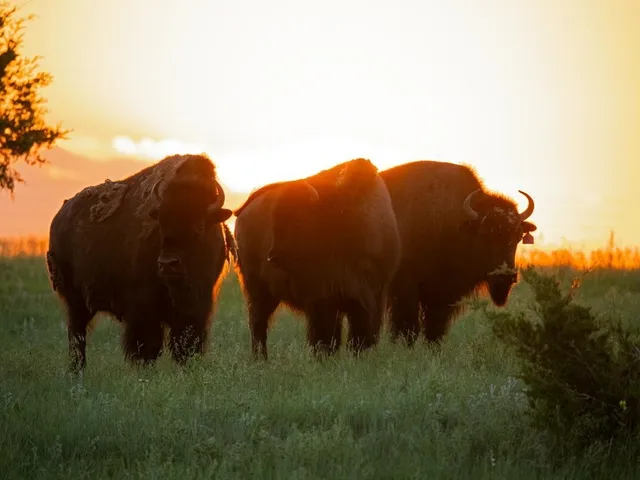
© WWF-US/Clay Bolt
Support Tribes restore buffalo to the Great Plains
The Indian Buffalo Management Act would strengthen support for Tribal Nations who are working to bring buffalo back from the brink of extinction.