What to expect at COP30: Closing the gaps in Belém


© Edward Parker / WWF
Ten years after 195 countries approved the landmark Paris Agreement at COP21, world leaders are gathering again for COP30—this time at the gateway to the Amazon rainforest in Belém, Brazil. There is a powerful symbolism in meeting within one of Earth’s most vital ecosystems at a moment when the choices we make over the next five years will shape the planet for generations to come.
Progress has been made, but it hasn't been fast enough. We are being held back by dangerous gaps between words and action, between promises and reality. Countries have made commitments, but there is still a dissonance between pledges made—let alone actualized—and what science demands. These gaps can be measured in lost lives, lost livelihoods, lost ecosystems, and lost time. COP30 must be the moment we begin to close these gaps.
Putting action behind ambitious climate plans
A critical item on the agenda is strengthening national climate action plans. Countries had a February 2025 deadline to submit new Nationally Determined Contributions (NDCs) for 2035, but as of mid-October, only 62 countries have submitted them. This shortfall is troublesome given the scale of the challenge.
NDCs are important for two reasons. First, they represent a country's commitment and plan for reducing emissions. Second, they provide a concrete way to measure progress and hold countries accountable. We need NDCs developed through inclusive, transparent processes that contain economy-wide absolute targets with detailed sectoral plans. We have already slowed the world's warming from a 4°C trajectory to about 2.1°C, based on current pledges. This shows that change is possible, but it is still above what science says is safe, especially in light of emissions rising by 1.2% in 2024.
Making climate finance work for people and nature
Ambitious plans though mean little without the resources to implement them. Finance remains at the heart of effective climate action, but the finance gap is stark.
- Estimates suggest we need $4–6 trillion per year for climate action, but we're currently deploying only about $1–1.3 trillion.
- Public climate finance reached $90 billion in 2024, far short of the $300 billion per year needed.
And funds for nature, which play a crucial role in climate solutions, are no exception. Reports have concluded that conservation efforts worldwide face a $900 billion annual financing gap that leaves essential environmental work unfunded.
These unfunded projects have the potential to address both climate change and nature loss. At Climate Week NYC, Brazil announced a billion-dollar commitment to the Tropical Forest Forever Facility (TFFF), a proposed $100 billion financing mechanism to preserve critical carbon sinks in the World’s tropical forests. WWF supports this initiative and debuted our new Nature Finance and Investment strategy with a clear goal: accelerate and scale the flow of capital into the world's most vital natural places by channeling more private and upfront financing into conservation priorities, ultimately ensuring resources reach the ground where they make the biggest difference. Whether this momentum translates into concrete action and additional commitments at COP30 will be something to watch closely in Belém.
Protecting nature as climate infrastructure
COP30 must be the moment when halting and reversing deforestation and ecosystem degradation becomes fully incorporated into climate negotiations. We're advocating for a new climate-nature workstream that recognizes what science has shown: nature has absorbed about half of all human-made carbon dioxide emissions, slowing global warming significantly. We will not halt climate change if nature loss continues, and we cannot protect nature if global warming is not stopped.
Building resilience where it's needed most
While mitigation and nature protection are essential, we cannot ignore the communities already facing climate impacts today. Adaptation, specifically, remains highly underfunded, with a financing gap of $187–359 billion per year. This has significant impacts on communities most vulnerable to climate change that need support to stay safe from worsening floods, droughts, heatwaves, storms, and sea-level rise.
The good news is that we already know how to adapt through resilient infrastructure, ecosystem restoration, and climate-smart agriculture. The solutions exist, but we must work on ways to improve access and affordability. At COP30, we must see adequate finance for adaptation agreed upon and operationalize the Global Goal on Adaptation. Developed countries must provide new, additional, predictable, and adequate adaptation finance to developing countries based on their needs. We must develop and implement mechanisms to invest in long-term resilience and planning for a hotter, wetter, wilder world.
An energy system that protects people and nature
No discussion of climate solutions would be complete without addressing energy. The economics are increasingly clear: in 2024, solar photovoltaics were 41% cheaper than the lowest-cost fossil fuel alternatives, while onshore wind projects were 53% cheaper. Renewables now generate over 50% of global electricity, and 91% of new renewable power projects commissioned last year were more cost-effective than any new fossil fuel alternatives.
Yet we're at a critical inflection point. Solar and wind capacity grew 18% in 2024, but must double annually to meet 2030 goals. We need full commitment to an integrated energy agenda that includes tripling renewable energy capacity and doubling energy efficiency improvements by 2030. While we have unprecedented momentum toward renewable energy, we risk creating unintended environmental and social damage through its deployment.
Modernizing and improving our energy system must center and protect communities and nature as we develop new resources. Energy transition minerals are increasingly in high demand, and recent analysis of the overlap between mining projects and key biodiversity areas shows we must be strategic. A nature-positive energy strategy is possible, but it requires proper research, guidance, and policies that protect ecosystems even as we scale up clean energy.
We have the solutions and need to use them
There are cost-effective solutions—like energy efficiency, renewable energy, reforestation, and forest protection—available and deployable now across every sector. The sooner and more decisively we act, the sooner people and nature can reap the benefits of a cleaner, safer, and more stable future. We have all the tools we need. It is well within our power to meet this challenge.
For COP30 to succeed, governments must deliver on past promises and respond to the needs of communities suffering the consequences of past failures. That means enhanced NDCs, an ambitious nature package centered on halting deforestation, accelerated measures for an equitable energy transition, finalized adaptation indicators under the UAE Framework for Global Climate Resilience, and a stronger Global Climate Action Agenda with adequate capacity to meaningfully close the gaps on mitigation, adaptation, and resilience.
Time is running out, but we are not out of options. Decisions taken in Belém could help chart the path forward. Our global commitment to a better world must be renewed in the Amazon. The question is: will we rise to meet this moment and deliver the action demanded in the second half of this crucial decade?
How you can help
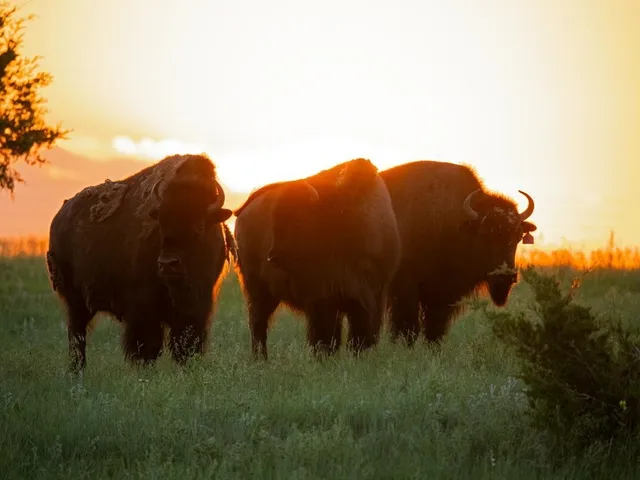
© WWF-US/Clay Bolt
Support Tribes restore buffalo to the Great Plains
The Indian Buffalo Management Act would strengthen support for Tribal Nations who are working to bring buffalo back from the brink of extinction.