Why buffalo restoration and food sovereignty are critical for Native Nations
Ehakala “Hawkey” Cummings on restoring a way of life to help Tribes and grasslands
By
-
Benjamin Alva Polley

© Clay Bolt / WWF-US
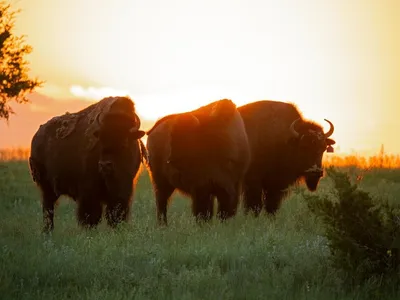
Near the Pine Ridge Reservation, south of Rapid City, South Dakota, Ehakala "Hawkey" Cummings stands on a butte discussing teepee rings, with a herd of bison grazing behind him. Recently graduated with a degree in conservation biology from Oglala Lakota College, Twenty-six-year old Hawkey is a citizen of the Cheyenne River Sioux Tribe. Standing at 6'2", his presence commands attention, but it’s his bright smile and infectious enthusiasm for restoring buffalo and promoting food sovereignty for Native Nations that truly captivates.
Hawkey worked with the Inter-Tribal Buffalo Council, where he served as a traditional ecological knowledge specialist for his college capstone project. He conducted interviews with tribal herd managers, elders, and knowledge carriers about their tribes’ connections to buffalo, exploring their significance for physical and spiritual health, as well as cultural revitalization and language development.
The loss of buffalo
Historically, scientists estimate that before colonization, 30 million–60 million buffalo roamed the Great Plains, at the time outnumbering humans 10 to one. Buffalo were an integral part of Native diets alongside other game, plants, and wild foods—"kind of like a food forest on the prairie,” Hawkey explained. “We were resourceful and well taken care of.”
The era of colonization brought purposeful government extirpation of buffalo designed to cause food scarcity and starvation among many Plains tribes. Many Great Plains Tribes, previously rich in resources, were relocated to reservations, forced to accept federal food rations (flour, lard, sugar, coffee, salt pork, and other non-Indigenous foods) to survive, and farm implements were distributed to encourage farming, drastically altering their way of life. “With that came so many negative implications, and health was a primary concern,” Hawkey noted. “We shifted from consuming natural, whole foods to relying on flour, sugar, and rancid meat, abandoning our traditional diets.”
These dietary changes have resulted in drastic and long-lasting effects in Native communities, contributing to high rates of cancer and diabetes. However, many Native Nations are beginning to recover. “I see buffalo restoration and food sovereignty as a huge part of that,” Hawkey says.
© WWF-US/Clay Bolt
Support Tribes in restoring buffalo to the Great Plains
The Indian Buffalo Management Act would strengthen support for Tribal Nations who are working to bring buffalo back from the brink of extinction.
Take action nowFood sovereignty
Hawkey’s Tribe, the Cheyenne River Sioux Tribe (CRST), focuses on food sovereignty through initiatives like processing and distributing their own buffalo meat and integrating buffalo meat into school lunches under the leadership of the CRST Buffalo Authority Corporation. In Rapid City, South Dakota, another notable effort is Sacred Storm. This Indigenous-led organization prioritizes the inclusion of buffalo in the diets of Native peoples for both cultural and nutritional reasons. The Sacred Storm team trains and empowers dozens of Native youth in the art of meat processing and food sovereignty, and travels to buffalo herds to help harvest buffalo directly on the prairie, respectfully, in their natural habitat. Sacred Storm and NDN Collective have worked together with Tribal food programs to also serve the urban Native population in Rapid City.

© Sarah Mosquera / WWF-US
“If we restore buffalo to the numbers we had before colonization, we would be a secure nation. In a crisis, we would have a food stock lasting five to ten years,” Hawkey explained. “Food sovereignty is key to addressing many challenges that can restore our mind, body, and spirit. It’s a vital first step to tackling health issues, which are a primary concern among our people.”
Restoring a way of life
Hawkey’s work with the InterTribal Buffalo Council has reunited him with his ancestral connection and deepened his understanding of how bison help restore grasslands. “I approach this work from an academic background and a passion for the environment. I want to leave the world better for the next generation.”
Buffalo restoration is essential for the health and well-being of Native peoples. Historically, when Tribes struggled to find buffalo, it wasn’t due to a lack of effort. “We would seek guidance through ceremony and prayer with our elders on what actions to take. I don’t see that practice as prevalent today because we often believe we know best,” Hawkey said. “If our ancestors from the 1880s could see our actions today, I think they would be proud.”
Through prayer, they can find the best paths for their people. It’s not just about reintroducing bison to the landscape; it’s about restoring a way of life. “Working with buffalo has reconnected me in a meaningful way, giving me a sense of identity and pride. These issues are larger than any individual; we often lack the wisdom to know the right course of action.”