
Fishing for solutions to an invasive species crisis

By

© Keith Arnold / WWF-US
Nothing says “invasive” like a fish jumping out of the water and into your lap on a boat. And that’s exactly what happened to me recently when I and some of my colleagues from WWF went to the Illinois River near Starved Rock State Park, Ill., in search of invasive silver carp (Hypophthalmichthys molitrix).
The trip was part of a project that I’ve been working on with colleagues for more than two years, examining the potential to use market forces as a tool to hold in check and then reduce invasive species when eradication is not possible.
WWF began its work by examining invasive carp and the potential to build robust pet food demand for the fish in 2024. Four species of carp — silver, grass, black, and bighead — were intentionally introduced into the US in the 1970s as a way to clean aquaculture retention ponds. The wily fish soon escaped those enclosures, however, finding their way into the Mississippi River and its tributaries where, with no natural predators, they proliferated.
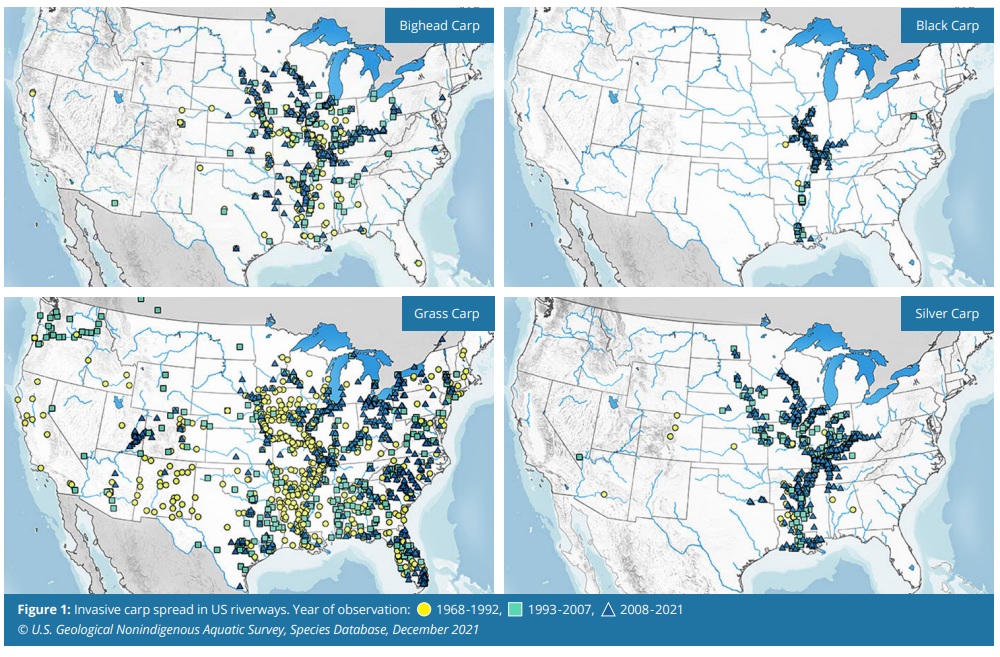
Today, some estimates suggest that carp can make up to 95% of the biomass in parts of the Mississippi and Illinois Rivers. But while carp is a highly nutritious and mild-flavored fish, it is extremely bony, which makes it difficult to cleanly filet for human consumption.
© Keith Arnold / WWF-US
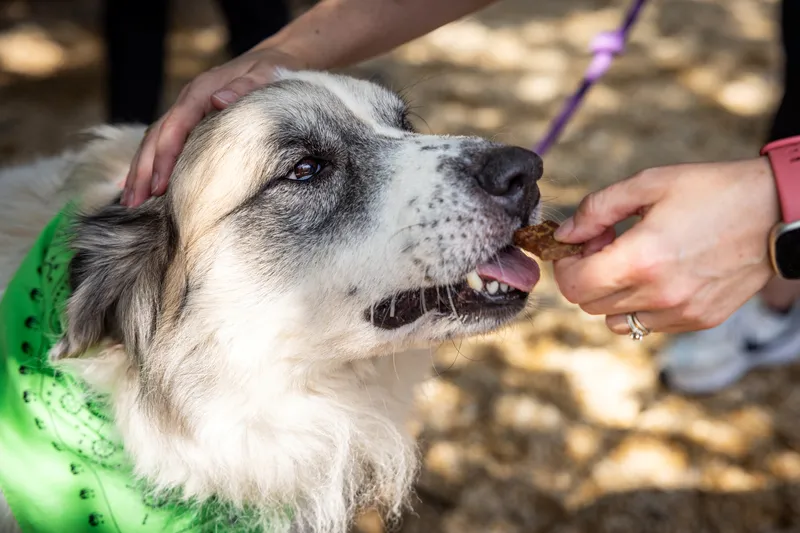
Pet food, however, doesn’t present the same hurdle. With pet food consumption rising faster than the availability of animal byproducts from human consumption, we found carp could fill a need in the pet food supply chain, while at the same time producing tasty treats for cats and dogs.
The most recent phase of our work has focused on the need for processing capacity and securing supply, as well as working closely with a few partners to generate demand for the new carp-based product. One such company, Chippin*, is now moving forward with a processing plant inside a former limestone mine near St. Louis, which is convenient to both a large part of the pet food manufacturing industry and the carp population.
As WWF has explored the potential to build robust pet-food demand for carp, we have found that while markets can be a useful tool in addressing certain invasive species, there can be considerable roadblocks to moving these efforts forward. That’s why we have created a “Market Uses for Invasives’ framework to de-risk market-based solutions to address invasive species. The framework, which is laid out in our new report, “From Pest to Profit,” grounds the work in boosting biodiversity while highlighting some of the market and ecological steps that must be taken to explore the suitability of this approach, avoid unintended consequences, and bring new products to market.
We applied the ecological and business checklist to two species, carp and black locust, a tree invasive to part of the US and other regions around the globe. The analysis examines carp for pet food and black locust for lumber and is meant to showcase, at a very high level, how to use the checklist to consider whether an invasive species can be considered for market uses.
Ultimately, our goal is to support a “market for invasives” ecosystem that lives beyond WWF’s involvement. Invasive species are one of the largest threats to biodiversity, and we are eager to harness market forces to help address this scourge in an economically, environmentally, and socially beneficial way. And to feed some dogs and cats along the way!
*Disclosure: WWF Impact, the impact investing arm of WWF-US, supports investment solutions to solve some of the most pressing environmental challenges facing people and the planet. WWF Impact is invested in Chippin. This investment aligns with WWF Impact’s impact investing mandate and internal governance procedures.