Atlantic Forest, Brazil
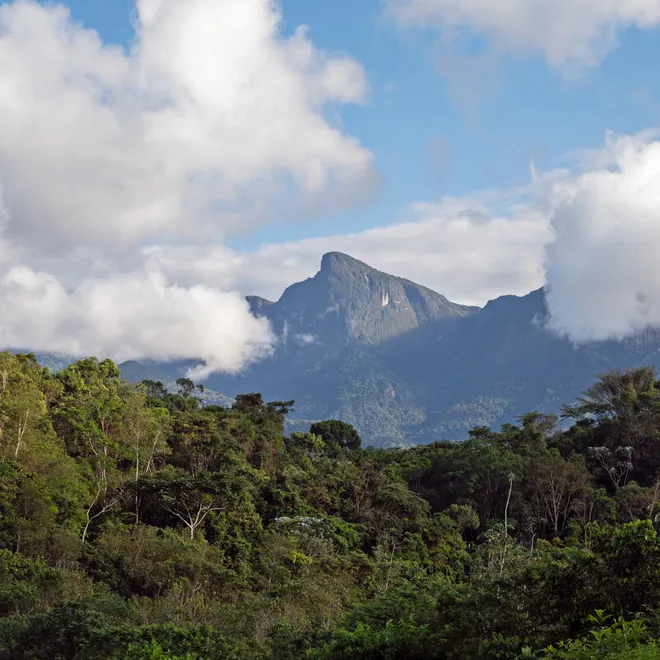
© Adriano Gambarini / WWF-US
Stretching from northeastern Brazil, down along the Atlantic coastline, and inland to eastern Paraguay and northeastern Argentina, the Atlantic Forest is a vital global biodiversity hot spot. Seven percent of the world’s plant species and 5% of its vertebrate species call it home, as well as around 150 million people—a third of South America’s population. The Atlantic Forest sustains one of the world’s largest freshwater reserves and supplies water to more than half of the Brazilian population. The hydropower generated from the Paraná River alone—fed by tributaries rising in the Brazilian Atlantic Forest and flowing south through Argentina and Paraguay—provides electricity for more than 30 million people across the region.
Human activity has destroyed more than 80% of the original vegetation in Brazil’s Atlantic Forest. Once totaling 350 million acres (about 140 million hectares), the forest is now fragmented due to agriculture and urban development. This degradation threatens the forest and its ability to provide wildlife habitat, clean air and climate regulation, soil protection, pollination, food, medicine, and drinking water to the millions of people who rely on it. Today, it is one of the most endangered biomes in the world.
WWF is partnering with diverse stakeholders to expand its efforts in this vital landscape. Together, they are working to restore crucial biodiversity corridors and protect critical species; strengthen governance and capacities for forest landscape restoration; and improve the protection and management of key protected areas. Our work helped secure recognition of the Atlantic Forest as a United Nations World Restoration Flagship—one of only 10 designated globally under the UN Decade on Ecosystem Restoration—and we’re leveraging that recognition to accelerate and scale our impact.
Snapshot
-
7% of Earth's plant species
The Atlantic Forest is one of the planet's biodiversity hot spots, home to 7% of Earth's plant species and 5% of its invertebrate species.
-
One of the largest freshwater reservoirs
This region sustains one of the world’s largest freshwater reservoirs, supplying water to 60% of Brazil’s population.
-
More than 80% of forest destroyed
An endangered biome, more than 80% of the original forest in Brazil has been destroyed by human activity
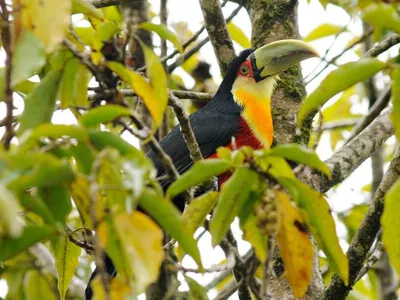
The red-breasted toucan, found throughout the Atlantic Forest, is among its noisiest inhabitants.
© WWF-Brazil / Adriano Gambarini
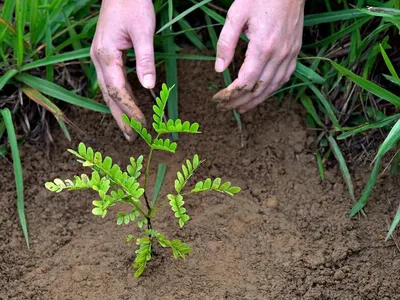
A Brazilwood seedling being planted in the Reserva Ecológica de Guapiaçu (REGUA), located in the Atlantic Forest outside Rio De Janeiro, Brazil. The Brazilwood tree is native to the Atlantic Forest and gave Brazil its name.
© Adriano Gambarini / WWF-US
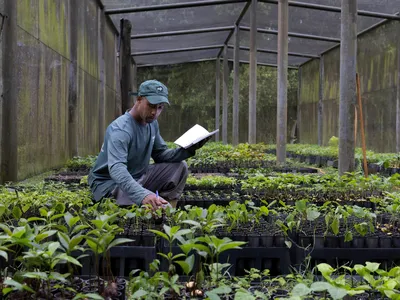
An employee from REGUA—a key local WWF restoration and conservation partner in the Brazilian state of Rio de Janeiro—recording the number of seedlings at the organization’s nursery. These seedlings will be planted to help restore fragmented areas of the Atlantic Forest.
© Jody MacDonald / WWF-US
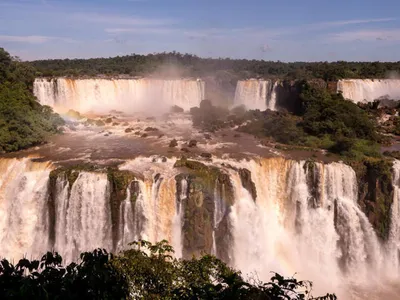
Iguaçu Falls, an Atlantic Forest treasure on the border of Brazil and Argentina, is the largest waterfall system in the world, consisting of a network of 275 waterfalls spanning nearly 3 kilometers wide.
© WWF / Richard Stonehouse
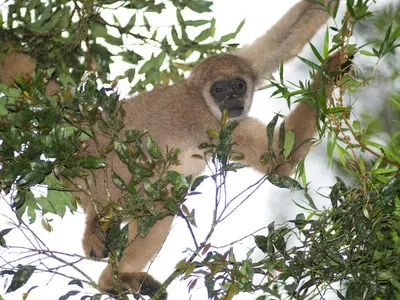
The southern muriqui is a critically endangered species endemic to the Atlantic Forest. Muriquis are essential seed dispersers that help maintain forest biodiversity and ecological balance.
© Adriano GAMBARINI
Featured species
Jaguar
The name jaguar originates from the Tupi and Guarani languages of South America. Derived from the word yaguareté, it means "true, fierce beast" and "he who kills in one leap."

© L-N / Shutterstock