Central Annamites, Viet Nam
© WWF-US / Justin Mott
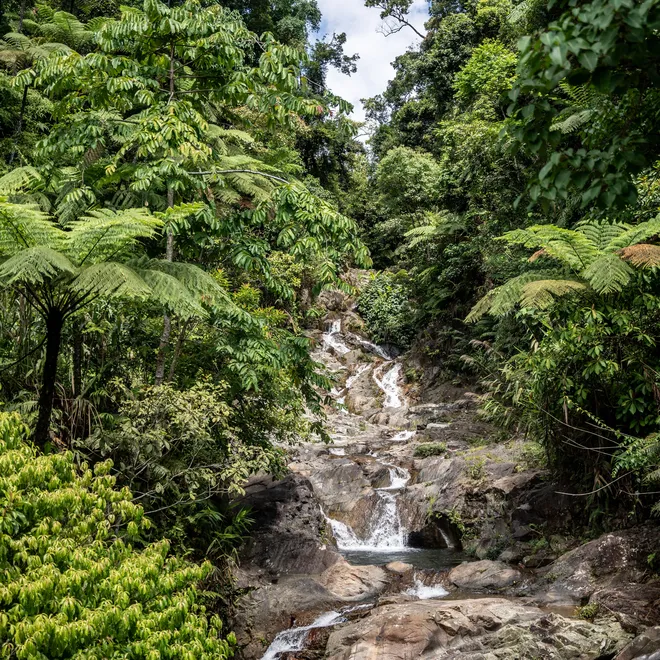
The Central Annamites cover more than 12.8 million acres, making the landscape home to one of mainland Asia’s largest contiguous primary forests. Composed of tropical evergreen forest and subtropical evergreen forest, the region boasts some of the planet’s most spectacular biodiversity, including many rare and endemic species. The ecosystem is also vital to local livelihoods and a significant contributor to the economies of Viet Nam and Laos.
This magnificent landscape faces myriad threats from illegal logging, agricultural expansion, tree plantation expansion, infrastructure development, deforestation, and mining.
WWF’s vision is to restore the region’s forests, increase biodiversity, and build community resilience throughout the Central Annamites. This entails enhancing protection across 747,000 hectares of natural forest and restoring 14,000 hectares. It also involves improving the management of 165,000 hectares of forest in plantations and natural forests owned by smallholders and companies, which would, in turn, improve the livelihoods of those dependent upon forest resources.
Snapshot
-
Home to contiguous forest
The Central Annamites are home to one of the largest and last contiguous forests in continental Asia.
-
134 mammal species
Known as a global biodiversity hot spot, it contains 134 mammal species and over 500 species of birds.
-
Leading producer of global commodoties
Products from this region include rice, timber, rubber, nontimber forest products, and coffee
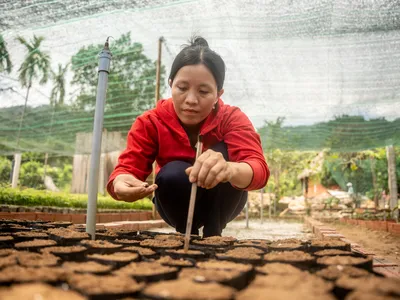
A community member sowing sprouting lim xanh seeds at a nursery garden in Doi Village in the Central Annamites landscape of Viet Nam. Nurseries are critical for building out supply chains for restoration work.
© WWF-US / Justin Mott
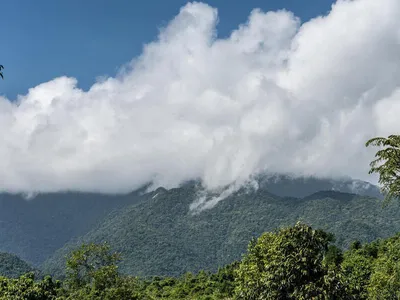
A view of the forest and mountains of Bach Ma National Park, located in Phu Loc, Hue City, Viet Nam.
© WWF-US / Justin Mott
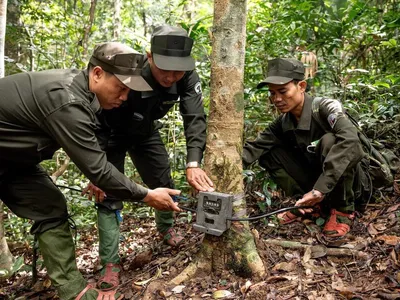
Forest guards setting up camera traps in the Saola Nature Reserve in the Central Annamites landscape of Viet Nam. These traps are essential for monitoring biodiversity, and they can also detect illegal activity in protected or other managed areas. Camera trap surveys help improve the management of protected areas and increase the effectiveness of wildlife conservation.
© WWF-US / Justin Mott
Featured Species
Even though the saola's scientific discovery dates back three decades, we still know very little about this enigmatic mammal from the Central Annamites. Often called the "Asian unicorn," the saola is critically endangered. None exist in captivity, and it has not been observed in the wild since 2013.
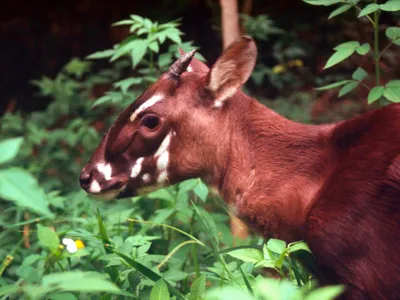
© David Hulse / WWF