Madre de Dios, Peru
© WWF-US / Marlon del Aguila
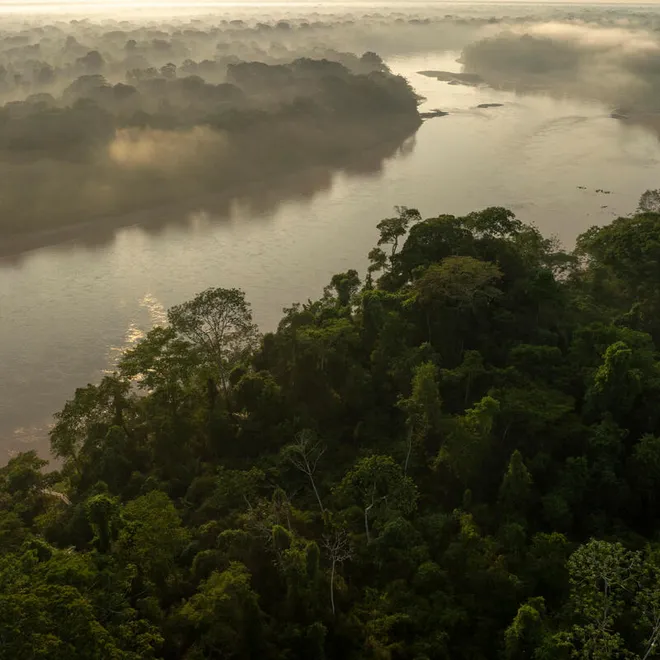
Located in southeastern Peru, the dense forests of Madre de Dios are considered the country’s biodiversity capital, making up 12% of the Peruvian Amazon and spanning 8.5 million hectares. This vast area includes a network of freshwater ecosystems containing many iconic and endangered species. It is also home to 37 native communities from 10 distinct ethnic groups—including Indigenous Peoples in voluntary isolation.
Despite having two-thirds of the territory designated as Natural Protected Areas, other conservation reserves, and forest concessions—including the largest Forest Stewardship Council® (FSC®)-certified managed forest area in Peru—the region is threatened by gold mining, illegal logging, unsustainable planned and unplanned infrastructure, unsustainable forest practices, and agriculture expansion.
Critical interventions here include initiatives to improve sustainable ranching and the management of production forests; restoration to ensure jaguar connectivity across the landscape; and conservation mechanisms such as Peru’s Natural Legacy (Patrimonio Natural del Perú) and other area-based conservation approaches.
Snapshot
-
Home to important reserves
The Tambopata and Manu Biosphere reserves are among the most bird-rich areas on Earth.
-
A critical freshwater source for wildlife and people
This freshwater source supports local ecosystems and downstream regions in the Andes and in coastal cities.
-
37 Indigenous communities
The communities come from 10 distinct ethnic groups.
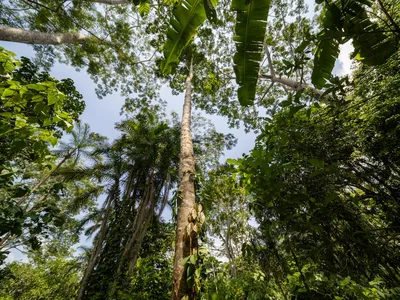
The densely vegetated Amazon rainforest in Madre de Dios, Peru.
© Andrés Murrieta / WWF Perú
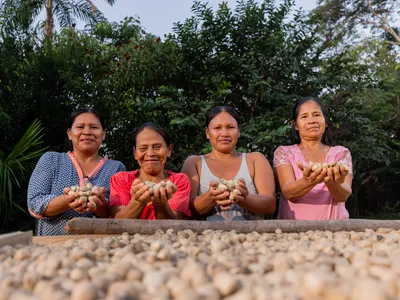
Rainforest seed collection for local nurseries. These nurseries boost deforestation recovery and promote sustainable land management for environmental and community benefits.
© WWF-Peru/Andres Murrieta
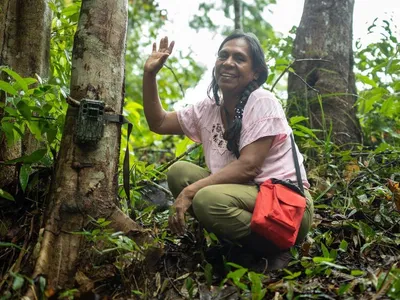
A community representative monitoring wildlife to enhance conservation efforts.
© WWF-Peru/Andres Murrieta
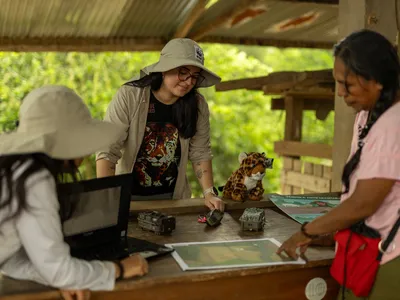
Community representatives and WWF collaborate to reduce human-wildlife conflict and enhance conservation efforts.
© WWF-Peru/Andres Murrieta
Featured species
Often referred to as "river wolves" by local communities, the giant otters found in Madre de Dios are larger cousins of badgers and minks. A top predator, they are known to pop out of the water with bared teeth, snorts, and howls to ward off intruders.

© Shutterstock