Sustainable Agriculture
© WWF-Canon / Simon Rawles
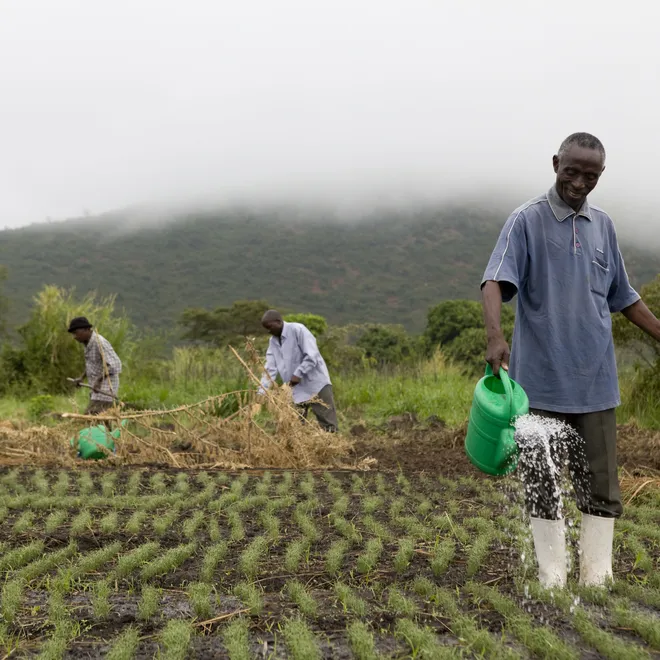
Agriculture is the world's largest industry. It employs more than one billion people and generates over $1.3 trillion dollars worth of food annually. Pasture and cropland occupy around 50 percent of the Earth’s habitable land and provide habitat and food for a multitude of species.
When agricultural operations are sustainably managed, they can preserve and restore critical habitats, help protect watersheds, and improve soil health and water quality. But unsustainable practices have serious impacts on people and the environment.
The need for sustainable resource management is increasingly urgent. Demand for agricultural commodities is rising rapidly as the world's population grows. Agriculture’s deep connections to the world economy, human societies and biodiversity make it one of the most important frontiers for conservation around the globe.
Priority commodities
Why sustainable agriculture matters

© Ola Jennersten / WWF-Sweden
How and where we produce food is one of the most important conservation issues of the 21st century. The challenge of sustaining life on an increasingly crowded planet of more than 7 billion people grows more complicated every day. By the year 2050, our planet will be home to another 2 billion people. How will we feed them all? Not only will there be more people, but everyone will have more money to spend on food.
Impacts on sustainable agriculture

© Sandra Mbanefo Obiago / WWF-Canon
While agricultural operations provide unique opportunities to conserve biodiversity, they also can threaten wild species and spaces. From habitat loss to pollution, agriculture contributes to many of the environmental challenges that WWF actively addresses.
Pollution
Agriculture is the leading source of pollution in many countries. Pesticides, fertilizers and other toxic farm chemicals can poison fresh water, marine ecosystems, air and soil. They also can remain in the environment for generations. Many pesticides are suspected of disrupting the hormonal systems of people and wildlife. Fertilizer run-off impacts waterways and coral reefs.
Poverty
Farming is the only viable livelihood option for three-quarters of the global population living below the poverty line. Subsidies provided by US and European governments to their agriculturalists encourage overproduction, which drives down world prices and forces many producers in developing countries to cut corners environmentally. Producers facing declining harvests from cleared lands expand into surrounding wild lands that are rich in biodiversity, resulting in a cycle of more people living below the poverty line and biodiversity loss.

© WWF-Canon / Simon Rawles
Water consumption
The agricultural sector consumes about 69 percent of the planet's fresh water. Without creative conservation measures in place, agricultural production consumes excessive water and degrades water quality. This adversely impacts freshwater systems throughout the world.
Climate change
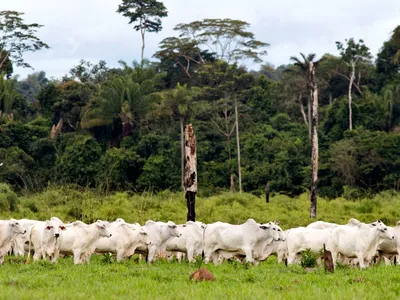
Many farming practices—such as burning fields and using gasoline-powered machinery—are significant contributors to the buildup of greenhouse gases in the atmosphere. The Food and Agriculture Organization of the United Nations (FAO) contends that the livestock sector alone is responsible for 18% of all greenhouse gas production. Additionally, clearing land for agricultural production is a major contributor to climate change, as the carbon stored in intact forests is released when they are cut or burned.
Land conservation
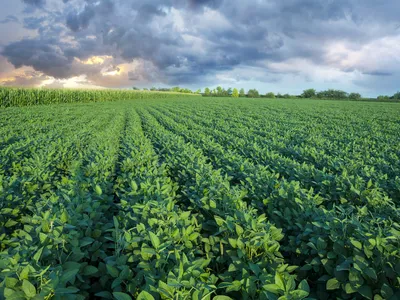
Agricultural expansion is a major driver of deforestation and other ecological destruction, decimating habitats and biodiversity. Oil palm displaces lowland forests in Indonesia while soy production damages the Cerrado and Atlantic Forests of Brazil and Paraguay. Loss of forests and unsustainable farming practices lead to extreme erosion. During the past 150 years, half of all agricultural topsoil has been lost.
How WWF is taking action for sustainable agriculture

© Brent Stirton / Getty Images / WWF-UK
WWF identifies and implements better management practices for agriculture. We create financial incentives to encourage biodiversity conservation, improve agricultural policies, and identify new income opportunities for producers. When agricultural operations are sustainably managed, they can preserve and restore critical habitats, help protect watersheds, and improve soil health and water quality. WWF works in collaboration with a wide range of players to:
- Convene multi-stakeholder roundtables that define and measurably reduce the impacts of growing priority commodities
- Identify and implement better management practices that protect the environment and producers' bottom line
- Create financial incentives to encourage biodiversity conservation
- Improve agricultural policies
- Identify new income opportunities to ensure producers’ economic viability