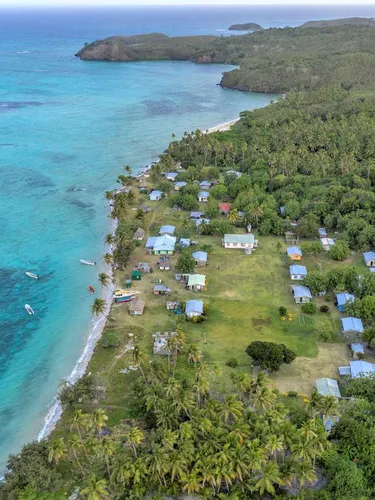
© Tom Vierus / WWF-US
The Bezos Earth Fund & WWF
Investment in community and climate
Nature underpins human health, and climate is critical to maintaining our planet’s balance. As the global climate warms at an accelerated pace, it threatens to break the natural systems that provide us with food and water and nurture our well-being. Yet, if protected, these same systems can be a vital part of the climate solution. The Bezos Earth Fund has awarded World Wildlife Fund (WWF) $100 million to harness the power of nature to stabilize the impacts of climate change. WWF is profoundly grateful for this transformational investment and the impact this commitment will have on millions of people around the world.
The grant funds three areas of work

© Tom Vierus / WWF-US
Protecting and restoring mangroves

© Harold Bjørgvin/ Ocean Rainforest
Developing new markets for seaweed

© César David Martinez
Protecting forests and other ecosystems
To deliver on global climate goals, we must cut emissions in half by 2030; this will require extraordinary financial support to test new approaches and scale proven solutions. The Bezos Earth Fund’s commitment sends an important signal to other institutions about the urgency of this issue. WWF is honored to partner with grantees, governments, communities, and others to accelerate climate solutions.
Areas of work
This grant will help WWF protect and restore mangroves, which store carbon and protect coastal communities from the ravages of climate-accelerated weather events. It will also enable WWF to develop new markets for seaweed as an alternative to fossil fuel-based products and to protect forests and other ecosystems from destruction in some of the most important landscapes in the world.
These projects aim to deliver substantial emissions reductions, conserve nature in areas greater than the state of California, and improve the resilience of more than 14 million people around the world. Support from the Bezos Earth Fund will allow WWF to leverage an additional $850 million, magnifying the impact of this work.
Mangroves for community and climate
Mangroves—nature’s thin green line between land and sea—store three to four times more carbon per hectare than tropical forests, and they protect coastal communities from storm surges. WWF will increase conservation and restoration of these coastal forests through a combination of protecting standing mangroves and replanting efforts in Colombia, Madagascar, Fiji, and Mexico. We will work with local communities to ensure our efforts increase economic opportunity, improve health and food and water security, and build resilience in the face of extreme weather and rising seas.
Projected Impact
Protect and restore 1 million hectares of mangroves, safeguarding 1.8 billion metric tons of carbon (CO2eq) and improving climate resilience for 300,000 people annually living in vulnerable coastal areas.

© WWF-US / Keith Arnold
The seaweed solution
Seaweed farming has the potential to revolutionize how we think of food security, ocean health, and climate mitigation. Through this initiative, we will drive increases in seaweed demand and supply for animal feed, proteins, and biodegradable bioplastics, resulting in significant greenhouse gas reductions. This work sets the stage for groundbreaking work on deep-sea sequestration, which could change the trajectory of climate mitigation.
Projected impact
Seaweed farming has the potential to revolutionize how we think of food security, ocean health, and climate mitigation. Through this initiative, we will drive increases in seaweed demand and supply for animal feed, proteins, and biodegradable bioplastics, resulting in significant greenhouse gas reductions. This work sets the stage for groundbreaking work on deep-sea sequestration, which could change the trajectory of climate mitigation.

© COURTESY OF OCEAN RAINFOREST
Learn more
Safeguarding nature to stabilize climate
Protected areas are one of the greatest tools we have to stabilize planetary warming by halting deforestation and increasing sustainable land use. Yet limited political will, insufficient financing, and inadequate recognition of Indigenous Peoples are accelerating the loss of nature. We will ensure protection of critical ecosystems in the Amazon, Africa, and Central America. We will work with communities in and around the areas we protect to help them prepare for climate change impacts and reduce threats to nature.
Projected Impact
Ensure enduring protection of 53 million hectares of critical ecosystems, safeguarding 11.3 billion metric tons of carbon (CO2) and improving the welfare of 14.2 million people by keeping intact those ecosystems that protect people from floods and other catastrophes, reducing their vulnerability to climate change.