Law Enforcement and Criminal Justice
Law enforcement agencies monitor and enforce laws that protect landscapes, seascapes, and the species that inhabit them. Corruption in law enforcement or the criminal justice system enables violators to circumvent these laws and regulations and makes enforcement-based approaches much less reliable as avenues for limiting and preventing environmental harms.
This page provides information, guidance, and tools for practitioners to assess impacts of corruption and to design and implement informed programming. The contents outline how corruption risk assessment and capacity building, transparency, traceability and technology, case and court monitoring, reporting and whistleblowing mechanisms, and private-sector and community collaboration can be leveraged to strengthen the integrity and effectiveness of law enforcement and the criminal justice system.
Inside the Topic
Read the Guide
- 1. How enforcement supports conservation objectives
- 2. Applying a corruption lens to conservation enforcement
- 3. Anti-corruption and law enforcement: What can practitioners do?
- 3.1 Supporting enforcement agencies
- 3.2 Fostering transparency, accountability, and monitoring
- 3.3 Leveraging technologies
- 3.4 Exploring whistleblowing and other reporting options
- 3.5 Engaging the private sector
Resources
Tools for Conservation Programming
- Designing social norms and behavior change interventions: Guidance resources for conservation practitioners
- Integrating anti-corruption into law enforcement approaches
- How-to Guide: Strengthening internal controls to prevent corruption in illegal wildlife trade enforcement
- Guide to conducting corruption risk assessments in a wildlife law enforcement context
- Preventing and Combating Corruption as it Relates to Crimes that Have an Impact on the Environment
Research Papers & Issue Analysis
- Pathways for targeting renewable resource corruption: A summary of evidence
- Internal controls and illegal wildlife trade: A systemic approach to corruption prevention and law enforcement integrity
- Monitoring wildlife crime cases: A possible approach to reduce corruption in the justice system?
- How political economy analysis can support corruption risk assessments to strengthen law enforcement against wildlife crimes
- Tracking the trade: Increasing efficiency and transparency in Tanzania's timber sector
- Open secrets: Corruption in Free Trade and Special Economic Zones as an enabler for illegal wildlife trade
- Where are the weakest links in the illegal wildlife trade enforcement chain? Lessons from corruption risk assessments with agencies in three countries
- On the case: Identifying corruption by reviewing wildlife crime court cases in southern Africa
- Targeting Profit: Non-Conviction Based Forfeiture in Environmental Crime
- Corrupting conservation: Assessing how corruption impacts ranger work
- Whistleblower Protection: An Essential Tool for Addressing Corruption that Threatens the World’s Forests, Fisheries and Wildlife
- The conservation-corruption conundrum: Understanding everyday relationships between rangers and communities
- Targeting corruption and its proceeds: Why we should mainstream an anti-corruption perspective into “follow the money” approaches to natural resource crime
- Strengthening Rule of Law Approaches to Address Organized Crime
- Understanding effects of corruption on law enforcement and environmental crime
- Illegal Logging, Fishing and Wildlife Trade: The Costs and How to Combat It
Place-Specific Resources
- Convergence of wildlife crime and other forms of transnational organized crime in Eastern and Southern Africa
- Colombian fisheries and aquaculture sector: Overview of corruption
- Sand Mafias: Environmental Harm, Corruption and Economic Impacts
- Corruption and criminality behind biodiversity loss in Colombia’s forests: Wildlife trafficking
- Organized Crime, Conflict, and Fragility: Assessing Relationships Through a Review of USAID Programs
- Countering Wildlife Trafficking through Tanzania’s Seaports
Expert Insights
- Mainstreaming anti-corruption in conservation: Dispelling myths and charting a path forward
- What shapes anti-corruption success and failure in renewable resource sectors?
- Environmental corruption: Building bridges across conservation and anti-corruption practice to stop environmental corruption from the ground up
- Can strengthening internal controls prevent corruption behind natural resource crimes?
- Her story: Women targeting natural resource corruption | Nicola Okes
- Making financial investigations into environmental crimes the norm
- Using political economy analysis to support corruption risk assessments that strengthen law enforcement against wildlife crime
- Lessons from the field: Assessing corruption risks that undermine law enforcement action against natural resource crimes
- Can Women Rangers Help Decrease Corruption Rates?
- Podcast: Rangers at the frontline of corruption and anti-corruption
- Whistleblower protection: A tool for stopping corruption that threatens the world’s forests, fisheries and wildlife
- Following the Money in Illicit Wildlife Trade
Where to Start
Building Anti-Corruption into Conservation Work
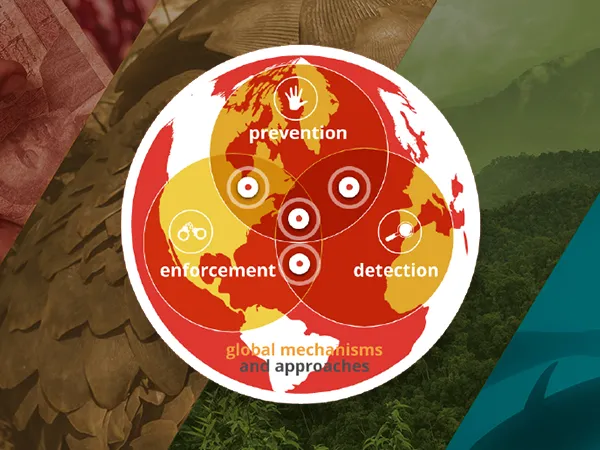
Locate your conservation challenge and follow three steps to understand forms of corruption that impact conservation outcomes, analyze your situation, and identify programming approaches that could improve results.
© WWF
This content is made possible by the generous support of the American people through the United States Agency for International Development (USAID). The contents are the responsibility of World Wildlife Fund (WWF) and do not necessarily reflect the views of USAID, the United States Government, or individual TNRC consortium members.