The US Endangered Species Act
Protecting at-risk animals and plants from extinction
© Leanne Scherp
© George Walsh
Strengthen the Endangered Species Act
More than 99% of the species listed under the Endangered Species Act have avoided extinction due to the law’s protections. Today, those protections are under threat — at the exact moment wildlife needs them most.
The US Endangered Species Act (ESA) is our nation’s most effective law to protect at-risk species from extinction, with a stellar success rate: 99% of species listed on it have avoided extinction.
Passed with bipartisan support on Dec. 28, 1973, the law allows individuals and organizations to petition to have a species listed as endangered or threatened. These listing petitions undergo rigorous scientific evaluation and public review before a final decision is made on whether a species should be protected. The law requires protection for critical habitat areas and the development and implementation of recovery plans for listed species. It also allows for flexibility in its implementation, requiring coordination among federal, state, tribal, and local officials on efforts to prevent extinction.
Endangered Species Day
Endangered Species Day is celebrated every year on the third Friday in May, encouraging people to learn about and take action to help endangered species. WWF highlights endangered wildlife every day, working to build awareness and partnerships with local communities, governments, businesses, and the rest of the world to take action to protect them.
Populations are monitored over time to determine whether a given species is recovering. When species are considered recovered, they are removed from the list. Viewed as the gold standard for conservation legislation, the ESA is one of the world's most effective laws for preventing and reversing the decline of endangered and threatened wildlife. In 2016, more listed species were found to be partially or completely recovered than in any previous year since the ESA became law.
The rebound of a species is a gradual process that requires a long-term commitment dependent on many factors, such as habitat, food availability, reproduction rate, and climate. The longer a species remains listed, the more likely it is to be recovering.
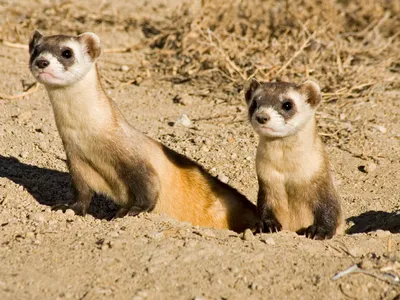
Black-footed ferret
Year listed: 1967
Status: Endangered, recovering
Black-footed ferrets declined to the brink of extinction due loss of habitat and prey. They depend on prairie dogs and their burrows for food and shelter, and prairie dog numbers decreased with conversion of native prairie to cropland, poisoning, and disease. The ESA enabled the establishment of captive breeding programs and reintroduction of black-footed ferrets to facilitate recovery. There are now close to 400 individuals in the wild.
© naturepl.com / Shattil & Rozinski / WWF
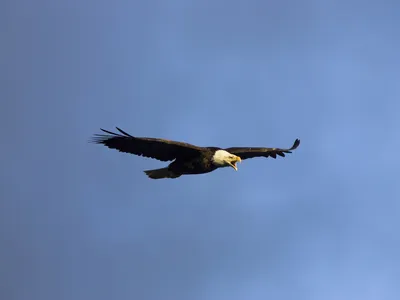
Bald eagle
Year listed: 1967
Status: Recovered, delisted in 2007
In 1973, bald eagles were one of the first species listed on the ESA, as pesticides, trophy hunting, and habitat destruction decimated their population to around 400 breeding pairs. Their listing helped accelerate a ban on the pesticide DDT and led to habitat protection and captive breeding efforts. Bald eagle populations in the contiguous US have increased to more than 10,000 breeding pairs.
© Scott Dickerson / WWF-US
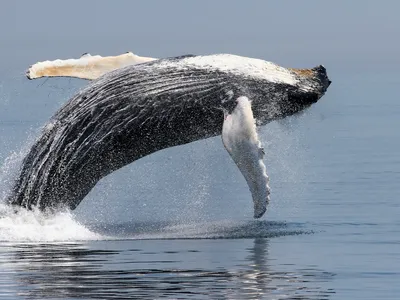
Humpback whale
Year listed: 1970
Status: Nine populations recovered and delisted in 2016
Commercial whaling decimated most humpback whale populations before they were listed on the ESA. After significant effort to reduce present-day threats of fisheries bycatch and ship strikes, there are now more than 60,000 individuals, and nine of the 14 distinct populations are considered recovered and have been delisted.
© Amy Kennedy / NOAA
The ESA and foreign species
The ESA also supports the conservation of listed species outside of the US and is the law through which the US enforces the Convention on International Trade in Endangered Species (CITES). CITES is a global agreement between governments to follow rules to monitor, regulate, or ban international trade in species under threat and is a key tool in the fight against the illegal wildlife trade.
Foreign wildlife protected by the ESA receives benefits such as prohibition or regulation of their live or harvested trade across US borders, limitations on commercial activity that would affect their habitat, and increased funding for their conservation. The US is the world’s second-largest consumer market for wildlife and this law helps ensure that US citizens do not contribute to the decline of foreign endangered species. Because of its proven success, the ESA is used in many countries as a model to develop similar conservation legislation.
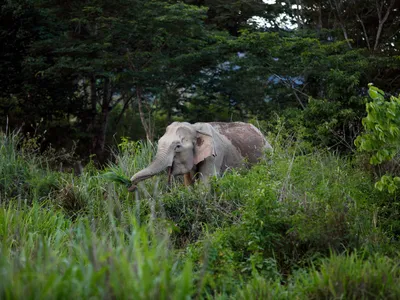
Asian elephant
Year listed: 1976
Status: Endangered
Asian elephant populations have long suffered from poaching for illegal trade in ivory and other body parts, and they face significant pressures from habitat fragmentation and conflict with humans. The endangered listing of Asian elephants under the ESA banned the trade of their ivory in the US. Despite these ongoing threats, extinction has thus far been prevented.
© Luke Duggleby / WWF-US
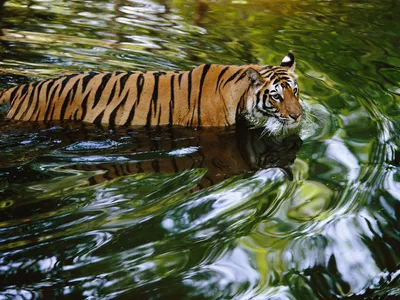
Tiger
Year listed: 1970
Status: Endangered, recovering
Tigers are classified as endangered due to poaching, conflict with humans, and habitat destruction. Focused conservation efforts have begun to pay off, and in 2016, WWF announced that the population of wild tigers had increased for the first time in decades. Today, as few as 3,890 tigers remain in the wild, up from an estimated 3,200 in 2010.
© Theo Allofs/WWF-US

Giant panda
Year listed: 1984
Status: Endangered, recovering
Driven nearly to extinction by habitat loss and poaching, giant pandas are beginning to recover, with an estimated 1,800 remaining in the wild. The ESA requires that fees paid by US zoos for pandas on loan from China contribute to the recovery of pandas in the wild. This has resulted in millions of dollars being invested in successful panda conservation efforts.
© naturepl.com / LYNN M. STONE / WWF