Bearded dragon
Pogona vitticeps
The risk associated with keeping this species as a pet is low. Bearded dragons are suitable pets if well cared for, but you can learn more below to check if it is a suitable pet for you.
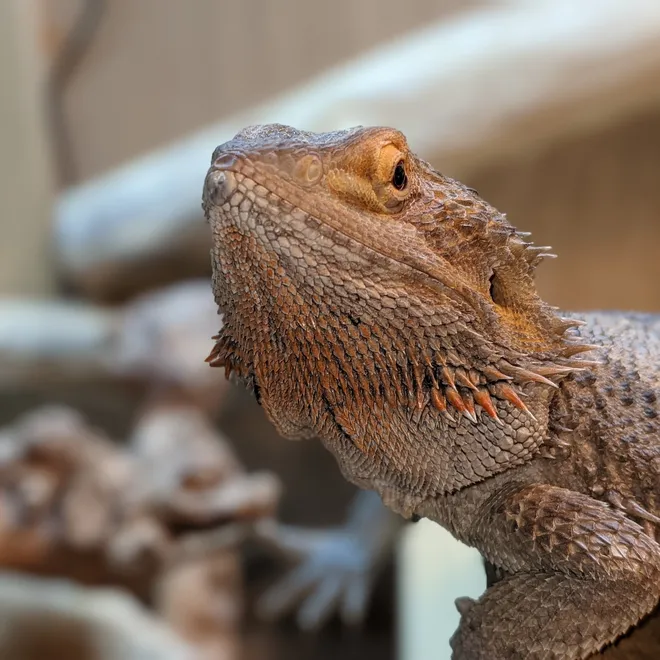
© Wikimedia Commons/Dan Scott
Assessment results
Low risk

Conservation | Low risk
This animal is most likely not threatened by extinction, and/or the exotic pet trade does not impact the wild population. Please check that the animal you want comes from a reputable seller or rescue center that follows best practices when they source their animals.

Legality | Low risk
This animal is not currently protected by any national laws or import restrictions. Exotic pet ownership, however, is regulated at the state, county, or city level, so check your jurisdiction to see if you can own it.

Human and public health | Moderate risk
It is likely that this animal is a potential threat to human or public health, either due to potential zoonotic diseases or due to physical attributes that can harm humans. Learn more about animal-related illness and injuries.

Invasiveness | Low risk
This species would not likely impact native biodiversity or habitats. However, never release a pet into the wild for any reason.

Animal welfare | Moderate risk
Care, diet, and housing needs of this species are either insufficiently known or difficult, making it hard to ensure it has a good quality of life for its lifetime. Learn more about the challenges with exotic pet welfare.
⚠️ Important considerations
- Most reptiles carry salmonella in their intestinal tract and may not be suitable for young children or immunocompromised individuals. Always practice good hygiene and hand washing around bearded dragons.
- Bearded dragons are relatively easy to care for, but their housing and diet needs require additional knowledge and effort. Proper temperature gradients (77 degrees F on the cool side to 90 degrees F on the warm side with a hot basking spot of around 100 degrees F, with no drop below 75 degrees F at night) in the tank, humidity levels, and exposure to UV light consistent with a day-night cycle are important for good health. They are prone to metabolic bone disease without UV light exposure and enough calcium and vitamin D3. They are also susceptible to respiratory infections and digestive issues from certain insects in their diet. Substrate used in their environment is important and should not be something they could ingest.
- Ensure you have access to a veterinarian that specializes in reptiles and consult them about proper habitat setup, diet, and care. Find a reptile vet near you.
Basic information
Taxonomy:
Squamata, Agamidae
Lifespan:
6-10 years
Weight:
10-18 oz (283- 510 g)
Size:
18-24 in (45-60 cm) long
Native range and habitat:
Warm arid areas of Australia
Diet:
Omnivores that eat insects and smaller animals, along with plants; in captivity, gut-loaded live insects covered in calcium/vitamin D supplement should be fed 3-4 times a week (the insects should not be longer than the distance between their eyes), and a salad should be fed daily (70-80% salad greens, 20-30% vegetables, 2-5% fruit).
Activity and behavior:
- Have many different poses and behaviors with different meanings to communicate, such as arm waving to show species recognition or fear
- Active during the day (diurnal) and semi-arboreal (tree-dwelling), so like to perch off the group
- Solitary animals that should not be housed together
© WWF-Japan