© _
The Galápagos
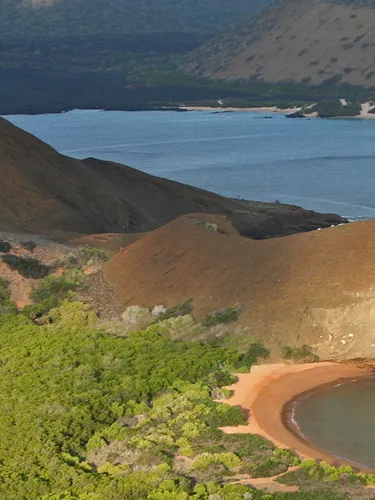
Six hundred miles off the coast of Ecuador lie the volcanic islands of the Galápagos, famous for a wealth of unique plants and animals found nowhere else in the world.
The Galápagos Islands were the source of Darwin’s theory of evolution and remain a priceless living laboratory for scientists today.
Illegal fishing, non-native species and the demands of more than 160,000 tourists each year threaten this irreplaceable ecosystem and the people who depend on it for their food and livelihoods. WWF spearheaded conservation efforts in the Galápagos, including funding the construction of the Charles Darwin Research Station. For more than 50 years we have played an integral role in protecting nature in the Galápagos and with our partners we continue our ambitious conservation work which is critical to every human, plant and animal on the islands.
In 1998, the Ecuadorian government enacted the Galápagos Special Law, a legal framework to protect the Galápagos, and created the Galápagos Marine Reserve. WWF supported its establishment and continues to be involved in the management process that helps the reserve succeed.
Wildlife of the Galápagos

© Michel Terrettaz / WWF-Canon
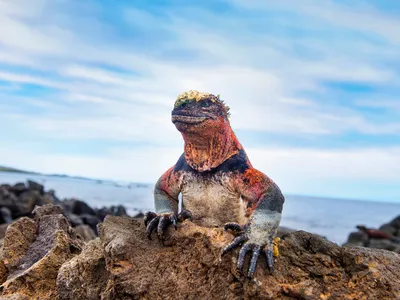
Marine iguanas
Marine iguanas are the world’s only oceangoing lizard. They are also only found in the Galápagos, where they can be seen resting on the rocky shores.
© Antonio Busiello / WWF-US
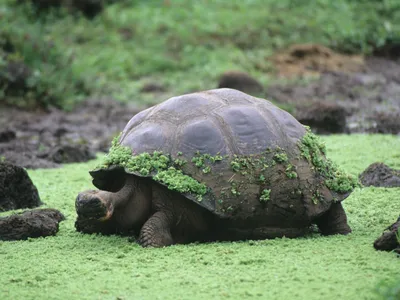
Giant tortoises
The giant tortoise is an iconic species from the Galápagos and is only found on these islands. They are the largest living tortoise in the world.
© Steve Morello / WWF-US
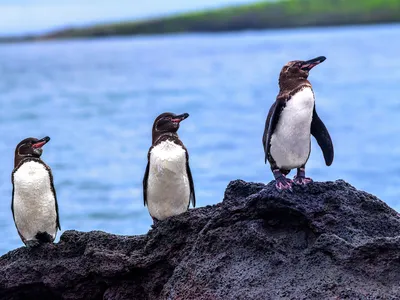
Galápagos penguins
This is the only penguin species found north of the equator and in the Galápagos.
© Chris McCann / WWF-US
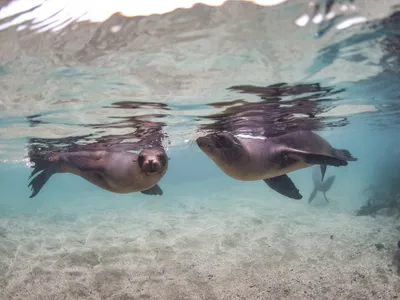
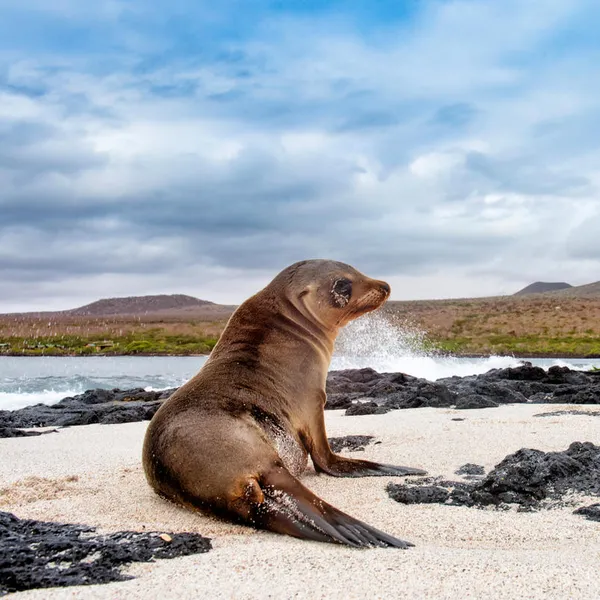
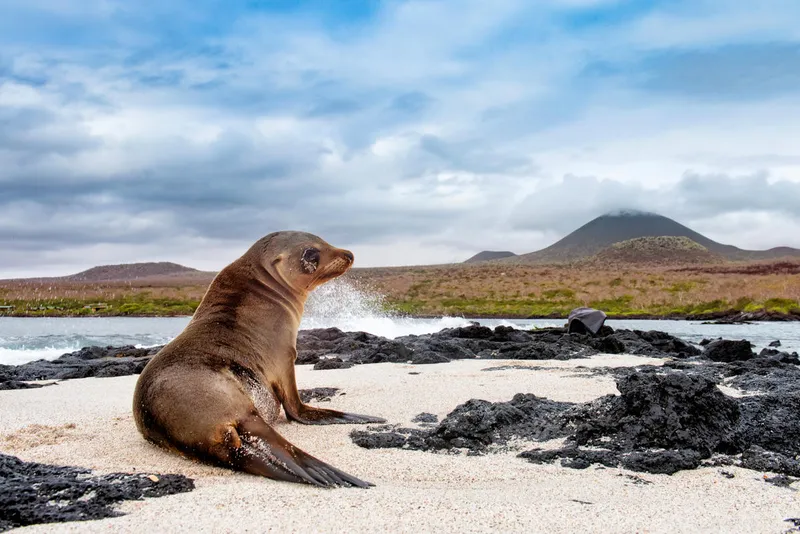
Sea lions
The sea lion is the most common mammal in the Galápagos.
© Antonio Busiello / WWF-US
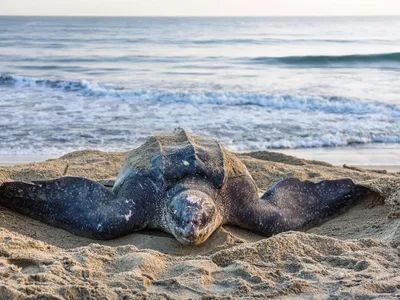
Leatherback turtles
Leatherback turtles consume large numbers of jellyfish which helps to keep populations of these marine organisms in check
© naturepl.com / Konrad Wothe / WWF
People and communities of the Galápagos

© Antonio Busiello / WWF-US
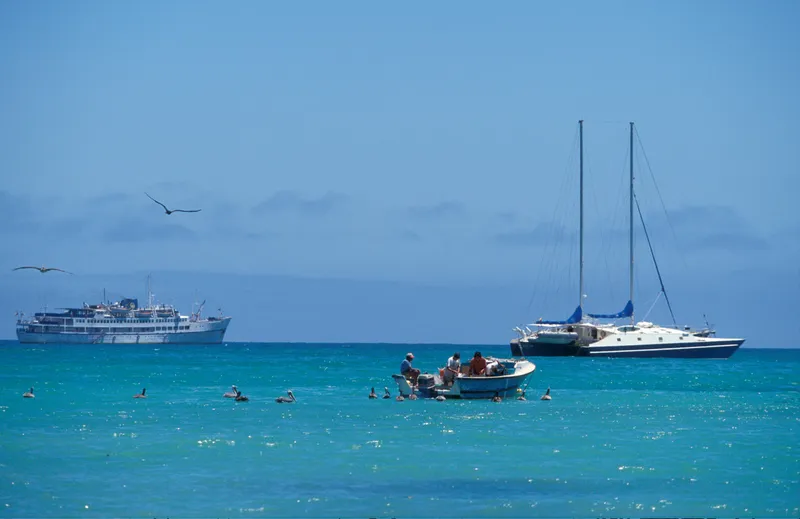
The islands were discovered in 1535, but were vacant of humans until the 1800s due to their inhospitable terrain. In the 1920s, European and North American settlers began to arrive, as well as Ecuadorians who came to fish and farm. Beginning in the 1960s, tourism and new fisheries brought more settlers. Along with these new economic activities, more and more people migrated to the islands. The Galápagos’ population has increased from roughly 3,000 in the 1960s to about 30,000 in 2012. Four of the islands are inhabited, with most people living on Santa Cruz and San Cristóbal. The nature of the Galápagos provides livelihoods based on tourism, fisheries, and commerce.
© Antonio Busiello / WWF-US
Helping artisanal fishers
The intense competition to catch lobster in the Galápagos drives fishers to pour their money into new vessels and gear. It also leads them to work under risky and dangerous conditions as they dive deeper for longer amounts of time in order to maintain or increase their catch rates. As a result, the number of fishers with decompression sickness has alarmingly increased over the last decade. WWF tries to relieve this dangerous competition among fishers (also allowing lobster stocks to recover) and increase incomes by promoting the commercialization of live lobster instead of tails—worth twice as much on the market.
© Antonio Busiello / WWF-US
Conservation training
Since 2007, WWF has been awarding scholarships to outstanding Galápagos students to pursue training in environmental management, tourism and business administration. Training the next generation of conservation leaders is important for the long-term conservation of the Galápagos Islands. This scholarship project builds upon other WWF education-centered activities that improve the educational system in the Galápagos.
The Galápagos under threat

© Pablo Corral / WWF-Canon
Illegal and overfishing
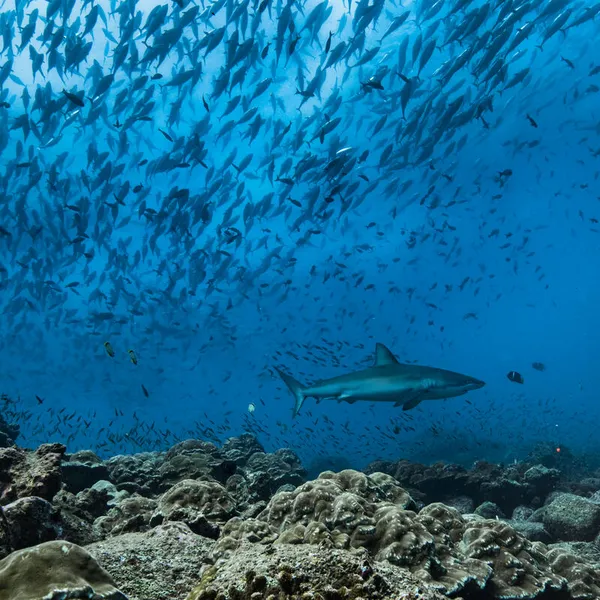
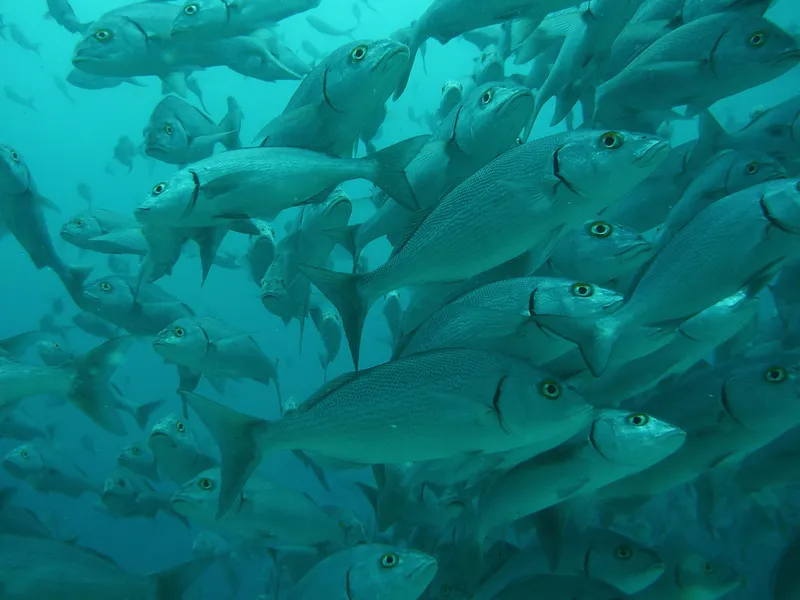
The Galápagos Marine Reserve is one of the largest marine protected areas in the world, which makes monitoring and patrolling expensive and challenging. Its rich diversity of marine life also makes it attractive to illegal fishing interests. Overfishing and illegal industrial fishing are serious threats to the islands’ delicate marine ecosystem. They deplete commercial fish, destroy marine environments, and harm local communities whose livelihoods and health depend on fish. Almost all of the Galápagos’ commercially important coastal species are being overfished. WWF addresses the root causes by supporting the Galápagos National Park to improve the control and surveillance system of the Galápagos Marine Reserve. We also promote an artisanal fishing culture that embraces sustainable fishing practices and maximizes catch while minimizing environmental impacts.
Unsustainable tourism
Worldwide fame has turned the Galápagos Islands into one of the most popular tourist destinations. Increased visitors as well as rapid human development bring higher demand for imported goods and fossil fuels, introduction of invasive species, and more demand for qualified labor (which comes primarily from mainland Ecuador), migration, and infrastructure needs. Increasing human pressure on the fragile archipelago becomes a potential threat to conservation and local sustainable development.
Pollution
Increased generation of waste and improper waste management continue to threaten the land and waters of the Galápagos. These threats relate directly to a large number of inhabitants and tourists and to new consumption patterns and lifestyles. Litter and poorly managed waste easily becomes marine debris which affects the fragile marine ecosystem and even the coasts of uninhabited islands. An unknown number of animals are killed every year when they become entangled in pieces of string or plastic bags, or consume floating trash.
WWF is taking action to protect the Galápagos
© Pablo Corral / WWF-Canon
Innovative fisheries management
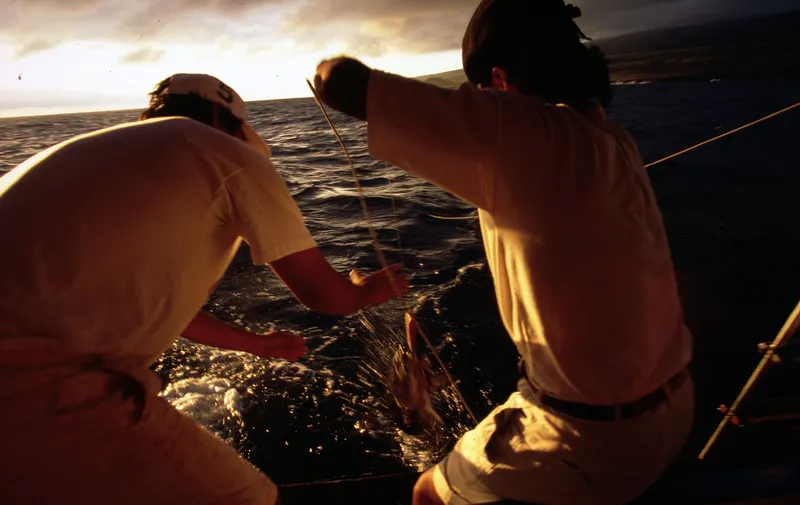
WWF works with the lobster fishing communities in the Galápagos Islands to embrace sustainable practices and to promote a new fishing rights-based approach. This would encourage fishermen to catch quality products rather than large volumes and eliminate the intense competition, overfishing and dangerous conditions that happen as a result. We also promote a transition to live lobster rather than tails and pilot live lobster tanks to supply local restaurants. This switch would increase lobsters’ market value and income for fishermen.
© Carlos Drews / WWF-Canon
Improved monitoring of the Galápagos Marine Reserve
In the past, the Galápagos National Park struggled to enforce the law that protects the reserve from harmful fishing activity. Park managers were faced with high operating costs and inadequate resources to patrol the large marine reserve. WWF, together with key partners, has helped create more efficient ways to monitor vessels in the marine reserve, using the latest technology such as satellite, radio and radars. Such systems have been very effective at detecting illegal fishing activities and minimizing the risk of vessel accidents, which could lead to oil spills. We also support training of park wardens on these technologies to better equip them to handle such threats against the Reserve’s natural resources.
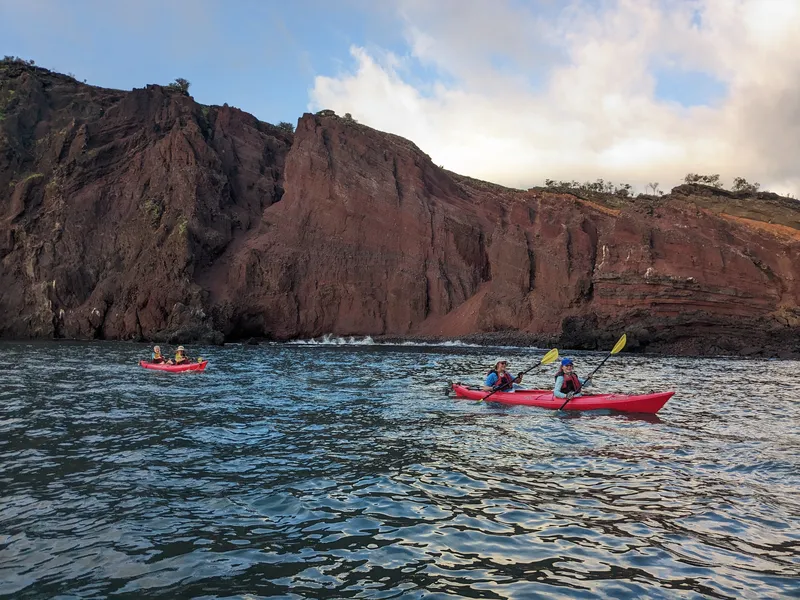
© Lorin Hancock / WWF-US
Implementing ecotourism
WWF wants to ensure that tourism in Galápagos becomes a tool for conservation and sustainable development. We help the Galápagos to design and implement a new ecotourism-based model to both support conservation and improve people’s livelihoods through collaboration with partners, governments and communities. WWF was a key player during a three-year process to develop the model, which includes improving local governance, designing new ecotourism activities, promoting an ecotourism-oriented culture and monitoring the impact of the tourism sector. We are also working on reducing the ecological footprint caused by the industry and visitors.