Publications
-
In July 2020, WWF published a collection of stories that showcased WWF‚'s ongoing commitment to inclusive conservation.
Here, you‚'ll find an update to that publication, which features stories from the past year that highlight WWF‚'s collaborative approach to conservation. Each story speaks to how WWF‚'s work is grounded in the benefits nature provides to people and the role of communities as stewards of their own land and water. It includes stories featured in World Wildlife magazine between November 2020 and August 2021.
-
To align with the Paris agreement, the aviation sector is required to reduce average carbon intensity by ~35-40% between 2019-2035, or ~65% from 2019-2050. This provides specific guidance on how airlines and users of aviation services should set targets to meet these goals.
-
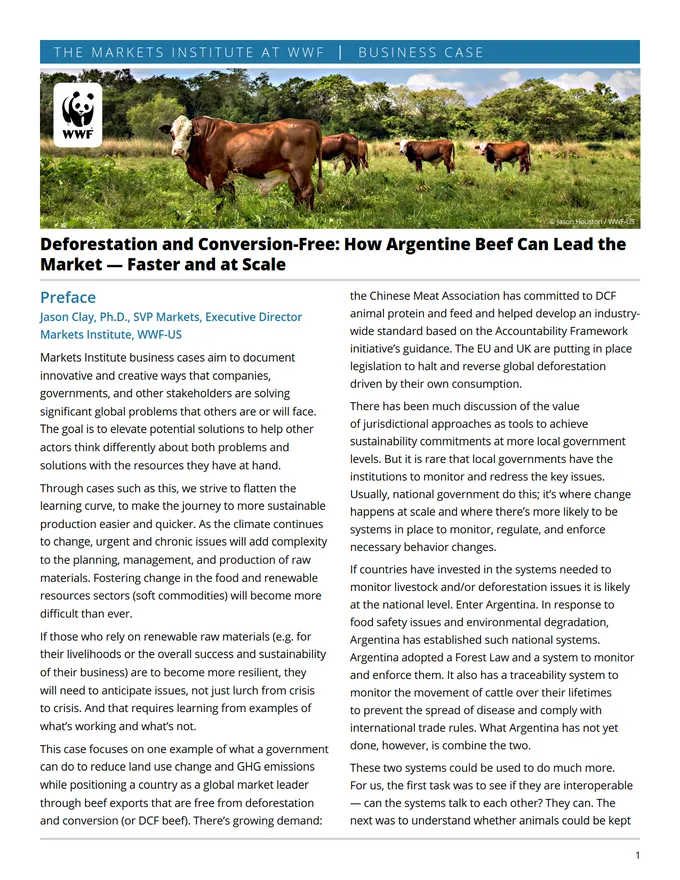
In this Markets Institute business case Fundacion Vida Silvestre Argentina, WWF, and BCG explored what it would take for Argentina to make the transition to DCF beef exports, considering demand, supply, traceability, and other factors.
-
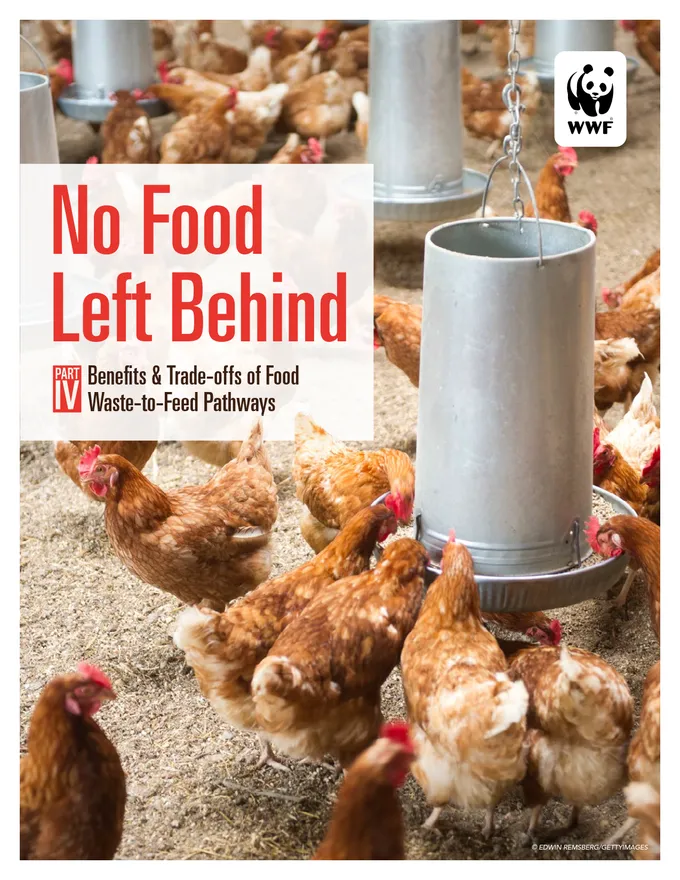
As part of its No Food Left Behind series , WWF, in partnership with Quantis, Penn State University, and with support and data sharing from several other farms, universities, and retailers, explored three different pathways of transforming food waste into feed for egg-laying hens and compared them to standard feed production.
The purpose of the research is to examine the environmental impacts, benefits, and tradeoffs of how more waste would get turned into livestock feed to create more circular food systems.
Please contact Leigh Prezkop for more information.
-
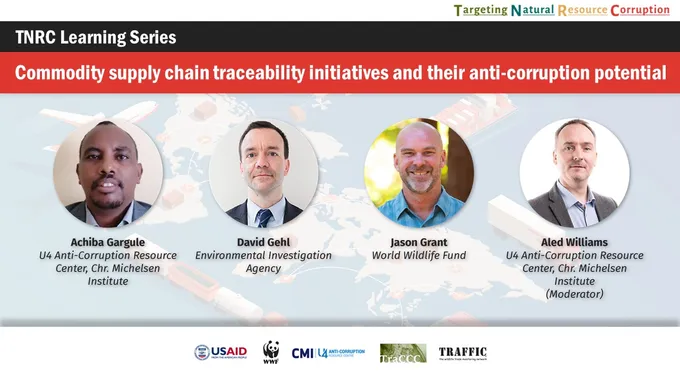
This presentation deck is rom a TNRC Learning Series Webinar on 18 June 2021 on commodity supply chain traceability initiatives and their anti-corruption potential. This webinar addressed the following learning questions: 1. Which forms of corruption and associated crimes in the wildlife, timber and/or seafood sectors could traceability systems address, and which forms might they not? 2. What are the strengths and weaknesses of traceability systems at their current stage of evolution, and what are their major limitations for addressing corruption? 3. How could traceability systems, and supporting approaches, mature to better accomplish anti-corruption objectives? 4. What actions could NRM practitioners and others take to help traceability initiatives become more effective as anti-corruption tools in the future?
---
This content is made possible by the generous support of the American people through the United States Agency for International Development (USAID). The contents are the responsibility of World Wildlife Fund (WWF) and do not necessarily reflect the views of USAID, the United States Government, or individual TNRC consortium members.
-
Human-wildlife conflict is when encounters between humans and wildlife lead to negative results, such as loss of property, livelihoods, and even life. Defensive and retaliatory killing may eventually drive these species to extinction. Not only is human-wildlife conflict one of the greatest threats to some of the world‚'s most iconic species, but according to this report, A Future for All: The need for human-wildlife coexistence, it is just as much a development and humanitarian issue as it is a conservation concern.
The report explains the complexity of human-wildlife conflict and its underlying drivers; illustrates the direct impacts of human-wildlife conflict at various levels; highlights the need for more attention to this subject; describes ways to address it by unlocking solutions and moving towards coexistence, and provides an outlook on the future of coexistence between people and wildlife. It also calls on the global community to recognize HWC as a worldwide threat not just to wildlife and communities, but to various other sectors, and develop holistic and integrated measures that can be scaled up to minimize and manage HWC and enable coexistence. Achieving this will require collective and collaborative action from the international community, regional and national governments, companies, donor agencies, civil society organizations, people and communities, researchers, and individuals to co-create and implement context-specific solutions at scale.
-
With your support, we are protecting some of the world's most vulnerable species, from tigers and elephants to polar bears and bison. Through this work, we are also supporting the people who rely on natural resources for economic survival and helping communities protect and advocate for these magnificent creatures.
-
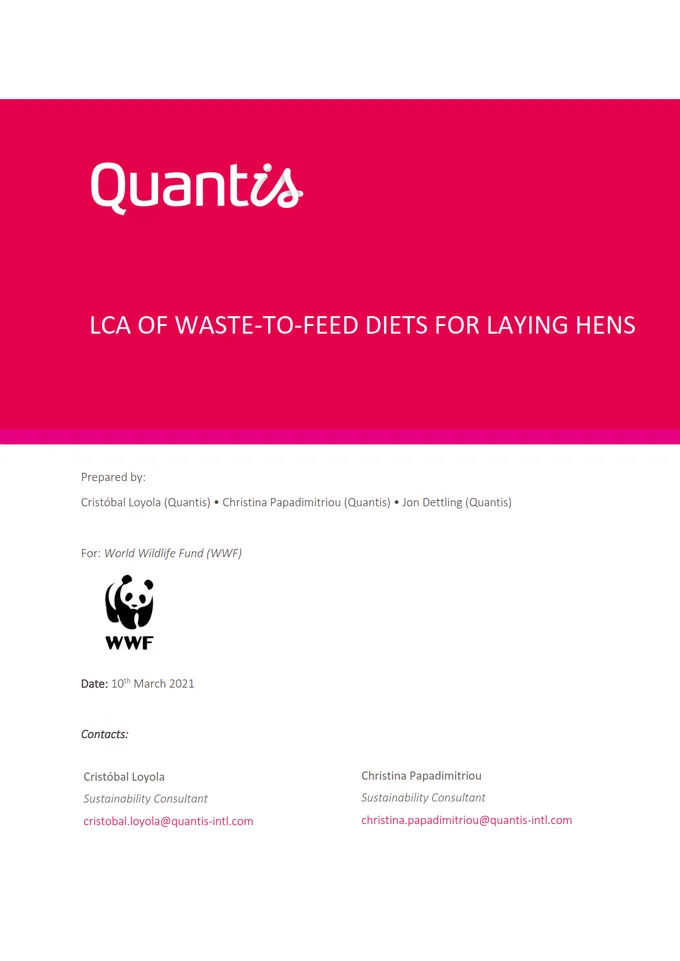
Feeding animals with food waste is an age-old practice that could have potential environmental benefits. With improved efficiency of animal feed production, and a large range of potential food waste possibilities, however, understanding these benefits requires further work.
This study is a life cycle assessment (LCA) of US laying hens‚' nutrition with incorporated feed derived from processed produce or bakery food waste. Its goal is to identify to which degree the replacement of conventional feed ingredients in hens‚' diet with alternative ones derived from food waste provides environmental benefits.
-
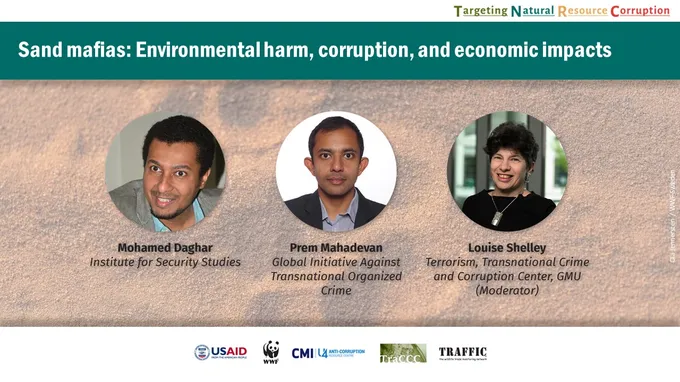
This presentation is from a TNRC virtual panel on June 14, 2021 in which speakers from Kenya and India discussed an understudied, yet environmentally devastating trend: the unsustainable mining of river sand, facilitated by corruption, that feeds the global construction boom while destroying habitats and livelihoods and fueling conflict.
---
This content is made possible by the generous support of the American people through the United States Agency for International Development (USAID). The contents are the responsibility of World Wildlife Fund (WWF) and do not necessarily reflect the views of USAID, the United States Government, or individual TNRC consortium members.
-
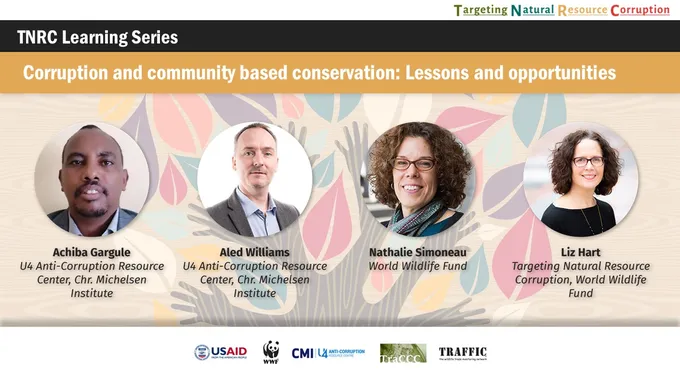
This presentation deck is from a TNRC Learning Series Webinar on 21 May 2021 on Corruption & community-based conservation: Lessons and opportunities.
---
This content is made possible by the generous support of the American people through the United States Agency for International Development (USAID). The contents are the responsibility of World Wildlife Fund (WWF) and do not necessarily reflect the views of USAID, the United States Government, or individual TNRC consortium members.