Publications
-
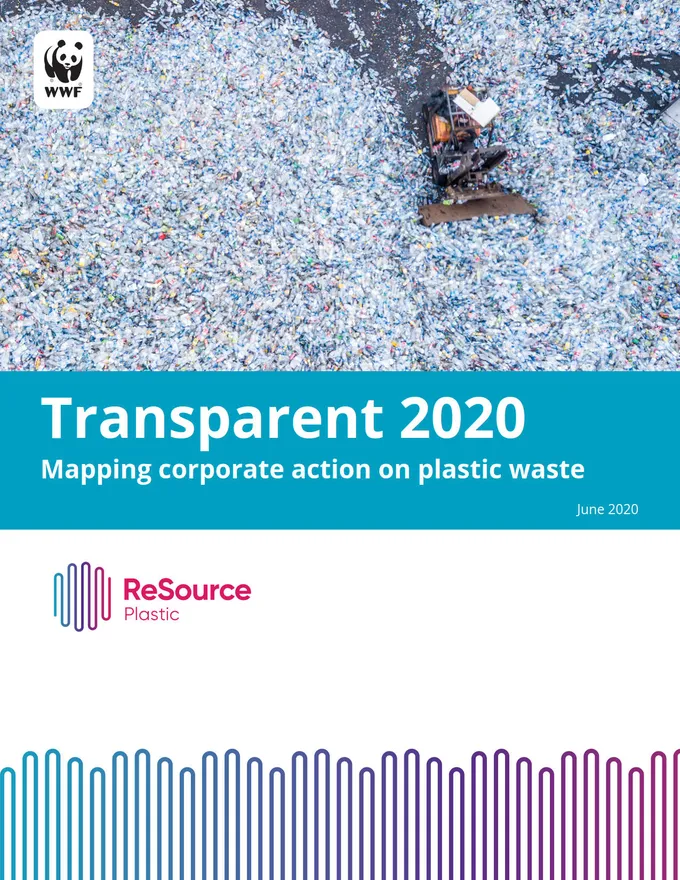
WWF has established a vision of No Plastic in Nature by 2030 and imagines a world where our resources are never wasted. ReSource: Plastic leverages the power of business to achieve this vision. In its inaugural year, ReSource: Plastic worked with five Principal Members (Keurig Dr Pepper, McDonald's Corporation, Procter & Gamble, Starbucks, and The Coca-Cola Company) as well as Thought Partners (The Ellen MacArthur Foundation and Ocean Conservancy) to establish a baseline of plastic use. This report presents key findings related to the ReSource Principal Members' global plastic footprints in 2018.
-
WWF has established a response network to respond to Australia's bushfires. Mobilizing funds raised, we are working to address needs with urgency and at the scale required.
-
WWF has established a response network to respond to Australia's bushfires. Mobilizing funds raised, we are working to address needs with urgency and at the scale required.
-
Phase 1: Definition of criteria for assessing the quality of carbon credits
Companies should first work to meet their Science-Based Targets, but investing in carbon credits can be an effective complimentary climate strategy. World Wildlife Fund and our partners have authored a paper that contains our recommended criteria for assessing the quality of carbon credits. It is to be the basis for the "Carbon Credit Guidance for Buyers", an upcoming guide to help carbon credit buyers navigate the complicated landscape of the carbon market and identify high-quality carbon credits. This document may be used as a high-level starter for current and potential carbon credit buyers in advance of the full guide's release.
-
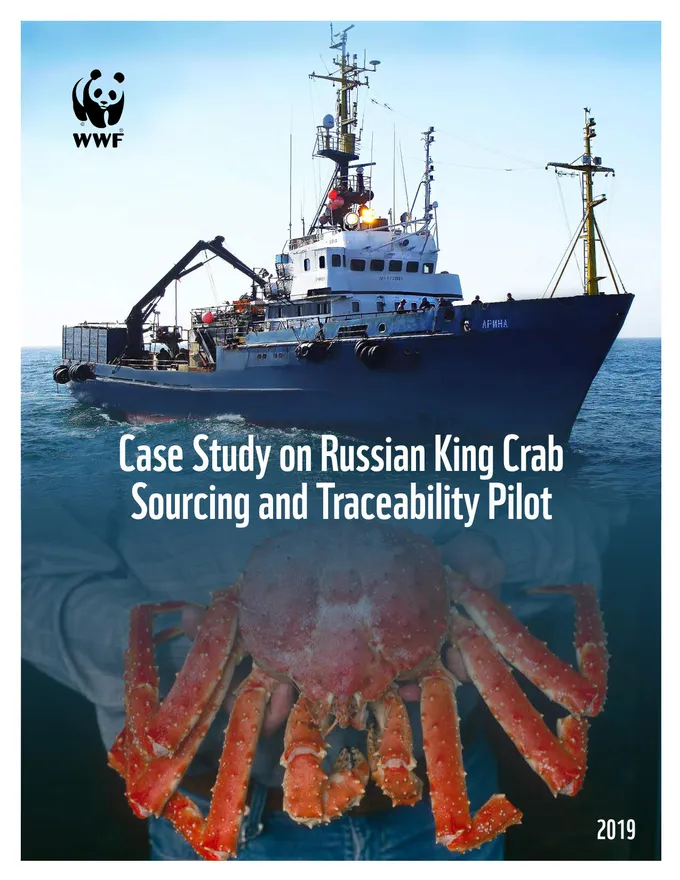
Ending illegal, unreported, and unregulated (IUU) fishing remains one of the most urgent priorities for achieving healthy ocean ecosystems and protecting the welfare of hundreds of millions of people around the world who depend on fishing for their livelihoods and food security. This case study, focused on the Russian King Crab fishery and brought forward through a collaboration between WWF and Orca Bay Foods, LLC, demonstrates that the application of some basic tools can substantially reduce the risk of "IUU infection" even in a relatively complex and multinational supply chain.
-
This Innovation Analysis from The Markets Institute at WWF examines the environmental impact of various systems of indoor soilless farming. These systems include hydroponics, aquaponics, and aeroponics in greenhouse and vertical settings.
At scale, this method of farming - also known as controlled environment agriculture - could have positive effects for the environment by decreasing pressures on land, biodiversity, natural habitat, and climate. However, the industry also faces hurdles that prevent it from moving beyond its current specialization in high-end leafy greens. This Analysis looks at how we might address some of these challenges and help bring these systems to scale.Updated 3/13/23 with a correction to graphs on page 19.

-
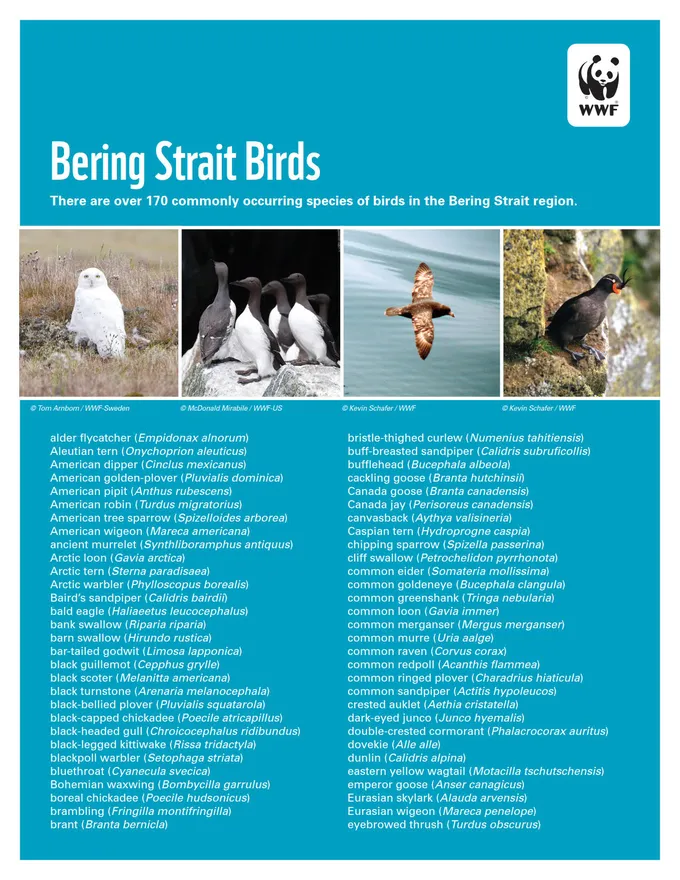
There are over 170 commonly occurring species of birds in the Bering Strait region.
-
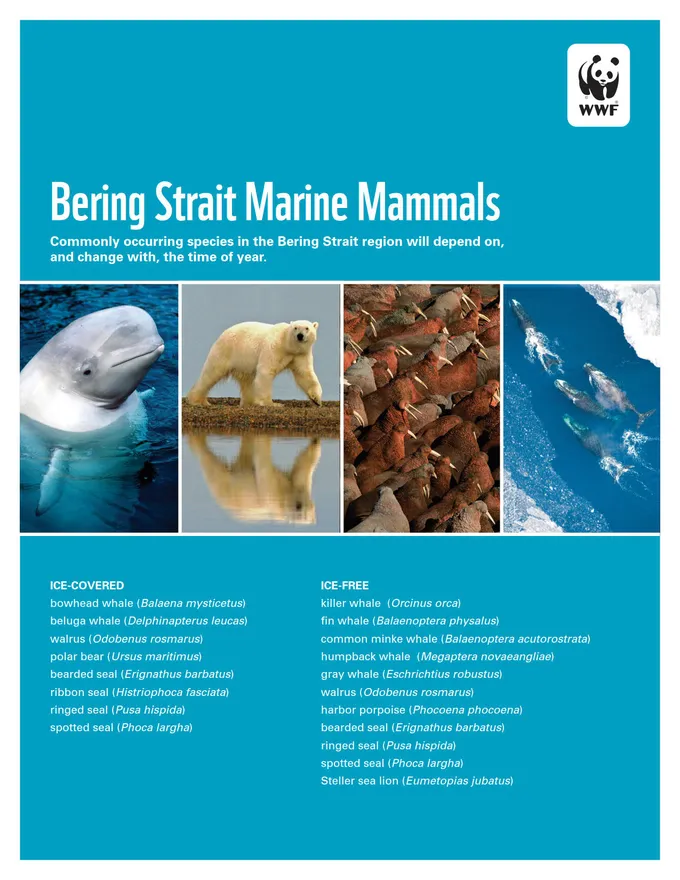
Commonly occurring species in the Bering Strait region will depend on, and change with, the time of year
-
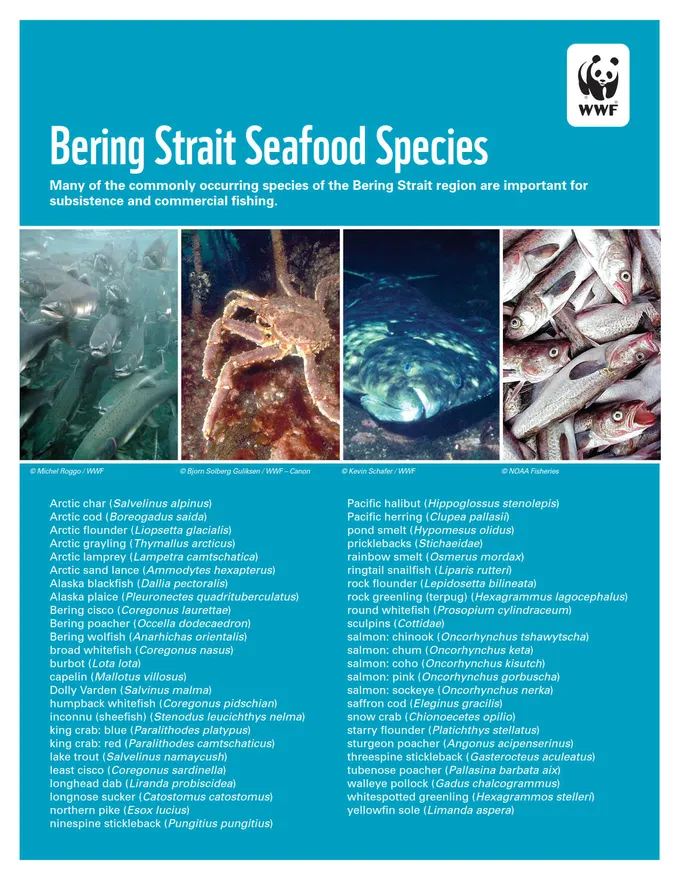
Many of the commonly occurring species of the Bering Strait region are important for subsistence and commercial fishing.
-
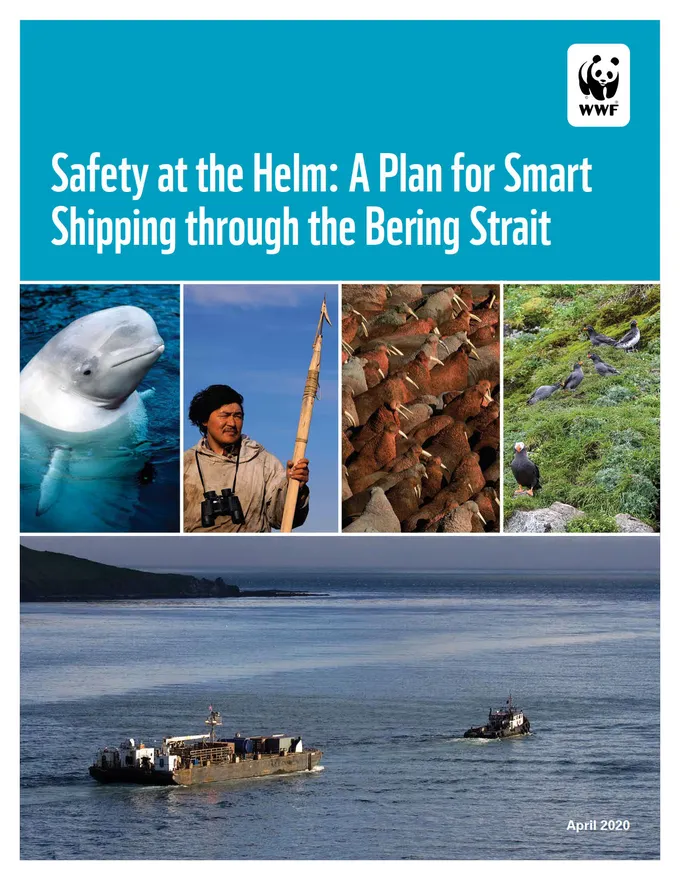
The Bering Strait, a waterway between the United States and Russia, is a marine wildlife "super highway" that supports amazing animals, from beluga whales to spectacled eiders and king salmon. As warming temperatures melt Arctic sea ice, increasing commercial ship traffic through the Strait is adding stress and risk of accidents to an already rapidly shifting environment.
WWF has five recommended actions that the United States should take to protect the Bering Strait.
- Share information in real-time
Knowledge is power, and real-time information can protect people and nature. Expanding implementation of digital navigation technology on ships can aid response to accidents, prevent movement through protected areas, and keep Indigenous communities informed. One of the most valuable knowledge-sharing tools is an Automated Information System (AIS) that can track position, speed, and the course of ships. This technology increases compliance and is vital to enforcing the following four recommendations. It can also be used to share up-to-date and real-time information about hazards, weather, wildlife, local boats, and other data relevant to maritime safety. - Improve traffic management
Shipping and cruise traffic in the region have almost doubled in the last 10 years as summer sea ice melts. That much traffic needs organizing. The US should adopt a modern, internationally accepted sea traffic management process for the Strait in coordination with Russia. A sea traffic coordination center would track ships and ensure they are safely passing through the area in designated two-way routes. Dynamic protection of the environment, regular monitoring of ships and wildlife, and minimized conflict with subsistence hunters will all improve with management, and officials can update crews in real-time with current news on all movement through the region. - Protect wildlife and indigenous communities
The Bering Strait is one of WWF's highest Arctic conservation priorities. The US government needs to work with coastal communities and conservation groups in Alaska, as well as key entities in Russia, to establish Areas to be Avoided, especially around the islands of Big and Little Diomede, located in the center of the Strait and split between the US and Russia. These islands have especially sensitive ecological and indigenous value. As the Bering Strait region rapidly warms, flexible protected areas will also be needed to protect wildlife as they move throughout their changing environment. - Create area-specific industry practices
As ship traffic increases, so can wildlife injury or boat collisions, and the discharge of sewage, garbage, and grey water, resulting in major damage to the environment. Rules for ships regarding speed, discharge, and designated routes need to be put in place and made specific to this area to ensure safety for all. These measures also need to be flexible to account for real-time changes in the environment. The industry can act quickly and introduce simple solutions like slow speed limits, which will give whales in the area more time to react and move away from ships, allow ships to move away from each other, reduce noise pollution, and make ships more fuel efficient. - Avoid and be prepared for disasters and emergencies
Alaskans have learned from experience the long-lasting damage an oil spill can have on natural and human communities. Even today, the impacts of the Exxon Valdez oil spill of 1989 are still being felt. The Bering Strait can’t take an Exxon Valdez-size spill when the environment is already increasingly stressed from climate change. Above all, the most important step is to implement accident prevention measures. At the same time, the US needs to improve its domestic capabilities, as well as develop a plan for strong emergency prevention and response in collaboration with Russia, so that both countries can work together to respond to spills and collisions rapidly and efficiently.
Now is the time to work with all stakeholders to implement these recommendations and protect one of the Arctic’s most biologically productive environments and vital migratory corridors. By collaborating around the Arctic Circle and embracing safety measures and technology, we can keep the region as stable as possible for as long as possible.
To foster engagement and collaboration, WWF is running US-Russia Science Corners throughout 2021:
- Within the 2021 Alaska Marine Science Symposium in January, a WWF session was organized for Russian and American researchers to present the variety of their work across the Strait, available to watch back in English and Russian.
- In April, a webinar was hosted with the Alaska Ocean Observing System that brought together Russian and Alaskan ornithologists to discuss studying and observing bird life in the Bering Sea, Chukchi Sea, and Arctic Ocean. The webinar is available to watch back in both English and Russian.
Learn more about the wildlife that live in the Bering Strait and WWF’s full shipping recommendations through the PDFs below.
- Share information in real-time