Publications
-
WWF-Mongolia, with support from the ALIGN Project, contributed to the recent passage of a new national standard for railway and highway barrier fences in Mongolia. The standard will reduce the risk of hundreds of species being caught in barbed fences and keep these fences from restricting wildlife movement.
View a roundup of media coverage on the standard.
-
The ALIGN project in Nepal collaborated with Radio Sagarmatha to produce four episodes on the need for natural resource safeguards in LI development. The radio program series was produced to raise awareness, provide correct and relevant information to a wide audience. The program was titled "Digo Bikash ra Prakritik Shrot ko Samrakshyan" (Sustainable Development and Natural Resource safeguarding) and provided information on Nepal‚'s wildlife-friendly infrastructure directives to the audiences.
-
During early 2024, WWF conducted a second annual assessment of 42 asset managers‚' approaches to addressing environmental and social (E&S) risks in seafood-related investments. The objective of this research was to understand if and how investors are improving the way they manage these risks in their seafood portfolios, and where, specifically, additional support may be needed most. This report highlights key findings from this assessment, compares the results against last year‚'s baseline to monitor progress, provides actionable recommendations for asset managers, and directs readers to practical resources to guide next steps.
Overall, this year's assessment found that an increasing number of asset managers are taking action to manage E&S risks related to nature and biodiversity loss, with some specifically starting to address these risks within the seafood sector. Of the 42 asset managers assessed this year, 13 (31%) demonstrated minor or moderate improvements against last year‚'s baseline. However, more progress is needed to ensure that asset managers‚' policies sufficiently prevent and manage their exposure to E&S risks, particularly as they relate to the seafood sector. Consistent with last year, our analysis found that only one of the 42 assessed asset managers has yet developed and publicly disclosed seafood-specific E&S expectations for its investee companies.
-
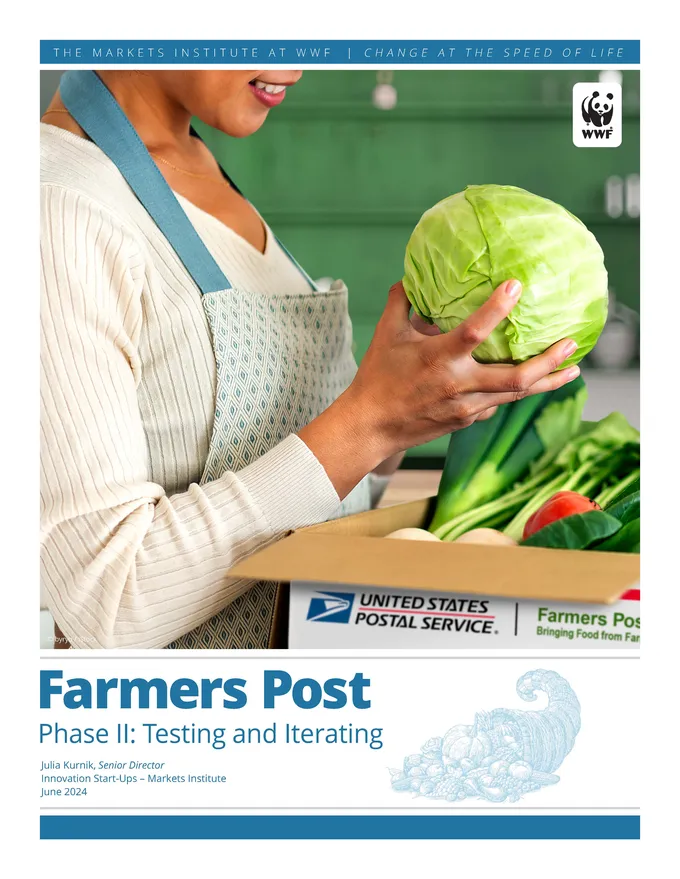
California dominates commercial agriculture production in the US, growing more than two-thirds of fruits and nuts and nearly half of all vegetables, but this is increasingly unsustainable. As the climate continues to change, some food production will need to shift.
WWF has been working to build a sustainable and equitable commercial-level specialty crop industry in the Mid-Mississippi Delta (western Tennessee, northwestern Mississippi, and eastern Arkansas) to ease the pressure on California, avoid land conversion (transforming natural ecosystems to farmland) elsewhere in the country, and create an equitable engine of growth in the Delta region.
The Phase I report examined the major opportunities and hurdles of such a shift in the Delta. This Phase II report outlines all work on the project to date, providing context on farming in the region today and a vision for the future. It candidly discusses potential challenges to and unintended consequences of large-scale implementation. The report also explores proven successes of innovative business and finance models, and opportunities to break into large markets, concluding with next steps for Phase III of the project.
To learn more, visit our Next California project page.
-
Your enduring commitment as a member of WWF‚'s Legacy Circle is helping to ensure there is a future for the world‚'s wildlife‚ – from bison in the US Northern Great Plains, to jaguars in South America, to elephants across Angola, Botswana, Namibia, Zambia, and Zimbabwe. In recognition of your support, this report details how we are making important progress for vulnerable species around the world, from Africa to the Arctic.
-
World Wildlife Fund (WWF) has developed‚ – alongside the Consumer Goods Forum, World Resources Institute, WRAP-UK, Lyncros, and others‚ – a new, simplified Global Farm Loss Tool (GFLT) for growers of all sizes and crop types to easily measure and manage on-farm food losses. In doing so, the GFLT helps growers understand and communicate what is being left behind in-field or at further stages (processing, storage, etc.) and why. It also helps them partner with their buyers to develop new channels and solutions to sell more of what they grow. Over time, collecting better data can improve growers‚' profitability, get more of what is produced to people as it was intended, and reduce the footprint of food.
-
Dr. Ridhima Solanki, team member from the ALIGN Project in India, presented at a seminar titled "__Quality of DPR and Construction of Highway Projects__" organized by the Consulting Engineers Association of India (CEAI), an apex body of consulting engineers in India. The seminar took place on January 9‚Äì10, 2024, in New Delhi. It was supported by the Ministry of Road Transport and Highways (MoRTH), National Highways Builders Federation, and Indian Road Congress. Dr. Solanki presented ecological considerations to make while preparing a detailed project report (DPR) and discussed the ALIGN Project‚'s perspective and vision to help raise awareness of wildlife-friendly linear infrastructure among engineers.
-
WWF-Nepal organized a visit to India for government officials from Nepal in December 2023. The delegates visited several important sites in Haridwar and Dehradun and interacted with experts and officials from India. They also observed sites with successful examples of wildlife-friendly infrastructure and safeguard measures. This was the second visit of this kind, after the first visit to the same site by federal-level stakeholders in August 2023.
The visit‚'s main objective was to facilitate cross-learning, best practices sharing, and field observation to broaden and enhance participants‚' knowledge and understanding of natural resource safeguards in linear infrastructure. Fifteen government officials from federal and provincial ministries related to forestry, environment, physical infrastructure development, and province policy and planning commissions participated in the visit.
-
What if you could leverage the structure of a business to embed sustainability and worker equity into a company‚'s DNA? One way some companies have sought to improve worker equity is through different forms of employee ownership, such as employee stock ownership plans, worker cooperatives, or Perpetual Purpose Trusts.
This business case explains these different business structures and discusses the advantages and disadvantages of each.