Publications
-
This new Policy Brief discusses the political economy of a green recovery in Ukraine. It analyses how corruption might inhibit green, equitable and sustainable reconstruction in Ukraine, the drivers of this corruption and the political opportunities for tackling it. It recommends joining up the anti-corruption and environmental reform agendas, ensuring citizen and community involvement in post-war recovery and building on wartime community self-help initiatives. The brief is based on research undertaken in 2022 by Anna Paterson, Andrii Biletskyi, Lyubov Palyvoda and Sam Bickersteth for the Worldwide Fund for Nature (WWF) Ukraine, with support from the Targeting Natural Resource Corruption project.
---
This content is made possible by the generous support of the American people through the United States Agency for International Development (USAID). The contents are the responsibility of World Wildlife Fund (WWF) and do not necessarily reflect the views of USAID, the United States Government, or individual TNRC consortium members.
-
-
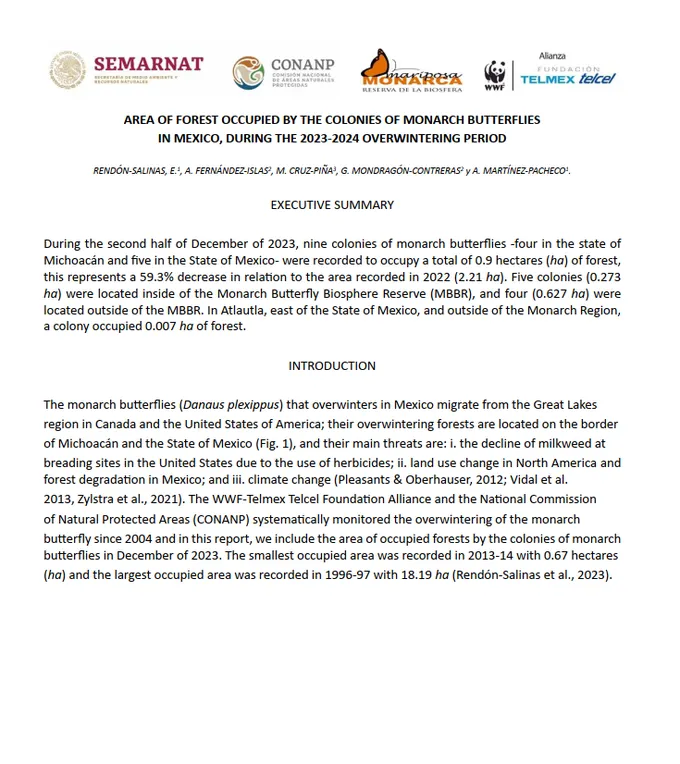
Every year WWF-Mexico and its partners including The National Commission of Protected Natural Areas in Mexico and the WWF-TELMEX Telcel Foundation Alliance, monitor the sites where the eastern monarch butterfly spends the winter, inside and outside the Monarch Butterfly Biosphere Reserve in Mexico. This analysis is considered a benchmark for the overall abundance of the species. The new data indicates that the species occupied only 2.2 acres during the 2023-2024 winter season, 59% less than the previous year when scientists observed 5.5 acres.
-
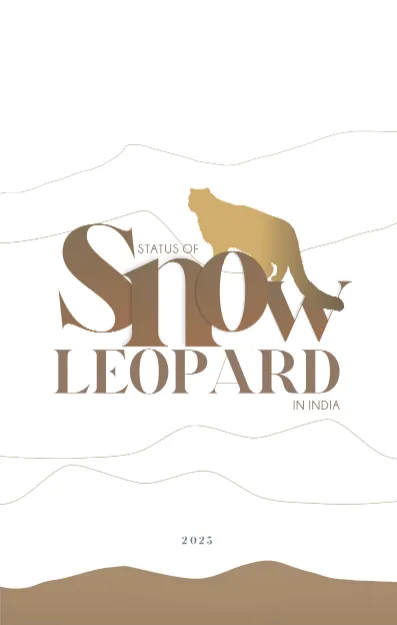
The Snow Leopard Population Assessment in India sampled over 10 million acres, deploying about 2,000 cameras that produced thousands of photos. Skilled scientists in India completed this first-ever rigorous examination of the country‚'s snow leopard population, estimating that 718 of these iconic big cats live within the country‚'s borders.
-
These Resource Guides introduce some foundational principles and common considerations for research into conservation-focused anti-corruption actions.
Part I introduces three "packages" of research that introduce non-specialists to some of the relevant core approaches and methods for assessing whether, when and how social norms might be targeted to address corrupt behaviors. When combined, the packages provide quantitative measures for pivotal values – e.g., social tolerance of and attitudes towards corruption, or the percent of a sample who have paid a bribe – against which progress with anti-corruption actions can later be measured (the "baseline"). The arising data will also provide qualitative information to help guide choices around the SNBC strategies to adopt ("formative" insight).
Part II introduces two "packages" of research that introduce non-specialists to some of the relevant core approaches and methods for assessing and adaptively managing social norm and behavior change approaches and understanding whether they have achieved the overall aims, goals, and ambitions.
See more resources from the TNRC Knowledge Hub.
---
This content is made possible by the generous support of the American people through the United States Agency for International Development (USAID). The contents are the responsibility of World Wildlife Fund (WWF) and do not necessarily reflect the views of USAID, the United States Government, or individual TNRC consortium members.
-
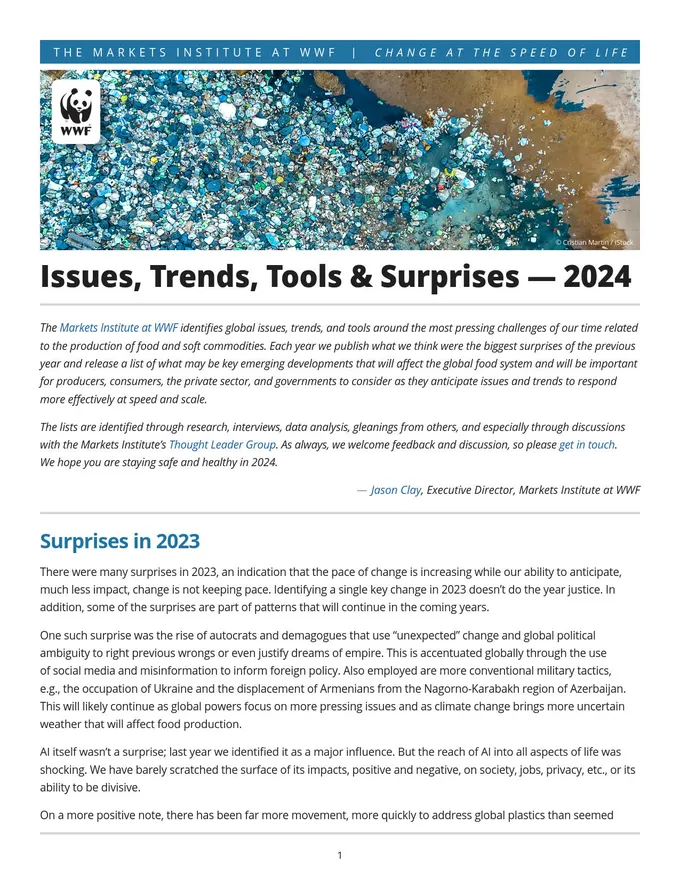
The Markets Institute at WWF identifies global issues, trends, and tools around the most pressing challenges of our time related to the production of food and soft commodities. Each year we publish what we think were the biggest surprises of the previous year and release a list of what may be key emerging developments that will affect the global food system and will be important for producers, consumers, the private sector, and governments to consider as they anticipate issues and trends to respond more effectively at speed and scale.
-
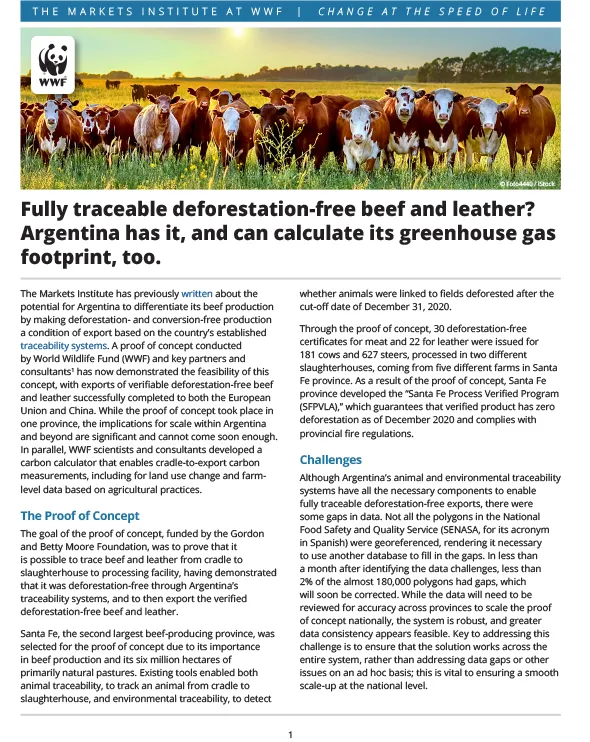
The Markets Institute has previously written about the potential for Argentina to differentiate its beef production by making deforestation- and conversion-free production a condition of export based on the country‚'s established traceability systems. A proof of concept conducted by World Wildlife Fund (WWF) and key partners and consultants has now demonstrated the feasibility of this concept, with exports of verifiable deforestation-free beef and leather successfully completed to both the European Union and China.
-
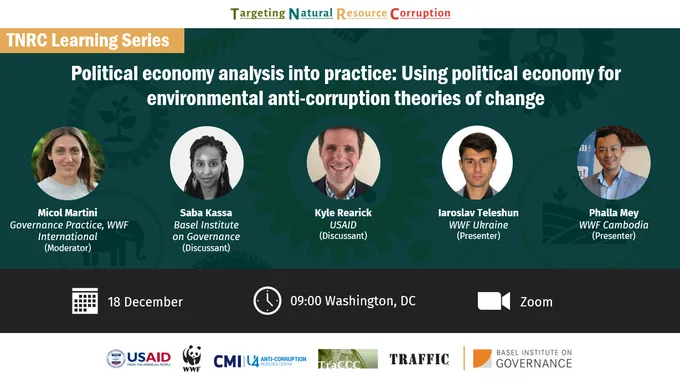
This presentation deck is from a TNRC Learning Series webinar introducing a new guide on Integrating Political Economy Analysis (PEAs) findings into theories of change (ToC) to address corruption that undermines conservation objectives. The webinar was held on 18 December 2023. Panelists discussed the utility of PEAs for designing, testing, or adapting ToCs, identified challenges to using PEA, what conditions have enabled uptake, and offered insights into context-specific PEA approaches and their applications.
---
This content is made possible by the generous support of the American people through the United States Agency for International Development (USAID). The contents are the responsibility of World Wildlife Fund (WWF) and do not necessarily reflect the views of USAID, the United States Government, or individual TNRC consortium members.
-
A knowledge-sharing visit brought together government, private sector, and financial institution representatives from Nepal and India in August 2023 under the Asia‚'s Linear Infrastructure safeGuarding Nature (ALIGN) Project. The weeklong event held in Delhi and Dehradun in India, brought together key stakeholders to identify challenges and limitations in implementing linear infrastructure safeguards; share insights and experiences; problem-solve; and enhance participants‚' understanding of safeguard-related policies and best practices.
-
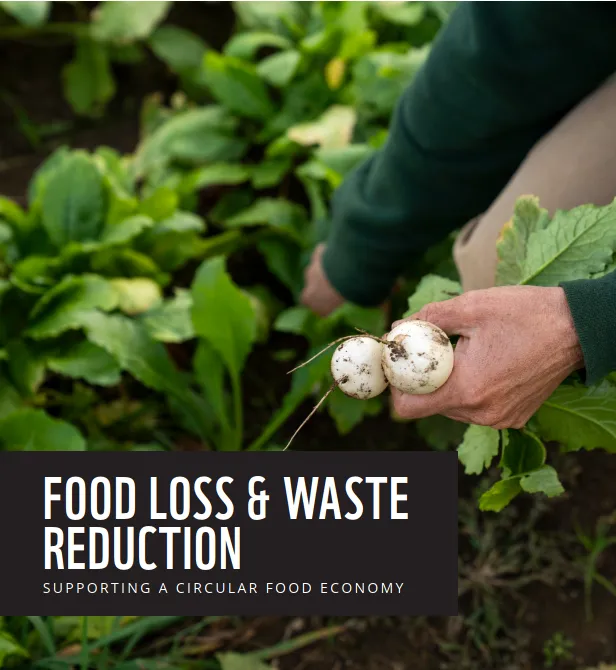
WWF envisions a world where all edible food grown is eaten by people, and remaining nutrients are utilized as feed for animals, while inedible organic matter is returned to the farm to create healthier soils or high-value inputs. WWF aims to harness the power of innovation, collaboration, and responsible stewardship to eliminate food waste at every stage of the supply chain. In this Food Loss and Waste Factsheet, learn how WWF aims to leverage food loss and waste (FLW) as a non-controversial and cost-effective strategy to catalyze a more circular food system, mitigate climate change and nature loss, and help feed those in need.