Publications
-
Nepal‚'s expanding linear infrastructure can pose a significant threat to its diverse wildlife and biodiversity by fragmenting habitats and causing other adverse effects, such as depleting natural resources. Nepal‚'s Cabinet of Ministers achieved a significant milestone when it endorsed the Wildlife-friendly Infrastructure Construction Directives on March 10, 2022, followed by the directives‚' official gazetting on April 18. In collaboration with various government ministries and stakeholders, WWF-Nepal‚ – through the ALIGN Project funded by the US Agency for International Development‚ – played a vital role in advocating for the directives and promoting wildlife-friendly practices.
-
-
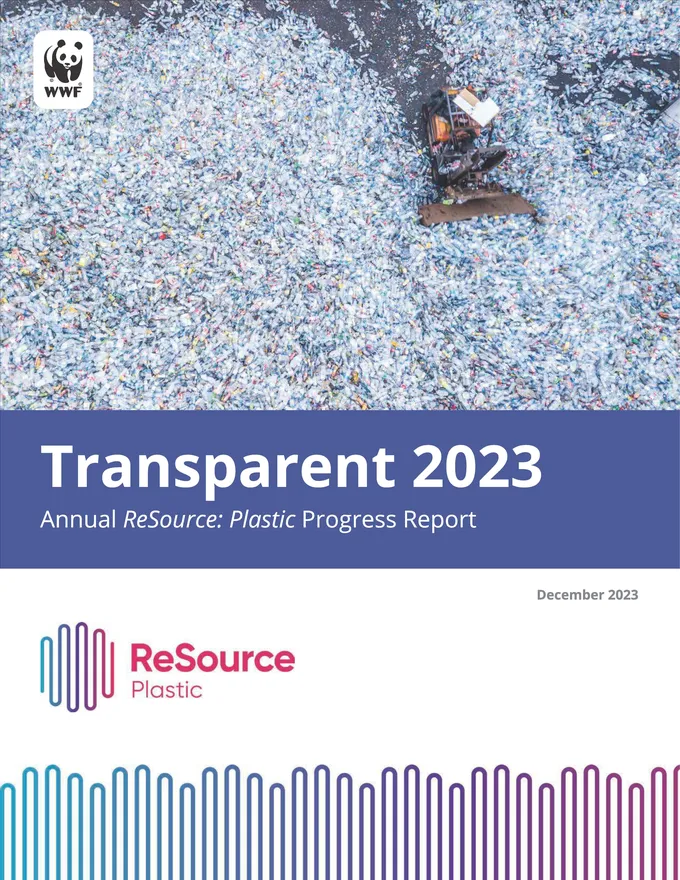
Transparent 2023 is the fourth annual report from ReSource: Plastic, providing an update on how Member companies are addressing plastic pollution and identifying new opportunities to maximize impact.
-
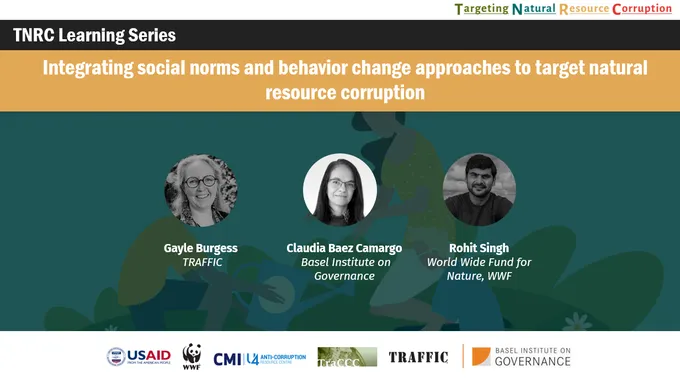
These slides are from a TNRC Learning Series webinar from the Basel Institute on Governance. The webinar shares learning from a series of forthcoming tools and examples for adopting social norm and behavior change (SNBC) approaches to address natural resource corruption.
---
This content is made possible by the generous support of the American people through the United States Agency for International Development (USAID). The contents are the responsibility of World Wildlife Fund (WWF) and do not necessarily reflect the views of USAID, the United States Government, or individual TNRC consortium members.
-
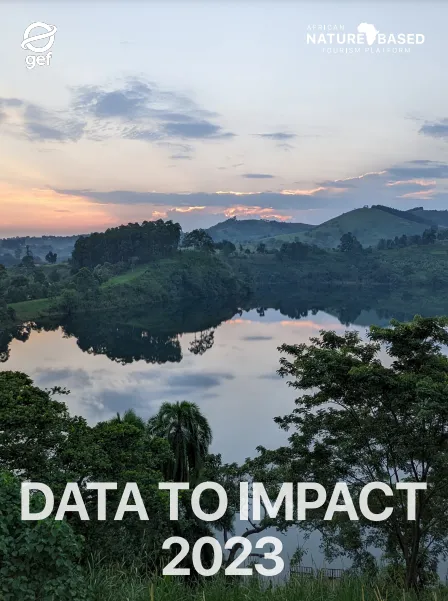
The African Nature-Based Tourism Platform worked with partners in Botswana, Kenya, Malawi, Mozambique, Namibia, Rwanda, South Africa, Tanzania, Uganda, Zambia, and Zimbabwe to conduct surveys assessing the impact of COVID-19 on communities and small to medium enterprises (SMEs) within the nature-based tourism sector. To date, the Platform has conducted 687 surveys across its 11 target countries.
Leveraging this survey data, the Platform has collaborated with partners to develop community-led and designed grant proposals. This collaborative approach has resulted in the mobilization of significant funding going directly to community-based organizations.
-
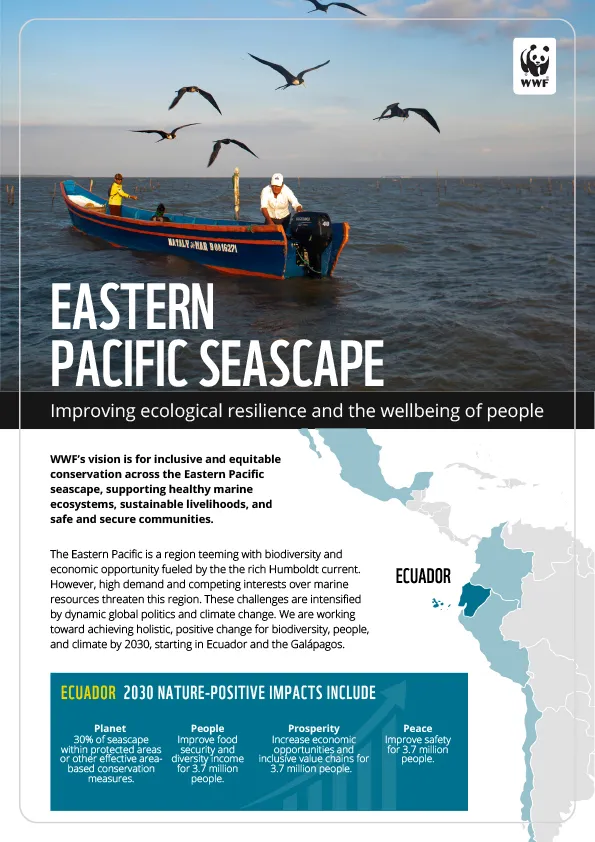
The Eastern Pacific region is a WWF-US priority seascape where WWF supports integrated management of marine resources to conserve ecosystems that benefit the planet, people, prosperity, and peace.
-
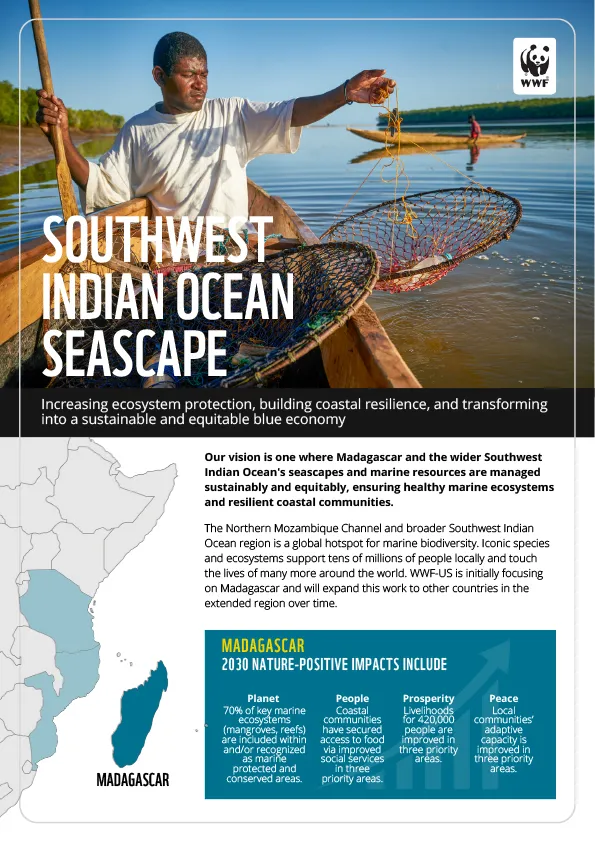
The Southwest Indian Ocean region is a WWF-US priority seascape where WWF supports integrated management of marine resources to conserve ecosystems that benefit the planet, people, prosperity, and peace.
-
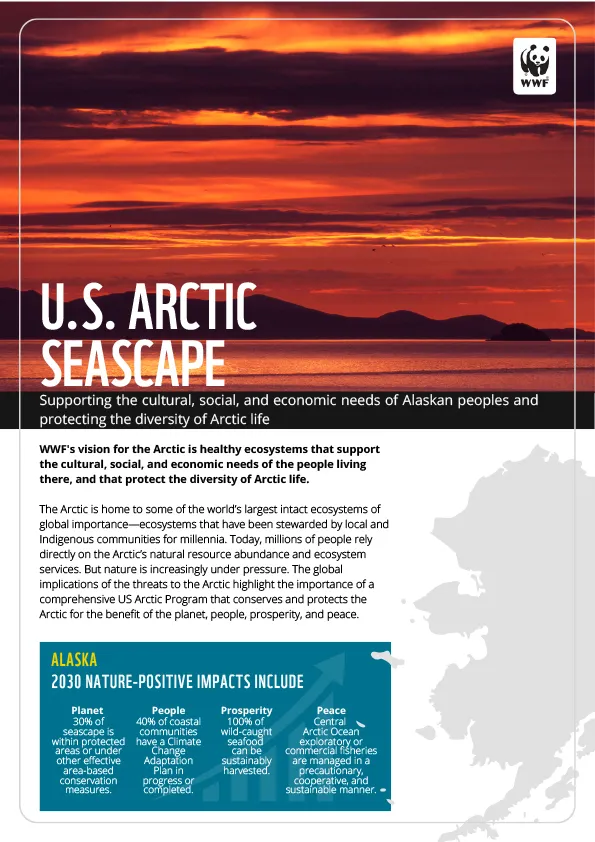
The Arctic is a WWF-US priority seascape where WWF supports integrated management of marine resources to conserve ecosystems that benefit the planet, people, prosperity, and peace.
-
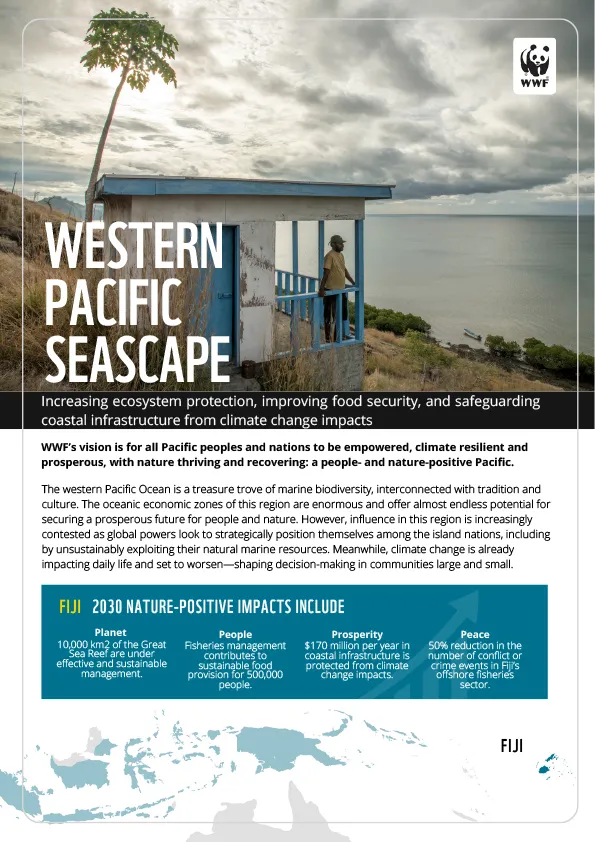
The Western Pacific region is a WWF-US priority seascape where WWF supports integrated management of marine resources to conserve ecosystems that benefit the planet, people, prosperity, and peace.
-
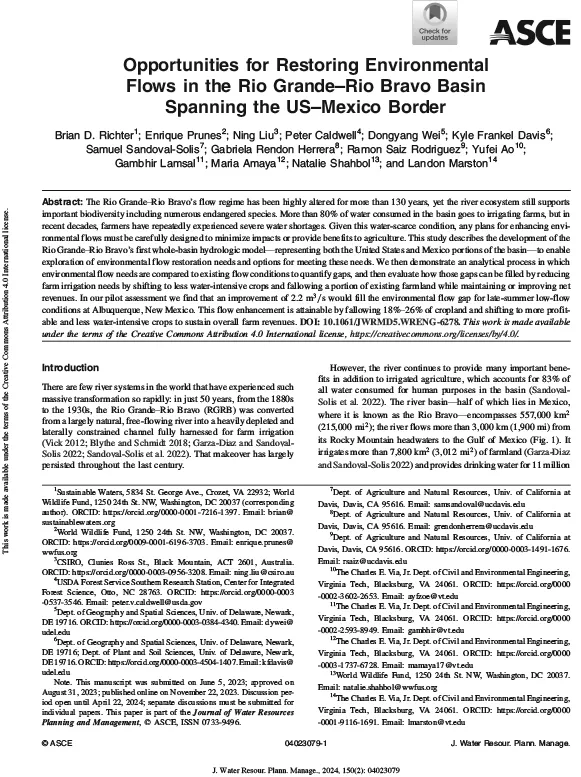
This paper explores how to restore environmental water flows in the Rio Grande‚ÄìRio Bravo basin, a river system that spans 1900 miles from Colorado to Texas, and has been heavily altered over the past century, primarily for agricultural irrigation. Despite these changes, the river still supports critical ecosystems and endangered species. The authors, including WWF's Enrique Prunes, developed the first full-basin hydrologic model for the region to assess how much water is needed to restore ecological flows and how those needs could be met. They found that by reducing irrigation through crop shifting and fallowing‚ – without reducing farmers‚' net income‚ – it is possible to restore key low-flow conditions in parts of the river, such as near Albuquerque, New Mexico. This approach offers a promising path to balance agricultural needs with ecological restoration in a water-scarce region.