Publications
-
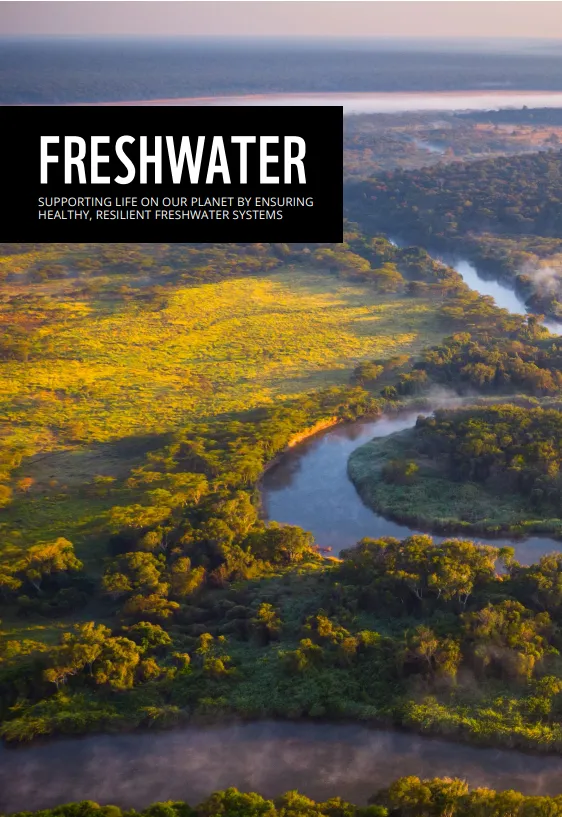
Discover WWF's vision for a water-secure future. This factsheet emphasizes the vital role of preserving freshwater resources and ecosystems. WWF envisions a world where the human right to water is supported by resilient freshwater ecosystems, benefiting both human and wildlife populations. The factsheet outlines WWF's approach, including promoting good governance, advocating for sustainable practices, influencing financial flows, and convening stakeholders. It also highlights policies and on-the-ground actions to protect and restore rivers and wetlands, illustrating the collective effort needed for a thriving future.
-
At the heart of connecting nature and people is the inextricable link between inclusive conservation and sustainable development. Inclusive conservation plays a critical role in ensuring the diversity of human-ecosystem interactions with an emphasis on sustainable livelihoods and developing capacity to accelerate responsiveness in tackling potential adverse impacts to people and the environment. In Africa, efforts are underway to implement interventions and actions that collectively strengthen the three dimensions of sustainable development: economic, social, and environmental. However, the complexity of balancing loss of biodiversity with development continues to demonstrate that achieving inclusive conservation and sustainable development requires action to deliver institutional and individual capacities in line with the 17 Sustainable Development Goals (SDGs).
The capacities to achieve social, environmental and governance standards are still inadequate in many countries. International institutions and non-governmental organizations often rely on consultants to fill this gap, fulfilling requirements for due diligence, but not creating local ownership and therefore making implementation more difficult. Collectively strengthening capacities of country systems is crucial in ensuring ownership and accountability. This approach involves taking into account environmental and social risks while putting in place both direct mitigation measures and adaptation measures that are attuned to the long-term vision of inclusive conservation and sustainable development.
In the last 28 years, EFN has been at the forefront of advancing research, training, and education through the provision of funds to individuals and institutions to address critical challenges facing biodiversity conservation in Africa, Latin America, and Asia. WWF recognizes the urgency to continue strengthening institutional mechanisms and abilities to advance contributions of national institutions, local communities and organizations, and youth, who often are ill-equipped to drive and achieve the goals of addressing environmental and social impacts.
With support from Charlotte Bingham, Environmental and Social Impact Assessment Grant seeks to build capacity and empower communities to achieve development objectives and inclusive conservation with projects that robustly address environmental and social issues.
-
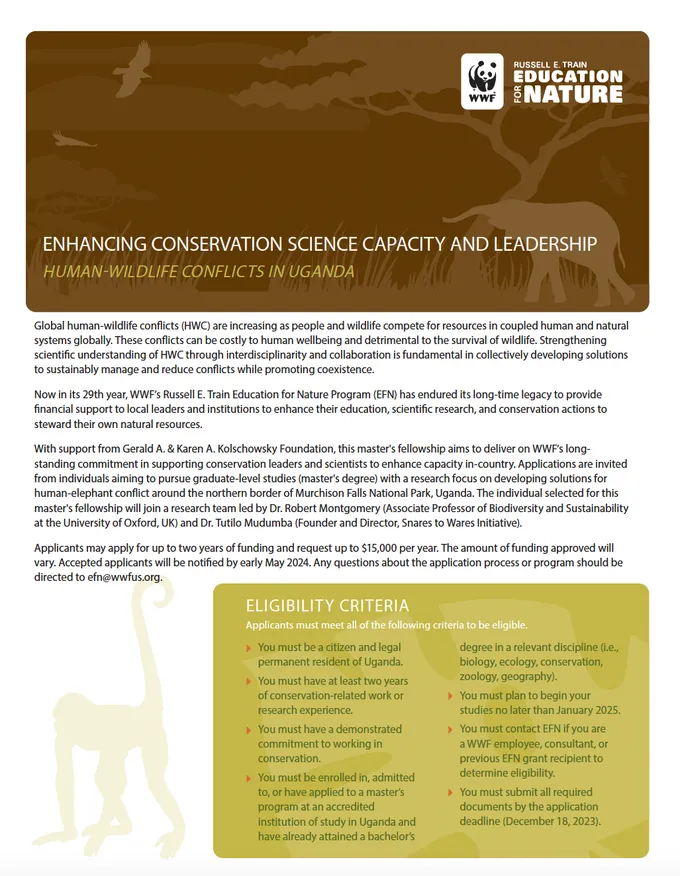
Global human-wildlife conflicts (HWC) are increasing as people and wildlife compete for resources in coupled human and natural systems globally. These conflicts can be costly to human wellbeing and detrimental to the survival of wildlife. Strengthening scientific understanding of HWC through interdisciplinarity and collaboration is fundamental in collectively developing solutions to sustainably manage and reduce conflicts while promoting coexistence.
Now in its 29th year, WWF‚'s Russell E. Train Education for Nature Program (EFN) has endured its long-time legacy to provide financial support to local leaders and institutions to enhance their education, scientific research, and conservation actions to steward their own natural resources.
With support from Gerald A. & Karen A. Kolschowsky Foundation, this master's fellowship aims to deliver on WWF‚'s long-standing commitment in supporting conservation leaders and scientists to enhance capacity in-country. Applications are invited from individuals aiming to pursue graduate-level studies (master's degree) with a research focus on developing solutions for human-elephant conflict around the northern border of Murchison Falls National Park, Uganda. The individual selected for this master's fellowship will join a research team led by Dr. Robert Montgomery (Associate Professor of Biodiversity and Sustainability at the University of Oxford, UK) and Dr. Tutilo Mudumba (Founder and Director, Snares to Wares Initiative).
-
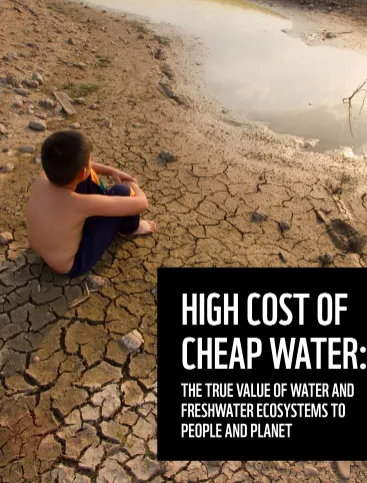
This report sheds light on the misconception of water's abundance. Despite over 70% of the Earth's surface being covered by water, our freshwater security is under threat due to the extensive exploitation of rivers, lakes, and aquifers. This crisis is adversely affecting both human and planetary health, leading to billions lacking access to safe water and sanitation, a surge in food insecurity, and a rapid loss of freshwater species. The root cause lies in our failure to appropriately value this vital resource.
The report emphasizes that water plays a crucial role not only in sustaining communities and species, but also in driving industrial production, transportation of goods, and energy generation throughout the supply chain. It stresses the interconnectedness of freshwater access and usage, highlighting that decisions regarding water have far-reaching impacts on various industries and communities. WWF estimates that in 2021, the total quantifiable economic value derived from water amounts to around US$58 trillion, equivalent to the combined GDPs of the United States, China, Japan, Germany, and India.
-
WWF's Freshwater and Food team confronts two of the biggest threats to nature‚ – agriculture and infrastructure. In this factsheet you'll find a condensed overview of WWF's Freshwater and Food team's strategy which calls for a harmonious equilibrium between human needs and the conservation of the natural world. There is a critical interplay between freshwater and food. This factsheet illuminates the escalating demands on land and water for various sectors, pushing beyond sustainable limits.
-
Bhutan‚'s National Snow Leopard Survey Report 2022-2023 provides an updated status of the country‚'s current snow leopard population and distribution. The recent camera trapping survey was conducted across five protected areas in Bhutan and implemented by the Royal Government of Bhutan‚'s Department of Forests and Park Services, with support from WWF-Bhutan and partners. The results will contribute to the global goal of assessing the global snow leopard population.
As an apex predator of the alpine landscape, the snow leopard represents the ecosystem's overall health. However, large carnivores such as the snow leopard are globally threatened by habitat loss and fragmentation, prey depletion, retaliation in response to livestock depredation, poaching for illegal trade, human-induced climate change, and other human disturbances. By understanding the snow leopard‚'s current population, we can effectively prioritize conservation efforts to preserve snow leopard habitats and safeguard their prey species.
-
This guide aims to provide government authorities clarity on the rationale and importance, the process and key elements, and the engagement of key stakeholders for the establishment of a robust seafood jurisdictional initiative.
-
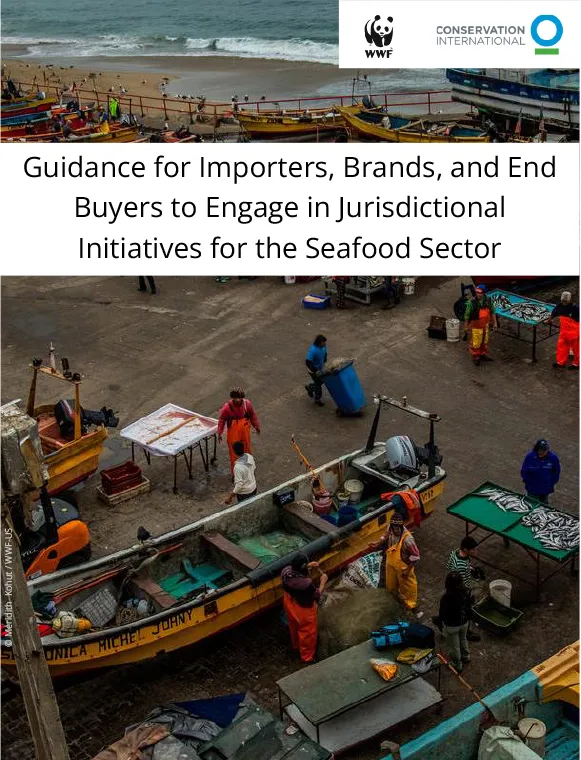
This guide aims to provide seafood importers, brands, and end buyers clarity on the rationale and importance, the process and key elements, and the engagement of key stakeholders for the establishment of a robust seafood jurisdictional initiative.
-
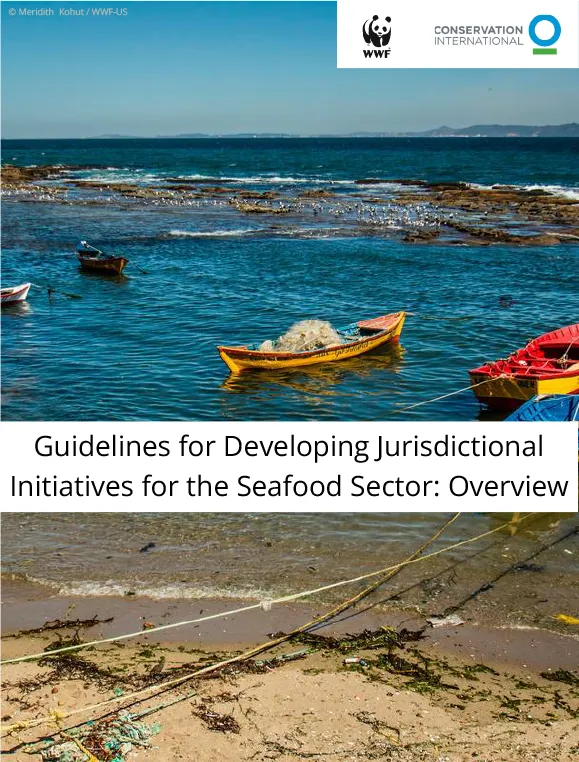
These Guidelines for Jurisdictional Initiatives offer new approaches that aim to address systemic barriers at scale while engaging seafood sector stakeholders broadly in improvement efforts.
-
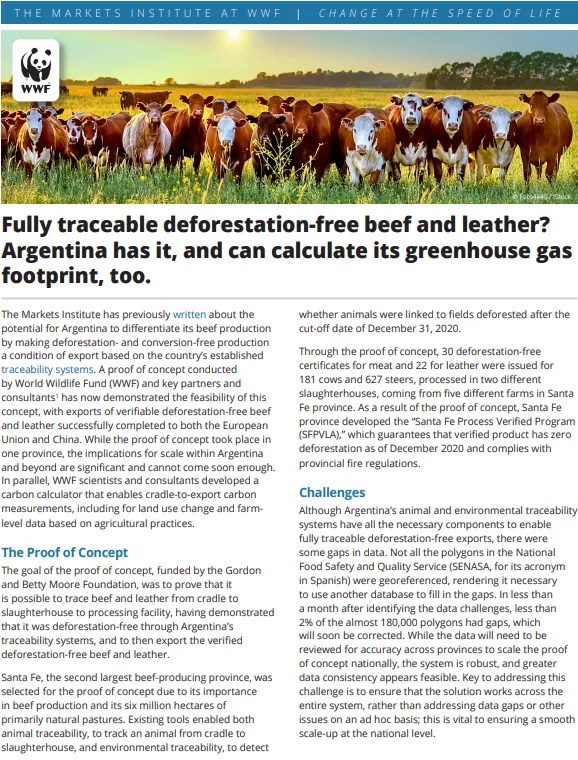
The Markets Institute has previously written about the potential for Argentina to differentiate its beef production by making deforestation- and conversion-free production a condition of export based on the country‚'s established traceability systems. A proof of concept conducted by World Wildlife Fund (WWF) and key partners and consultants has now demonstrated the feasibility of this concept, with exports of verifiable deforestation-free beef and leather successfully completed to both the European Union and China.
While the proof of concept took place in one province, the implications for scale within Argentina and beyond are significant and cannot come soon enough. In parallel, WWF scientists and consultants developed a carbon calculator that enables cradle-to-export carbon measurements, including for land use change and farm level data based on agricultural practices.