Publications
-
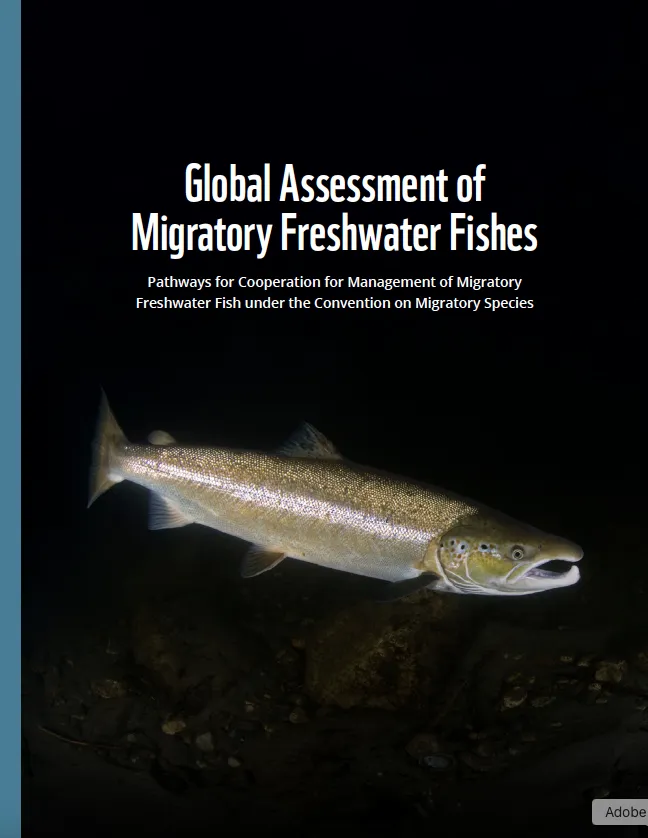
This report provides the most comprehensive global assessment to date of migratory freshwater fishes, documenting the scale, urgency, and opportunity for coordinated international action under the Convention on the Conservation of Migratory Species of Wild Animals (CMS). It identifies hundreds of migratory, transboundary freshwater fish species in decline, explains why these species are ecologically, economically, and culturally vital, and highlights how river fragmentation, altered flows, overexploitation, pollution, and climate pressures are driving widespread losses. Drawing on global data and a focused Amazon Basin case study, the report pinpoints priority species and river basins where cooperation can deliver the greatest conservation gains, and outlines practical CMS pathways—such as species listings, action plans, concerted actions, and memoranda of understanding—to restore connectivity, align management across borders, and turn science into tangible recovery for some of the world’s most imperiled and important freshwater migrations.
-
For the first time, a comprehensive review of laws in 12 tiger range countries exposes critical gaps in legislation that may help facilitate the trafficking of tigers.
The new report, Law of the Tiger: A Comparative Study of the Laws Governing Tiger Trafficking in 12 Tiger Range States, reveals critical legal gaps and inconsistencies that unless addressed would hinder efforts to counter the trafficking of tigers — undermining decades of conservation efforts and putting wild tigers at risk.
The report found significant gaps and inconsistencies across multiple countries and provides recommendations for legislative reform and policy priorities for national governments.

-
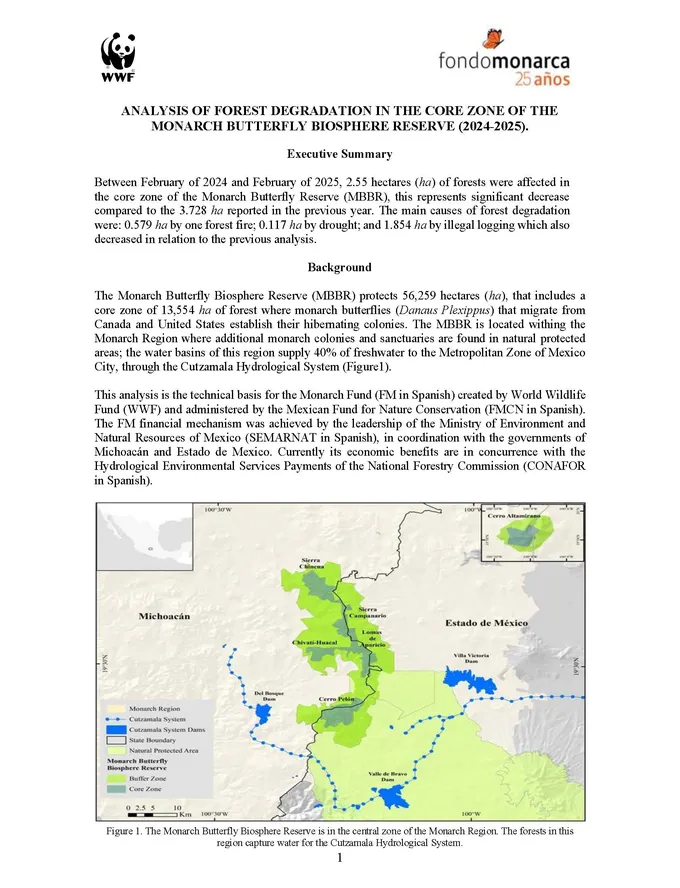
This WWF-Mexico led report, measures and examines changes in the monarch’s critical forest habitat. It finds that 6.30 acres of forest were degraded between February 2024 to February 2025, a significant decrease when compared to 9.21 acres reported the year before.
-
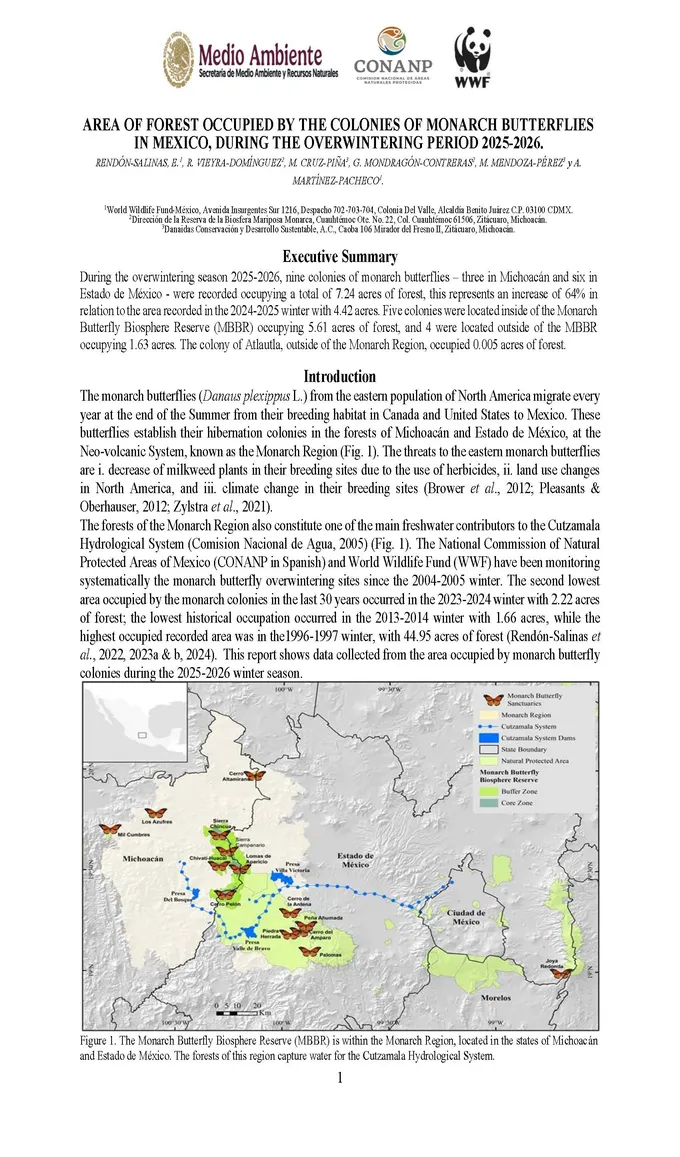
This WWF-Mexico led survey measures the area of forest where monarchs establish their colonies to hibernate each winter, providing a scientifically robust indicator of their population status. This year, scientists found monarchs occupied 7.24 acres of forest compared to 4.42 acres the previous winter—indicating a 64% increase of monarchs during this perio
-
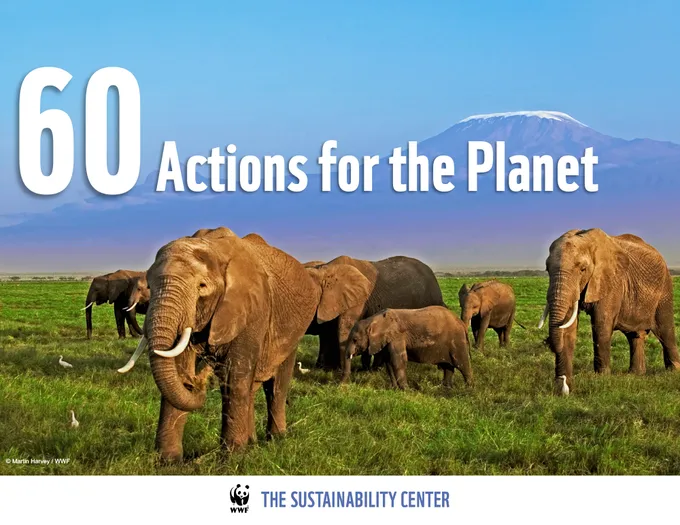
60 Actions for the Planet is a comprehensive resource with actions curated from WWF’s experts to help reduce your environmental footprint. By conserving water and energy, choosing sustainable products, minimizing waste and eliminating plastic pollution, we can together embrace more nature-friendly lifestyles not just on Earth Day, but all year long. Earth Day isn’t just a day—it’s a movement. Join us and Give an Hour.
-
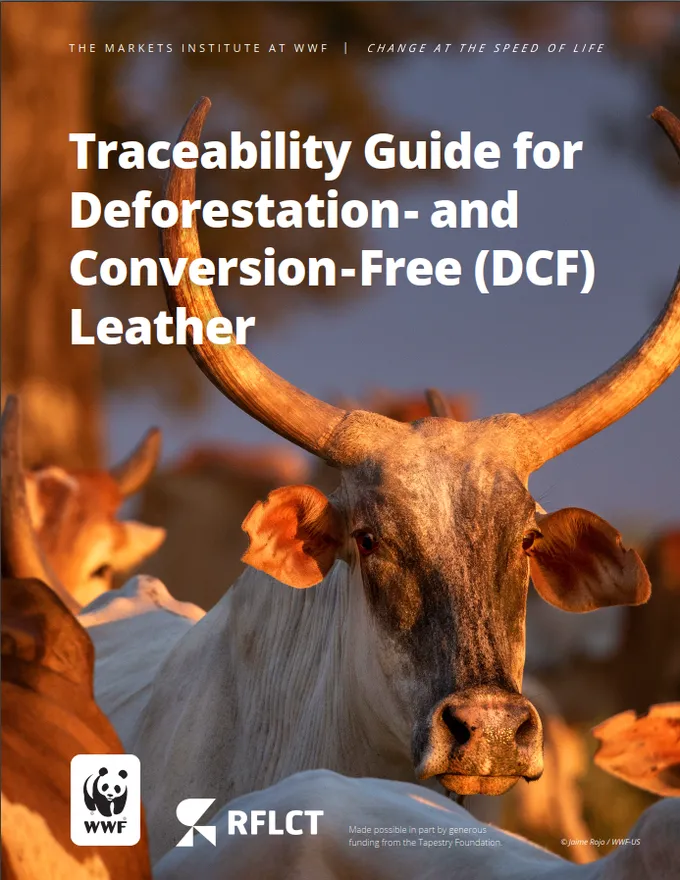
The Traceability Guide for Deforestation- and Conversion-Free (DCF) Leather provides a practical roadmap to help companies achieve full supply chain traceability for leather products. Its purpose is to support any company committed to building transparent, responsible, and regulation-ready supply chains, with the overarching goal of eliminating deforestation and ecosystem conversion from sourcing practices. The guide aligns with international frameworks and provides practical direction to support compliance with emerging regulations, including the EU Deforestation Regulation (EUDR), the EU Corporate Sustainability Due Diligence Directive (CSDDD), and similar laws worldwide.
-
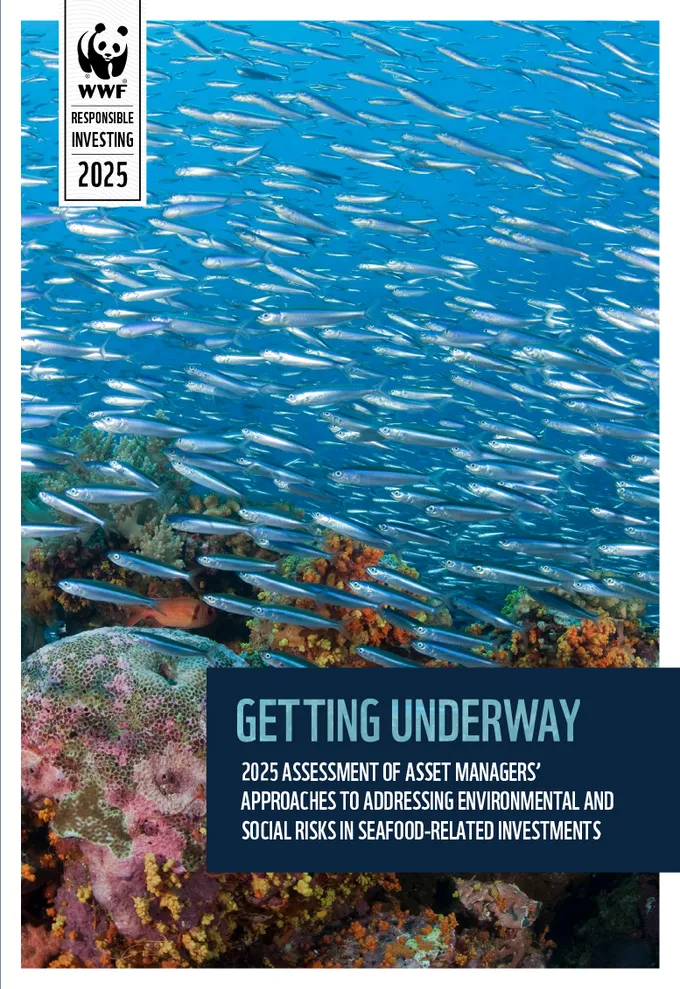
During early 2025, WWF conducted a third assessment of 42 asset managers’ approaches to addressing environmental and social (E&S) risks in seafood-related investments. The objective of this research was to understand if and how investors are continuing to improve the way they manage these risks in their seafood portfolios, and where, specifically, additional support may be needed most. This report highlights key findings from this assessment, compares the results against the prior year to monitor progress, provides actionable recommendations for asset managers, and directs readers to practical resources to guide next steps.
Of the 42 asset managers assessed, 40% (17) demonstrated minor or moderate improvements against last year’s assessment. Many of these improvements were driven by new or strengthened biodiversity commitments, increased nature-related risk assessment efforts, and ongoing work to engage portfolio companies on nature-related issues. For example, on the whole, 43% (18) of the asset managers now include biodiversity risk management in investment, risk, or thematic policies—explicitly setting expectations for investment and engagement decisions—up from 33% in 2023. However, while this progress is encouraging, this year’s assessment also documented stagnation in progress by 43% (18) of the assessed asset managers, and minor or moderate declines in the performance of 17% (7) of the assessed asset managers. These declines were the result of some reductions in E&S disclosures, as well as instances of changes to or reductions in engagement efforts with portfolio companies on E&S issues.
To ensure that asset managers sufficiently prevent and manage their exposure to E&S risks, more progress is needed, and faster. Consistent with last year, our analysis found that only one of the 42 assessed asset managers has yet developed and publicly disclosed seafood-specific E&S expectations for its investee companies. This persistent gap underscores the misalignment between stated biodiversity ambitions and the comprehensiveness of policies required to translate those commitments into credible impact.
-
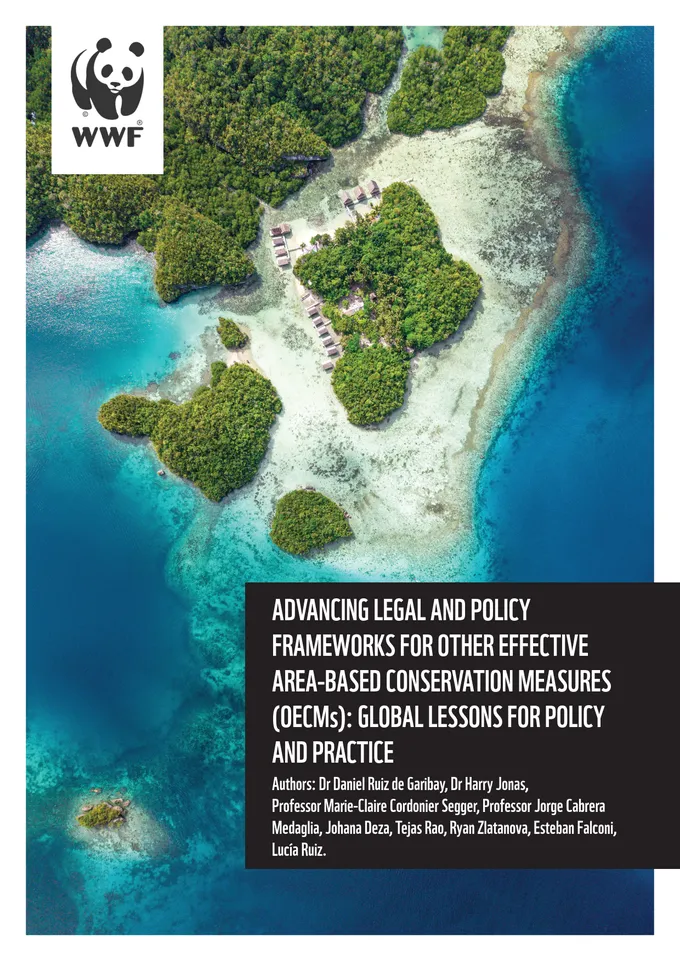
The world has four years left to achieve the Convention on Biological Diversity (CBD) Kunming–Montreal Global Biodiversity Framework Target 3, which calls for the conservation of at least 30% of planet Earth by 2030 (the 30×30 target). This global effort requires countries to acknowledge and support a wide range of governance systems that deliver sustained biodiversity outcomes within and beyond protected areas. In addition to Indigenous and traditional territories, other effective area-based conservation measures (OECMs) have emerged as a critical mechanism to identify and support diverse conservation practices led by Indigenous Peoples and local communities, private landholders, sectoral bodies, and subnational authorities.
This report provides the first comprehensive, comparative assessment of the legal and policy mechanisms that countries are using to give effect to OECM identification and reporting. Drawing on detailed analysis of the 16 countries and territories that have reported OECMs, and others that are developing OECM frameworks, it identifies five categories of mechanisms through which national authorities operationalize OECMs.
The report further examines emerging trends in OECM implementation, including the growing use of non-binding policy guidance, integration of community and cultural landscapes, and more.
By synthesizing lessons from early implementers, the study offers practical insights for policymakers to enable the design of robust and context-appropriate OECM systems. It highlights how countries are adapting CBD guidance to domestic legal contexts, strengthening governance arrangements, and building transparent procedures for documentation, evaluation, and reporting. The findings aim to support governments, legislators, practitioners and partners as they expand equitable and effective area-based conservation and accelerate progress toward the global 30×30 target.
Developed through a WWF–Centre for International Sustainable Development Law (CISDL) collaboration, the study contributes to ongoing international efforts to strengthen legal and policy pathways for biodiversity conservation.
-
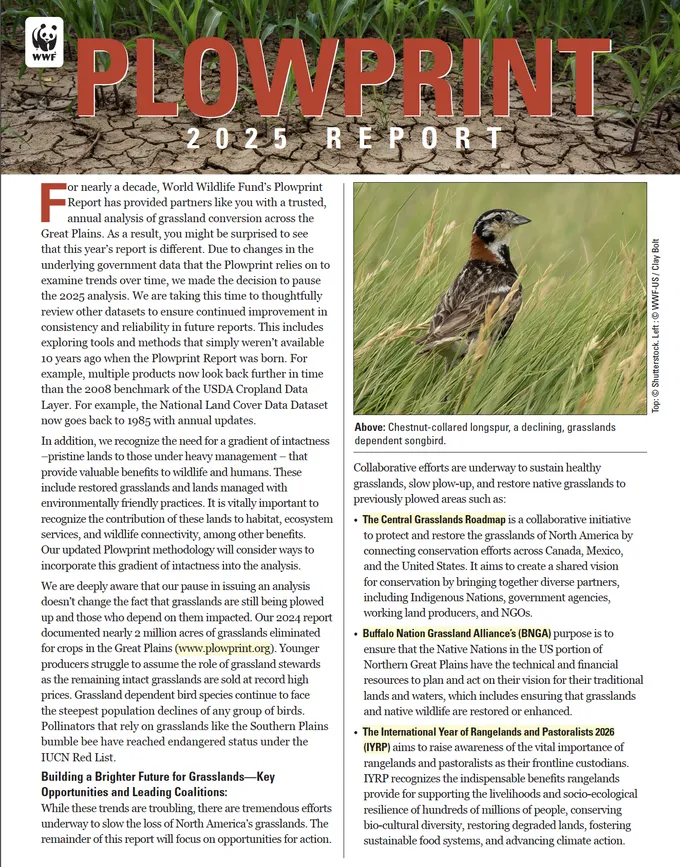
WWF's Plowprint Report monitors grasslands plow-up across the Great Plains, assesses agricultural impacts on biodiversity, and guides sustainable land use planning.
Due to changes in the underlying government data that the Plowprint relies on to examine trends over time, we made the decision to pause the 2025 analysis. We are taking this time to thoughtfully review other datasets to ensure continued improvement in consistency and reliability in future reports. This includes exploring tools and methods that simply weren’t available 10 years ago when the Plowprint Report was born.
-
The United States Export-Import Bank (EXIM) has needed to adapt to change in global economic and political power dynamics across the decades to keep the US economy competitive and thriving. The global energy transition’s confluence with rapidly evolving high tech sectors introduce an emerging global economic dynamic that places EXIM at another inflection point. This inflection point intersects with the US Congress needing to reauthorize EXIM through new legislation by the end of 2026, creating a key moment of obligation and an opportunity to address EXIM’s current challenges.
According to the latest global energy production and consumption data released in late 2025: since the start of the year, global energy demand has increased by 2.6%, or 369 terrawatt hours, with that rise in demand met thus far exclusively by the deployment of new renewable energy generation. The International Energy Agency (IEA) predicts that tens of millions of jobs will shift globally and be transferred from legacy energy industries to newer, more efficient, and cleaner sectors. For example, roughly 20% to 40% of upstream oil and gas roles globally - or two million to four million jobs -- could be repurposed for geothermal development under a high-growth scenario, especially if next-generation geothermal technologies scale rapidly. Meanwhile, China maintains an early lead in supporting jobs in these sectors, by making close to half of the total global investments in these sectors and surpassing the US, UK, and EU’s investments combined.
Modernizing EXIM is crucial to ensuring that US emerging advanced energy and clean tech industrial sectors are competitive in the global economy, particularly in emerging and high demand sectors like energy storage, support services, and energy transmission, and will dictate whether the millions of jobs available in these sectors employ US workers or workers abroad.
This report examines prospective export markets for emerging advanced energy industries, explains some of the business challenges and finance needs of emerging tech industries, argues that global demand for advanced energy is strong and growing, and competition to meet these demands is fierce. Lastly, the report describes some of the policies and export credit finance products that EXIM’s foreign competitors use to bolster their countries’ emerging tech sectors, while offering recommendations for what EXIM can do to surpass US rivals.
This report was authored by Joshua Klein, with contributions from Benjamin Hunt (WWF-US).