Publications
-
As the COVID-19 crisis unfolded across the world, impacting economic sectors in different and unprecedented ways, innovative solutions were needed to meet the challenge. WWF wanted to understand in real-time how the global food sector, in particular, was impacted by and reacted to the crisis to distill insights and lessons learned. What will be the short- and long-term impacts on supply chains? What are the key concerns of the average corporate manager and how can we work collectively to address this crisis and accelerate learning? What innovations will come from the permanent and temporary adjustments made as a result of the crisis?
To gather insights, we embarked on a global listening tour to hear directly from WWF partners and non-partners about their experiences. In all, the global Markets Practice, in collaboration with WWF-US and Global Corporate Partnerships, listened to and engaged with 46 companies in 14 countries representing a broad spectrum of the global food supply chain. This document contains a summary of our analysis and findings, with more to come.
We are deeply appreciative that the interviewees were willing to share their time and experiences with us, and we will be continuing on this learning journey.

-
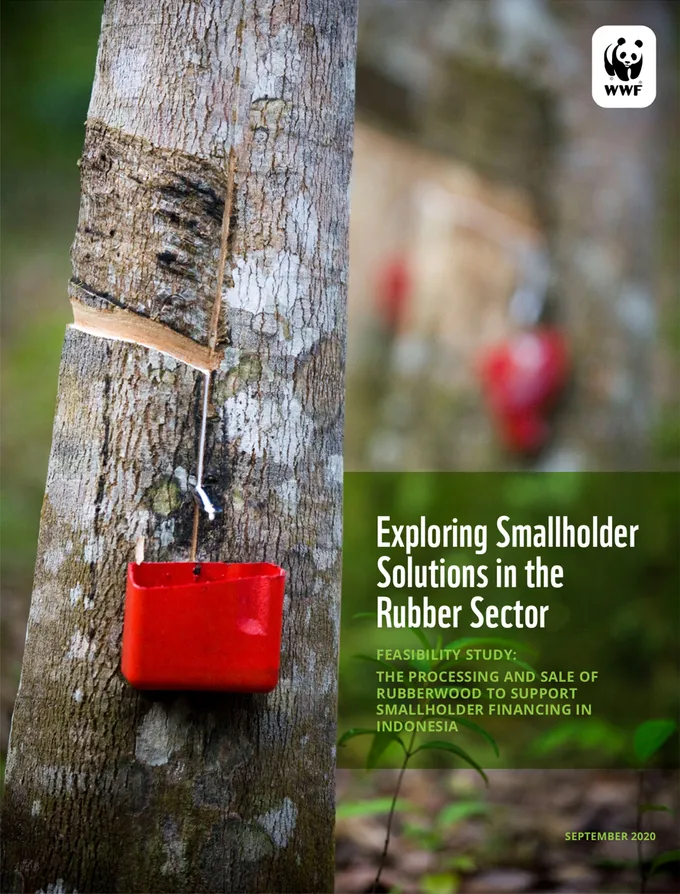
HeveaConnect, Target Corporation, and World Wildlife Fund are engaged in finding solutions to enhance the production and trade of sustainable natural rubber. The three organizations came together in 2019 around the shared interest in understanding how the processing and sale of rubberwood might incentivize the adoption of sustainable practices by natural rubber smallholders and enhance their livelihoods.
We enlisted the services of Financial Access to analyze the potential of rubberwood to serve as a mechanism to support smallholder financing in Indonesia. Low yields are one of the main issues plaguing rubber smallholders in Indonesia, who are often forced to replace rubber with other commodities to improve their livelihoods. This has consequences for Indonesia‚'s dominant position in the rubber sector, farmers‚' livelihoods and ability to rise out of poverty, and potentially drives deforestation as new land is often cleared to meet demand.
This report investigates the viability of selling rubberwood from the perspective of all stakeholders in the supply chain. We identify a financing scheme that has the potential to ensure that a smallholder avoids a cash shortfall during or after replanting. Although the scope of the analysis was limited to two provinces in Sumatra, the findings of this study could be used there and elsewhere in Indonesia to inform the development of sustainable natural rubber initiatives that include the processing and trade of rubberwood as one of several strategies to support equity in natural rubber supply chains.
-
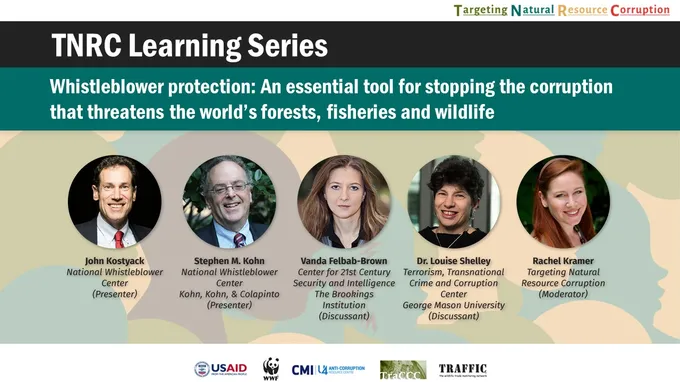
Conservation and management of forests, fisheries, and wildlife are suffering due to the lack of enforcement of resource protection and anti-corruption laws. Agencies charged with enforcement often lack the resources and political backing needed to prosecute fraud and bribery cases and impose meaningful sanctions. Fortunately, recent innovations in whistleblower protection provide abundant lessons that can be used to strengthen global natural resource conservation. This presentation, which was presented as part of TNRC's Learning Series Webinar on September 8, 2020, looked at the range of whistleblower mechanisms in place around the world, with a focus on key United States (U.S.) whistleblower laws.
---
This content is made possible by the generous support of the American people through the United States Agency for International Development (USAID). The contents are the responsibility of World Wildlife Fund (WWF) and do not necessarily reflect the views of USAID, the United States Government, or individual TNRC consortium members.
-
-
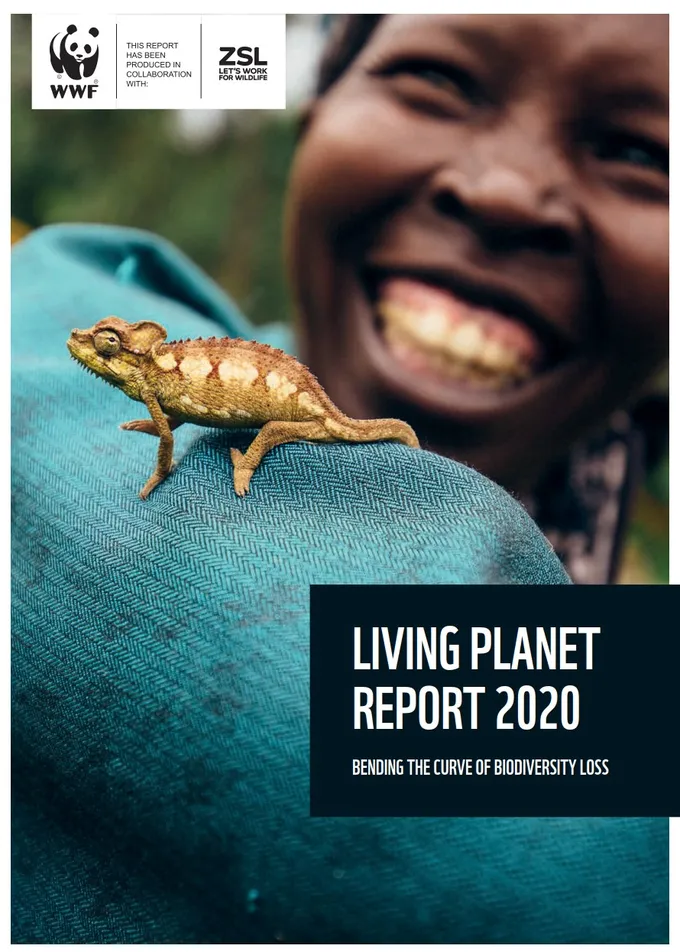
A 68% average decline of birds, amphibians, mammals, fish, and reptiles since 1970.
The findings are clear: Our relationship with nature is broken.
Biodiversity‚ – the rich diversity of life on Earth‚ – is being lost at an alarming rate. This loss effects our own health and well-being. Today, catastrophic impacts for people and the planet loom closer than ever.
-
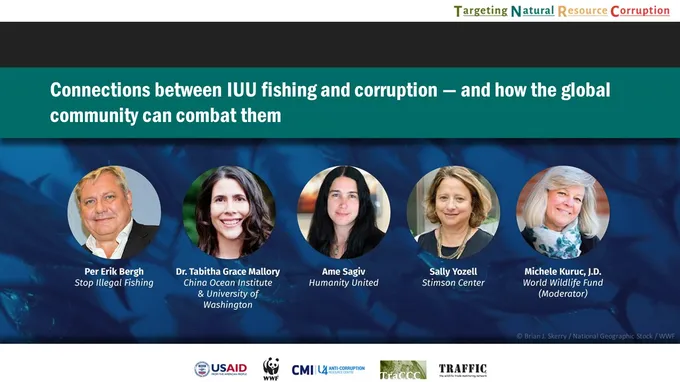
This presentation was delivered by experts in a TNRC virtual panel on 27 August 2020. Discussion focused on learning and approaches that global practitioners can consider to protect marine resources, address governance challenges, and safeguard rights.
---
This content is made possible by the generous support of the American people through the United States Agency for International Development (USAID). The contents are the responsibility of World Wildlife Fund (WWF) and do not necessarily reflect the views of USAID, the United States Government, or individual TNRC consortium members.
-
New analysis from WWF and Boston Consulting Group (BCG) shows that the number of fire alerts across the globe, as of April, were up by 13% compared to last year – already a record year for fires. Persistent hotter and drier weather due to climate change and deforestation caused primarily by land conversion for agriculture are the main drivers.
-
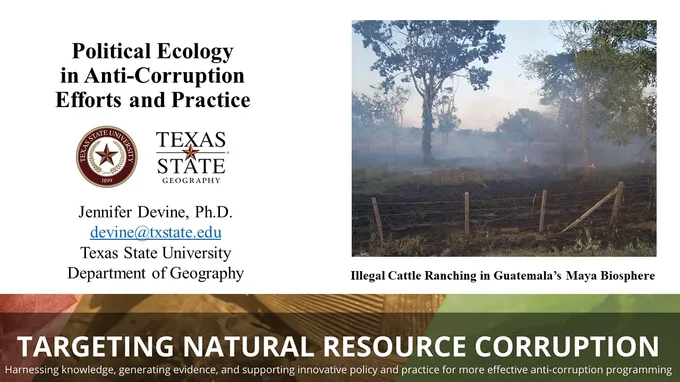
On August 13, 2020 TNRC held a Learning Series webinar on Political Ecology in Anti-Corruption Efforts and Practice. Featured speaker Jennifer Devine presented her research on "narco-deforestation" in Guatemala to discuss how political ecology helps deepen understanding of corruption and conservation crime.
---
This content is made possible by the generous support of the American people through the United States Agency for International Development (USAID). The contents are the responsibility of World Wildlife Fund (WWF) and do not necessarily reflect the views of USAID, the United States Government, or individual TNRC consortium members.
-
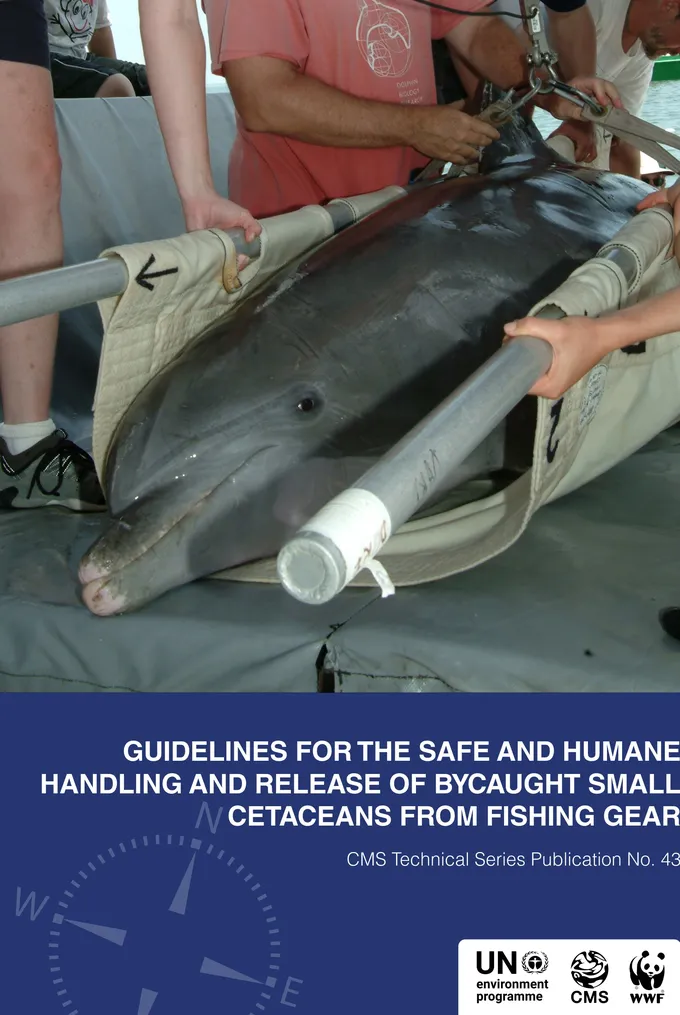
The largest cause of small cetacean mortality is bycatch, the incidental capture of non-target species such as dolphins, marine turtles, and seabirds. An estimated 300,000 cetaceans are killed in commercial fisheries each year, therefore preventing fisheries bycatch should be a top priority to ensure the conservation of species or populations. However, the threat of bycatch has yet to be eliminated, so these guidelines provide a practical tool to minimize its impacts by guiding fishers in the safe release of small cetaceans entangled in their gear, thus decreasing the risk of further injury or stress and increasing the chances of post-release survival.
-
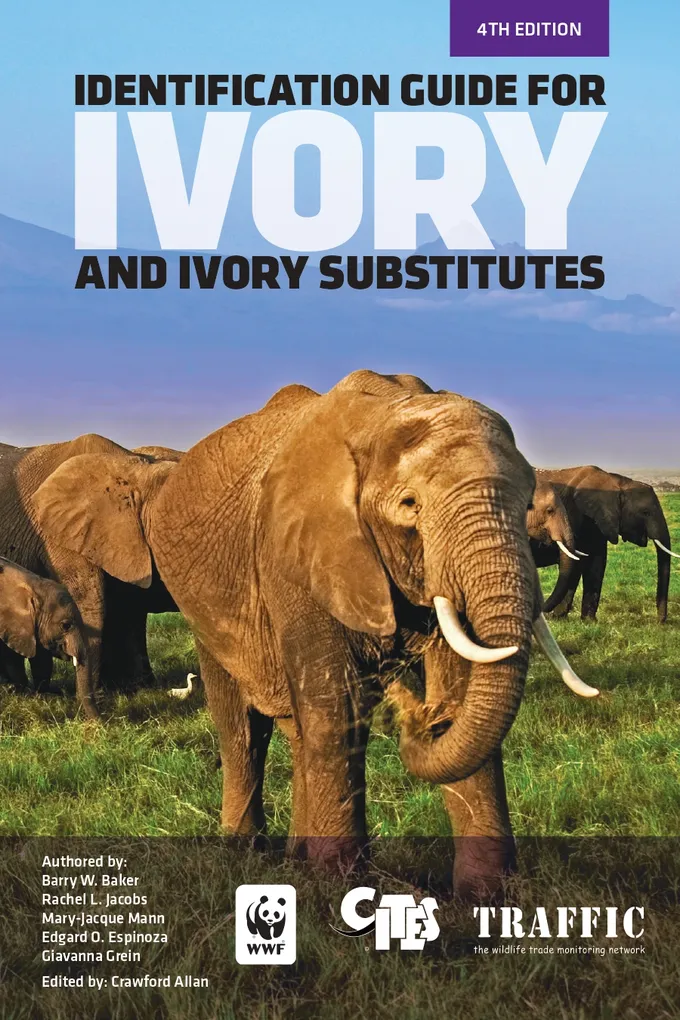
The Identification Guide for Ivory and Ivory Substitutes is an updated and expanded tool to help law enforcement officers, forensic scientists, online technology company enforcement staff and wildlife trade management authorities distinguish between types of ivories and their substitutes. This Guide (which was last updated in 1999), includes detailed procedures, visual aids and instructions for recognizing ivory products, particularly those that have undergone heavy alterations such as carving and painting.
This Guide includes details on the most relevant species‚ – elephants, mammoths, whales, walrus, narwhals, and hippos‚ – as well as more extensive visual materials to aid enforcement officers in identifying elephant ivories from ivory substitutes, such as plastics and vegetable ivory. The document also addresses the sale of ivory products online, where an increasing share of illegal elephant ivory trade is now taking place and where identification of static digital images can be challenging. There is also reprinted information summarizing modern instrumental methods to identify ivories using laboratory equipment and techniques.
The authors of this Guide include morphological forensics experts from the US Fish and Wildlife Service Wildlife Forensic Laboratory.
For additional information contact [email protected] or [email protected] .