Publications
-
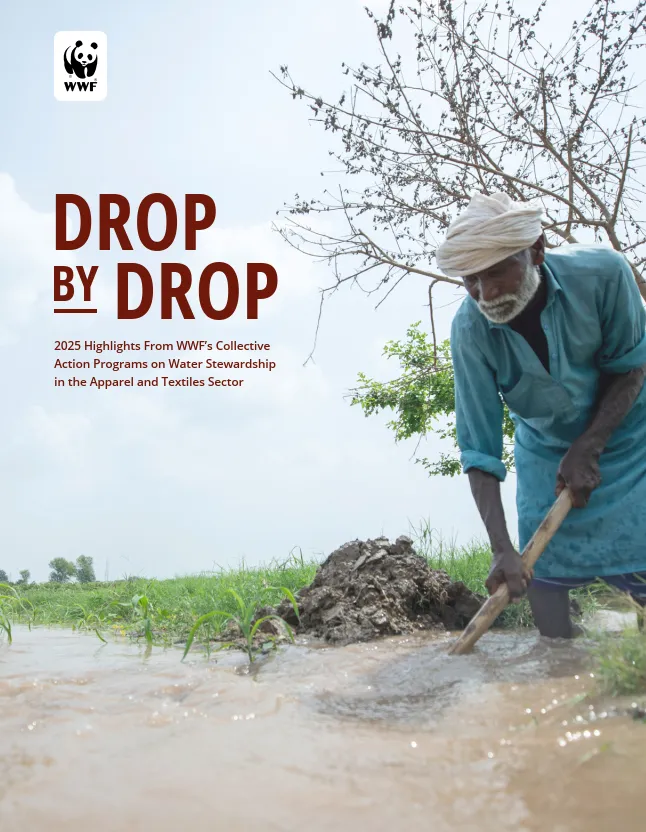
Drop by Drop is an annual report that showcases how collective action can help address some of the most pressing water challenges facing the global apparel and textile sector. The report illustrates how brands, suppliers, farmers, governments, and local communities are working together across key river basins to improve water stewardship, strengthen climate resilience, and support healthier freshwater ecosystems. Through examples from five major textile-producing regions, it demonstrates shared solutions to shared water problems. Readers will gain insight into how collaborative approaches can help build more sustainable supply chains while benefiting both people and nature.
-
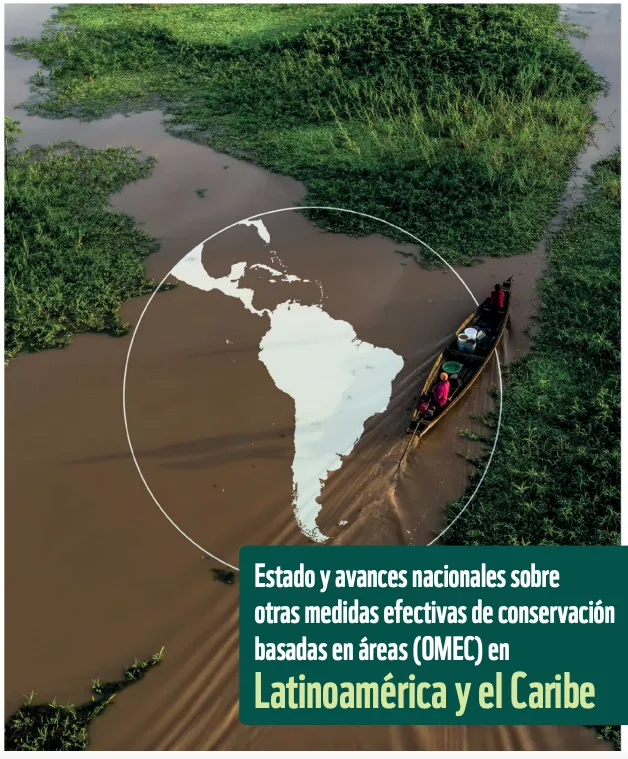
Estado de las OMEC en América Latina y el Caribe / State of OECMs in Latin America and the Caribbean
Español
Desde su incorporación en la Meta 11 de Aichi para la Diversidad Biológica en 2010, las Otras Medidas Efectivas de Conservación Basadas en Áreas (OMEC) han adquirido un reconocimiento cada vez mayor dentro de la agenda global de biodiversidad. A medida que los países trabajan para alcanzar la Meta 3 del Marco Mundial de Biodiversidad de Kunming-Montreal (MMBKM), que llama a conservar y gestionar de manera efectiva al menos el 30 % de las tierras, aguas continentales, zonas costeras y océanos del planeta para 2030, las OMEC están emergiendo como un complemento importante de las áreas protegidas y de los territorios indígenas y tradicionales. Estas proporcionan un marco para reconocer resultados de conservación de la biodiversidad a largo plazo alcanzados por pueblos indígenas, comunidades locales, actores privados e instituciones públicas más allá de los sistemas formales de áreas protegidas.
Este informe presenta la primera evaluación regional sobre el estado y los avances nacionales en la implementación del marco de las OMEC en América Latina y el Caribe (ALC). Desarrollado en el marco de la Agenda Colaborativa de OMEC para ALC 2025-2030, el estudio examina avances, oportunidades y desafíos relacionados con la implementación de las OMEC en 36 países y territorios de Mesoamérica, el Caribe, la Amazonía y el Cono Sur.
La evaluación revela un creciente impulso en toda la región. Catorce países han incorporado las OMEC en sus Estrategias y Planes de Acción Nacionales sobre Biodiversidad (EPANB) y otros instrumentos de política pública, mientras que varios países han establecido o están desarrollando marcos legales, regulatorios y administrativos específicos para apoyar la identificación, el reconocimiento y el reporte de las OMEC. Hasta julio de 2026, Colombia, Ecuador y Perú habían reportado conjuntamente 86 OMEC que abarcan más de 13 millones de hectáreas a la Base de Datos Mundial sobre Áreas Protegidas y Conservadas (WDPCA, por sus siglas en inglés).
Basado en encuestas, entrevistas e investigación documental, el informe destaca cómo los países están avanzando más allá de las etapas iniciales de sensibilización e identificación de sitios hacia esfuerzos de implementación más amplios, enfocados en monitoreo, incentivos, gobernanza y gestión a largo plazo. Los hallazgos también subrayan el papel fundamental de la colaboración entre gobiernos, pueblos indígenas, comunidades locales, organizaciones de la sociedad civil y expertos técnicos para impulsar los procesos nacionales relacionados con las OMEC.
El informe enfatiza que las OMEC pueden contribuir a la conservación de la biodiversidad de maneras que van más allá del aumento de la cobertura total de áreas conservadas. Al reconocer diversos sistemas de gobernanza y prácticas de conservación de larga trayectoria, las OMEC pueden ayudar a mejorar la representatividad ecológica, fortalecer la conectividad de paisajes terrestres y marinos, y promover enfoques de conservación más inclusivos y equitativos en toda la región.
Desarrollado mediante un esfuerzo colaborativo coordinado por WWF, Re:wild, The Nature Conservancy (TNC) y Wildlife Conservation Society (WCS), con el apoyo del Grupo Especialista en OMEC de la Comisión Mundial de Áreas Protegidas (CMAP/WCPA) de la UICN, este informe establece una línea de base regional para monitorear los avances y fortalecer la colaboración hacia el cumplimiento de la Meta 3 del MMBKM. Asimismo, identifica prioridades para la acción futura, entre ellas el fortalecimiento de capacidades técnicas, el apoyo a la participación efectiva de los pueblos indígenas y las comunidades locales, la mejora de los sistemas de monitoreo y el desarrollo de mecanismos financieros y no financieros que permitan sostener resultados positivos de conservación a lo largo del tiempo.
English
Since their inclusion in Aichi Biodiversity Target 11 in 2010, Other Effective area-based Conservation Measures (OECMs) have gained increasing recognition within the global biodiversity agenda. As countries work to achieve Target 3 of the Kunming-Montreal Global Biodiversity Framework (KMGBF), which calls for the effective conservation and management of at least 30% of the planet's lands, inland waters, coastal areas, and oceans by 2030, OECMs are emerging as an important complement to protected areas and Indigenous and traditional territories. They provide a framework for recognizing long-term biodiversity conservation outcomes achieved by Indigenous Peoples, local communities, private actors, and public institutions beyond formal protected area systems.
This report provides the first regional assessment of the state of and national progress in implementing the OECM framework across Latin America and the Caribbean (LAC). Developed within the framework of the OECM LAC Collaborative Agenda 2025-2030, the study examines progress, opportunities, and challenges related to OECM implementation across 36 countries and territories spanning Mesoamerica, the Caribbean, the Amazon, and the Southern Cone.
The assessment reveals growing momentum across the region. Fourteen countries have incorporated OECMs into their National Biodiversity Strategies and Action Plans (NBSAPs) and other national policy instruments, while several countries have established or are developing specific legal, regulatory, and administrative frameworks to support OECM identification, recognition, and reporting. As of July 2026, Colombia, Ecuador, and Peru have collectively reported 86 OECMs covering more than 13 million hectares to the World Database on Protected and Conserved Areas (WDPCA).
Drawing on surveys, interviews, and desk-based research, the report highlights how countries are increasingly moving beyond the initial stages of awareness-raising and site identification toward broader implementation efforts focused on monitoring, incentives, governance, and long-term management. The findings also underscore the critical role of collaboration among governments, Indigenous Peoples, local communities, civil society organizations, and technical experts in advancing national OECM processes.
The report emphasizes that OECMs can contribute to biodiversity conservation in ways that extend beyond increasing the overall coverage of conserved areas. By recognizing diverse governance systems and longstanding conservation practices, OECMs can help improve ecological representativeness, strengthen landscape and seascape connectivity, and support more inclusive and equitable conservation approaches across the region.
Developed through a collaborative effort coordinated by WWF, Re:wild, The Nature Conservancy (TNC), and Wildlife Conservation Society (WCS), with support from the IUCN World Commission on Protected Areas (WCPA) OECM Specialist Group, this report establishes a regional baseline for tracking progress and strengthening collaboration toward achieving Target 3 of the KMGBF. It also identifies priorities for future action, including strengthening technical capacity, supporting the effective participation of Indigenous Peoples and local communities, improving monitoring systems, and developing financial and non-financial mechanisms to sustain positive conservation outcomes over time.
-
WWF's Living Planet Report 2026 shows a devastating loss of biodiversity over a 52-year period: On average there has been a 73% decline in the average size of monitored wildlife populations. At the same time, evidence indicates that wildlife can recover, if we address the drivers of nature loss in the energy, food and finance systems.
While the overall percentage change is consistent with the 2024 Living Planet Report, the updated assessment incorporates additional population data and longer monitoring time, underscoring the continued scale of biodiversity loss.
The Living Planet Index (LPI), produced by ZSL (Zoological Society of London), includes 35,803 population trends of 5,790 vertebrate species from 1970 to 2022. The report notes the strongest decline is in freshwater ecosystems (-85%), followed by terrestrial (-69%) and then marine (-59%) species.
Although the overall trend is negative due to the magnitude of the declining trends, half of the populations included in the LPI are stable or increasing.
-
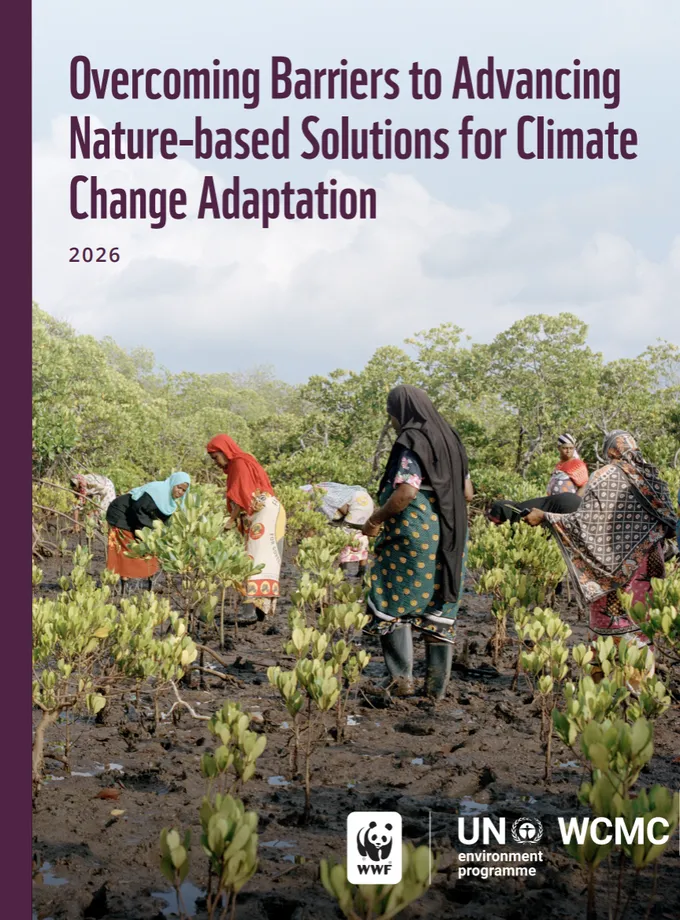
The report examines why nature-based solutions remain insufficiently integrated into government policy, planning and investment despite their potential to reduce climate risks and benefit people and biodiversity. Drawing on consultations across Latin America, the Caribbean, Africa and Asia, the report identifies five interconnected barriers: fragmented governance, limited institutional and technical capacity, gaps in evidence and monitoring, inadequate and inaccessible finance, and insufficient awareness and meaningful stakeholder engagement. Its central finding is that scaling NbS-A requires addressing the institutional, financial and governance conditions that keep promising initiatives confined to isolated projects.
To address these barriers, the report proposes four mutually reinforcing levers: strengthening political and regulatory support, through clear mandates and coordinated policies; aligning economic incentives, by recognizing resilience benefits and improving project preparation and long-term financing; deepening local ownership and participation, through co-design with communities and Indigenous Peoples; and strengthening collaboration, to build capacity, connect knowledge and improve monitoring.
Together, these levers provide a practical way forward for governments and partners to create the enabling conditions -and organize the targeted technical assistance- needed to mainstream, scale and effectively implement NbS-A, advancing climate resilience alongside biodiversity and development objectives.
-
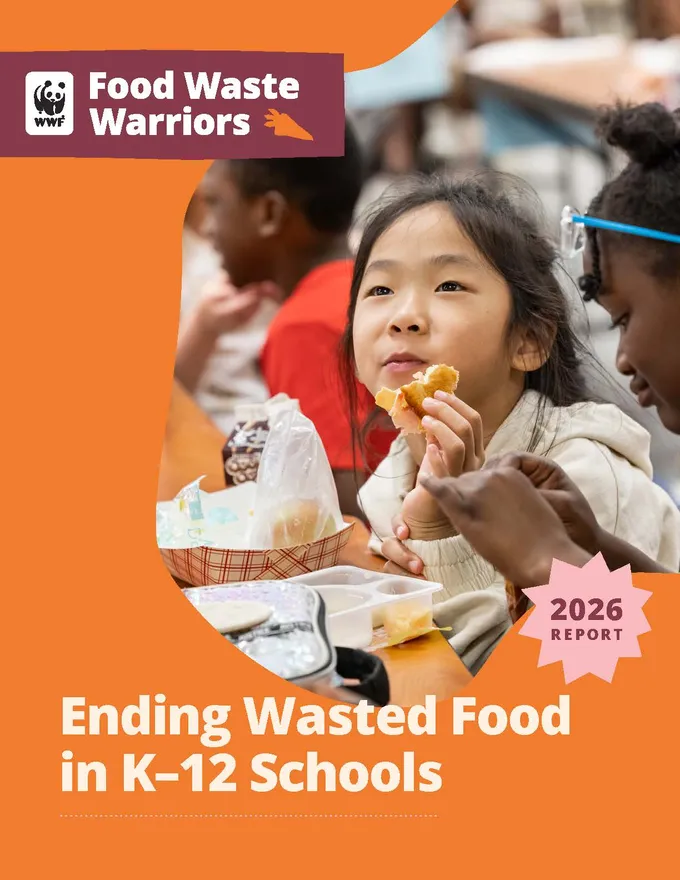
Food Waste Warriors (FWW) 2026 report, Ending Wasted Food in K–12 Schools, provides an update on the program’s rapid expansion in schools across the US. It includes important new findings on food waste prevention strategies, announces ambitious national goals, and features inspiring first-person accounts of FWW implementation in schools.
-
This report presents a forward-looking economic analysis of a hypothetical national Extended Producer Responsibility (EPR) framework in the United States, designed to evaluate dimensions of the system-wide impacts of a harmonized federal policy. This report was funded by SC Johnson, with technical advisory by WWF.
-
Bibliography of sources referenced in Dr. Mike McCloskey's 9/9 issue of the ReThink Food Newsletter
-
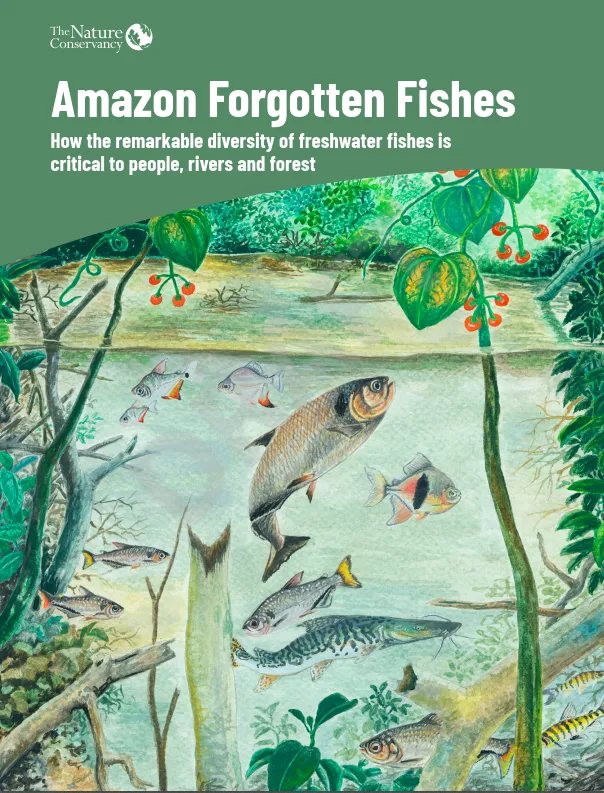
The Amazon Forgotten Fishes report explores the extraordinary diversity of the Amazon River’s more than 2,700 freshwater fish species and the connected rivers, floodplains, and wetlands they depend on to survive. The report highlights how freshwater fishes support ecosystems, food security, and livelihoods across the basin while facing mounting threats from habitat fragmentation, dams, pollution, overfishing, and climate change. It also outlines practical solutions, including protecting free-flowing rivers, restoring connectivity, improving water quality, strengthening community-led fisheries management, and advancing basin-wide conservation efforts to ensure a thriving future for Amazon freshwater ecosystems.
-
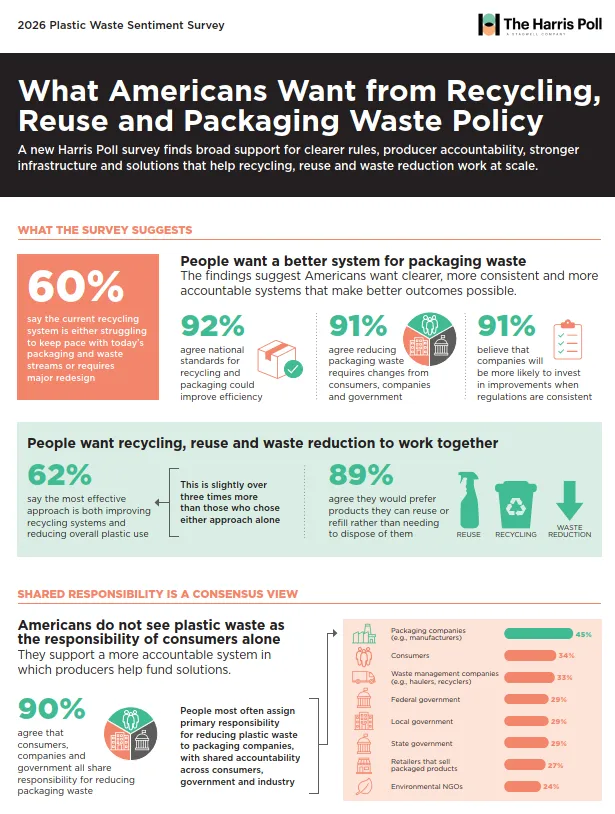
The Plastic Waste Sentiment Survey points to a broader way Americans appear to be thinking about plastic waste: less as a consumer behavior problem alone and more as a systems challenge. Respondents support clearer rules, stronger infrastructure, more accountability, and solutions that make recycling, reuse, and waste reduction easier to participate in and more likely to work. The research was conducted online in the US by The Harris Poll on behalf of SC Johnson among 4,215 US residents aged 18 and older.
-
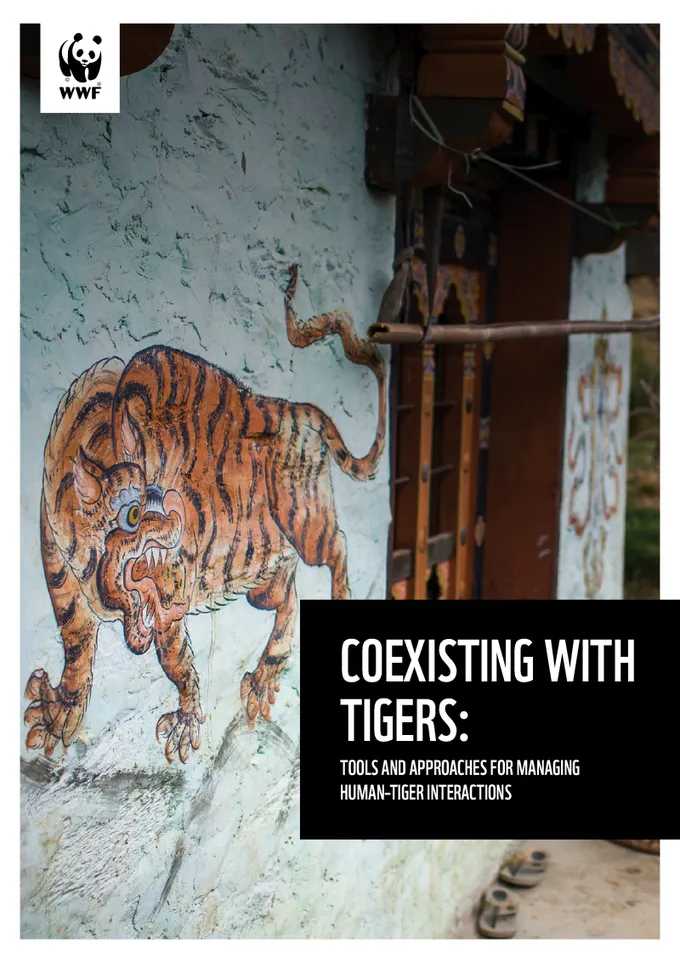
As tiger populations recover, interactions between people and tigers can increase. But human–tiger conflict isn’t driven by tiger numbers alone—habitat loss, land-use change, human expansion, and competition for resources all play a role.
Our new report “Coexisting with Tigers: Tools and Approaches for Managing Human-Tiger Interactions” offers practical tools to support people and tigers where both live in close proximity. Because coexistence isn’t just conflict management; it’s about achieving long-term balance where tigers and humans can thrive together.