WILDLABS: Annual Report 2017
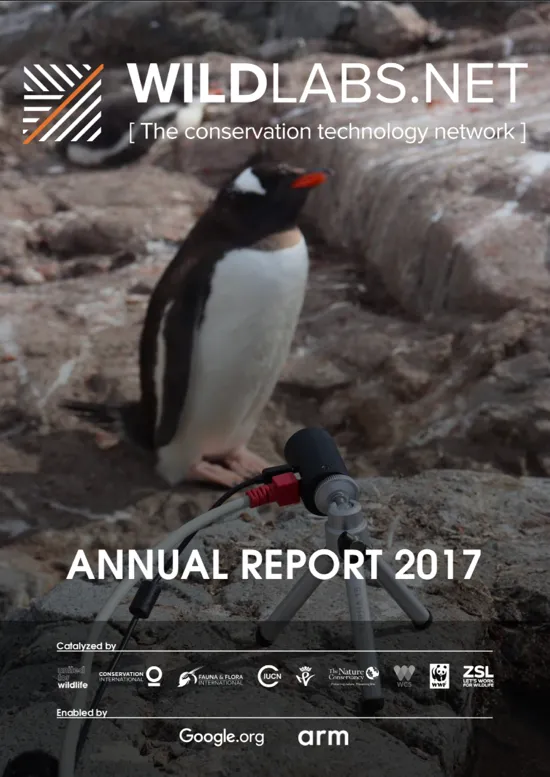
WWF’s Wildlife Crime Technology Project is dedicated to innovating and testing technologies that have the potential to transform the global fight against wildlife crime. One of the legacies of this work has been partnerships forged to deliver conservation benefits beyond WWF’s field presence. WILDLABS: the conservation technology network is one of these innovative partnerships. Founded through United for Wildlife, WILD LABS is the first-of-its-kind online community with a mission to support technology applications that conserve species. WILD LABS’ 2017 Annual Report, released today, offers a look back at two years of activity and impact.
“Tech can be tricky. Sometimes it takes a village to find the right tool for a task in conservation,” said Rachel Kramer, WWF’s Manager of Wildlife Conservation and TRAFFIC. “Through WILD LABS, we’re working to grow that village.”
Since WILD LABS’ launch in late 2015 it has become a platform for 2,300 experts around the world to openly share information and collaborate on technology solutions to pressing conservation challenges. Wildlife conservationists and tech geeks alike are using over 460 discussion threads in tech and conservation challenge groups. These threads have been viewed over 38,000 times, helping to democratise access to lessons learned and to crowd-source advice from engineers and scientists.
Last year WILD LABS helped to connect a group of researchers to pool limited conservation resources to bring down the cost of open-source acoustic monitoring devices from the unaffordable $700 per unit, to $50 via an Audiomoth group buy . Each year, researchers and conservationists share images of their technology in action around the world through WILD LABS’ #tech4wildlife Photo Challenge .
In 2017, WILD LABS helped two bear researchers —Ed Miller and Melanie Clapman—to find each other and leverage machine learning to identify individual bears from citizen photographs and camera trap images. Developing this recognition technology will help to assess and monitor bear populations, providing wildlife researchers with a new, non-invasive methodology to survey bears in the wild. “Through WILD LABS, I've found new collaborators,” said Clapham. “We have formed a non-profit together and are working towards our tech solutions more efficiently than we would have done before, separately.”
“We never dreamed that WILD LABS would be used in such diverse ways,” said Kramer. Recently, WWF leveraged WILD LABS to launch its Human-Wildlife Conflict Technology Challenge . The winners of that challenge continue to share their experiences from field-piloting innovations.
As an open community, anyone can visit WILD LABS to learn about how conservationists and technology experts are using the online platform to:
- Share information to increase transparency and reduce replication of effort.
- Ask and answer questions to share best practice, to increase efficiency and effectiveness of technology deployment to address conservation challenges.
- Collaborate to improve existing technologies or develop new technologies that address identified conservation needs.
The Annual Report shares highlights of how the community is doing exactly this.
For more information, contact:
Rachel Kramer
WILDLABS Steering Committee Chair
[email protected]
Stephanie O'Donnell
WILDLABS Community Manager
[email protected]
-
WILDLABS: Annual Report 2017
4.6 MB PDF Download