Beyond honey: How robust bee populations support human health
From honey bees and bumble bees to other wild bees, we are only just beginning to understand how the world’s more than 20,000 species of bees support human health
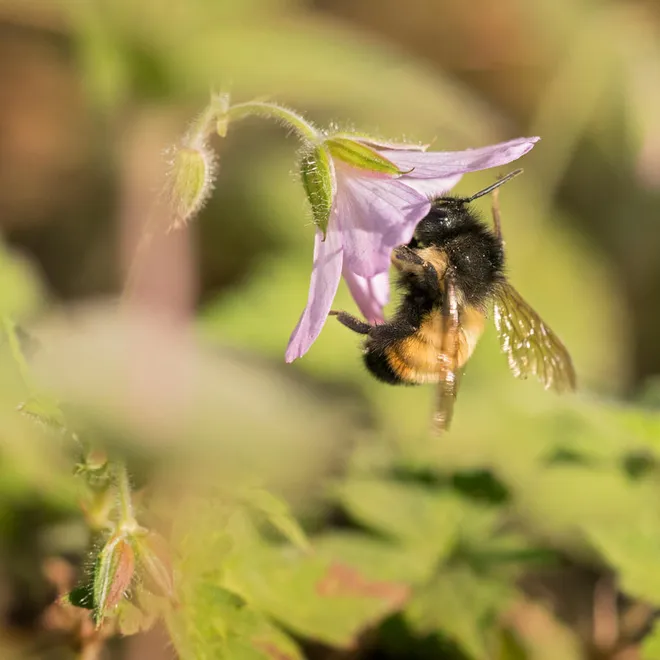
© WWF-US / Clay Bolt
Key takeaways
- Many fruits, vegetables, and nuts rely on insect pollination, making bees critical to nutrition and diversity in the human diet.
- A study shows that a lack of pollinators means a loss of food sources and a higher human mortality rate.
- Globally, one out of every four bumble bee species is at risk of extinction. By protecting bees, we protect human health too.
A pollination system built on diversity
When most people think about bees, they often picture a white box humming with activity, its frames heavy with cells of golden honey. That association is understandable: humans have shared a close relationship with honey bees for thousands of years, including the world’s seven species of honey bee and more than 600 species of honey‑producing stingless bees found throughout the tropics. And honey is not only delicious but highly nutritious too, so much so that one study suggests it may have played a role in the evolution of our big brains.
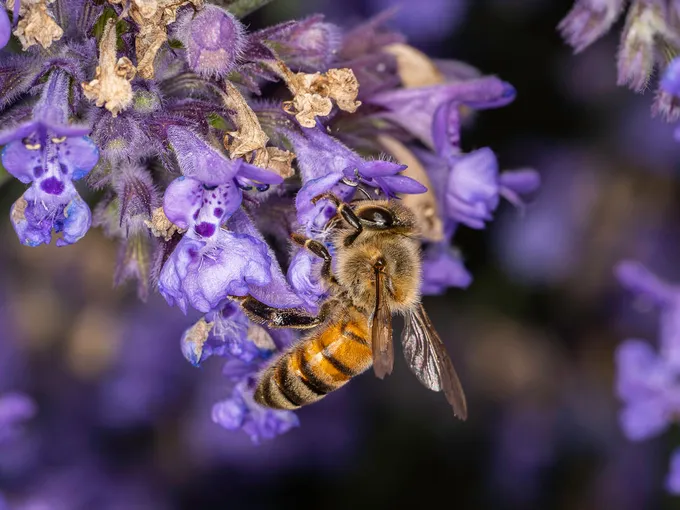
While European honey bees (Apis mellifera) have long dominated pollinator headlines, many more of the world’s 20,000-plus bee species are also critical to global crop pollination, including bumble bees, mason bees, squash bees, and blueberry bees. Together, both wild and managed bees provide ecosystem services from which humans directly benefit, including food security and medical resources.

© Paul Rogers / WWF-UK
In fact, different bee species do different jobs, including some that honey bees simply cannot do. Bumble bees, for example, can employ a special technique called buzz pollination, or sonication. By unhinging their wings from their flight muscles, like a tuning fork, bumble bees can vibrate their bodies at the frequency of middle-C, shaking loose pollen locked inside the anthers of specialized flowers. Tomatoes, eggplant, kiwi, and blueberries all depend on this vibrational approach, which honey bees are incapable of producing.
The nutrient connection—and death toll
The crops that most rely on bees are often the most nutrient‑dense. Important fruits, vegetables, nuts, and seeds depend heavily on insect pollination, making bees essential to the diversity and nutritional richness of the human diet—particularly our intake of vitamins, minerals, and antioxidants.
A landmark study connected what people eat in four developing countries to the pollination requirements of their food supply. Across five key nutrients, as many as 56% of those populations would become newly at risk for malnutrition if pollinators were removed, per the study by researchers at the University of Vermont and Harvard. Vitamin A was the most vulnerable nutrient, with its deficiency causing blindness and increasing mortality from diseases including measles and malaria.
Even more alarming was the first study to directly measure the human mortality toll of insufficient wild pollinators. Drawing on data from hundreds of experimental farms across four continents, researchers modeled "pollinator yield gaps" and translated food losses into health outcomes. The study, conducted by researchers at the Harvard T.H. Chan School of Public Health in 2022, suggests that reduced pollination has already caused a 3%–5% loss of global fruit, vegetable, and nut production, contributing to an estimated 427,000 excess deaths per year due to heart disease, stroke, diabetes, and certain cancers.
© WWF-Sweden / Ola Jennersten
© WWF-US / Clay Bolt
Wild bees under pressure
While data on most wild bee populations remain sparse, the broader trend is unmistakable: Many insect species are declining.
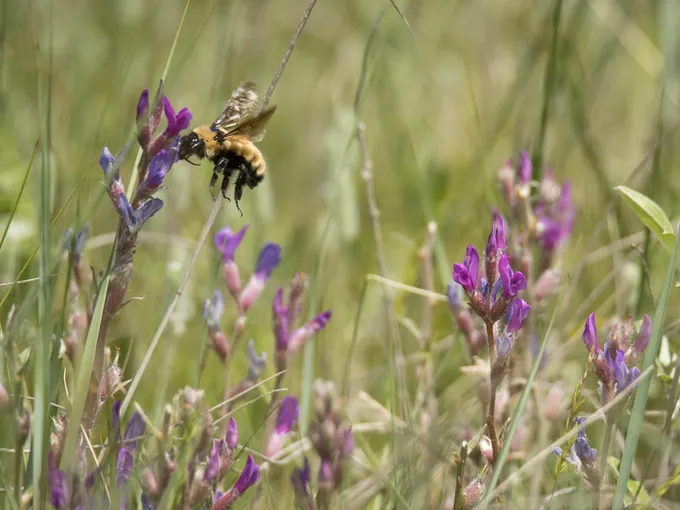
That said, we do have data on populations of bumble bees: One out of four of the world’s bumble bee species is at risk of extinction. In Europe, North America, and South America, many declines are documented. The American bumble bee (Bombus pensylvanicus), once one of the most widespread US species, has disappeared from at least eight states, and in southern Argentina and Chile, the giant Patagonian bumble bee (Bombus dahlbomii) is critically endangered. This species is vital to pollinating wildflowers and crops in the Patagonian region where many of our fruits, like blueberries, are raised. These declines—documented by The International Union of Concerned Scientists’ Bumble Bee Specialist Group—are concerning for several reasons, especially when considering our reliance on these hardworking insects for the health of our food systems.
Bumble bees and other native bees sustain many of our most nutritious crops, while honey bees underpin food production across the globe. Our health depends on theirs. Protecting bees is not just about conservation—it is a public health imperative.
© WWF-US/Franck Gazzola
Reconnect with nature and yourself
Explore calming videos, inspiring stories, nature prescriptions, and other resources that highlight how time outdoors can support mental health and well-being.