Prairie dogs: the tiny architects of the Great Plains
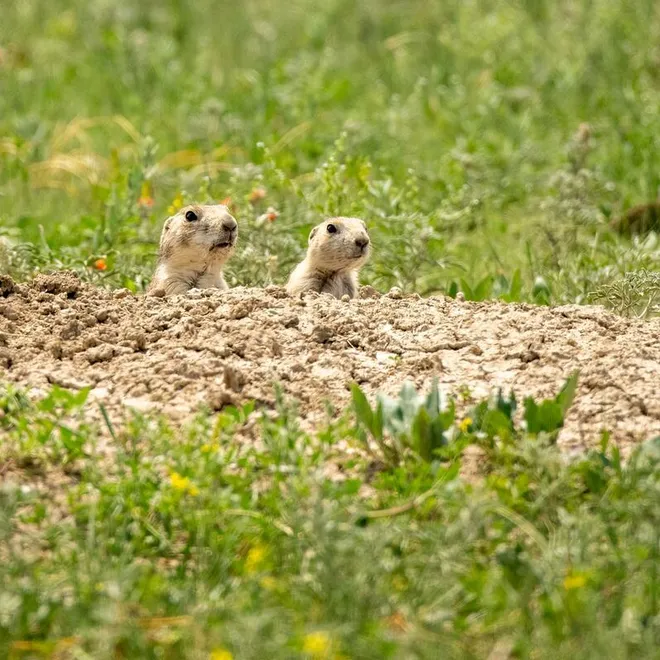
Though they may be small, prairie dogs shape the grasslands in mighty ways. Just as coral reefs sustain an array of life in the ocean, prairie dog colonies become vibrant centers of biodiversity on an expansive prairie.
© WWF-US/Clay Bolt
Sporting a sandy yellow-brown fur coat, small, round ears, and a sturdy build, prairie dogs are irresistibly cute creatures—if not also slightly comical. Five species of prairie dog live among the grasslands of Western North America, including the black-tailed prairie dog, the most widespread species. Historically, these industrious critters could be found from southern Canada all the way to Mexico.
Welcome to Dogtown

© Shutterstock / Tony LePrieur Photography
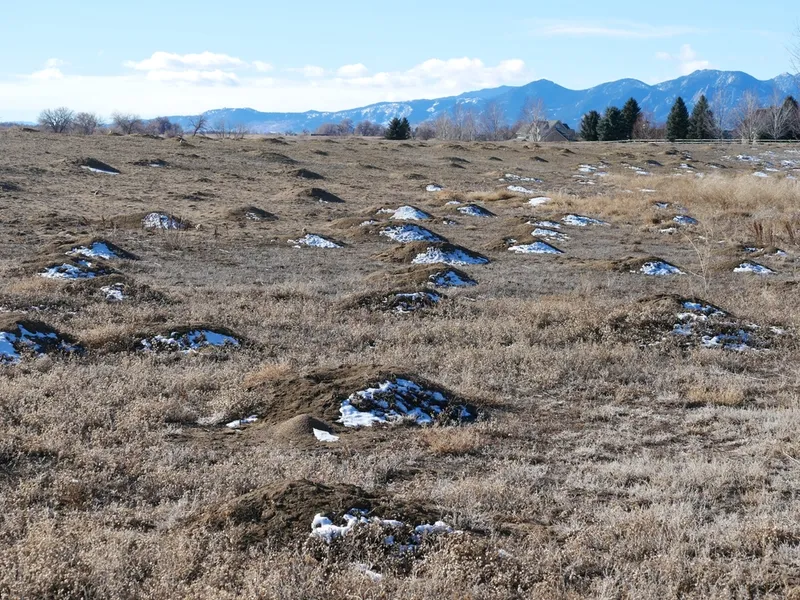
Prairie dogs are social animals, living in large colonies—or towns—that once contained hundreds of millions of individuals (though today, colonies are much smaller). In fact, the biggest prairie dog town ever discovered stretched 25 thousand square miles across Texas and was home to 400 million individuals!
© Shutterstock / Ted Iwabuchi Nature
Prairie dog towns are structured remarkably similarly to our own: they are subdivided into neighborhood-like sections known as wards, which are each occupied by family groups called coteries. Each coterie—which typically consists of a breeding male, several related females, and their young—calls a dedicated territory of burrows their home.
Prairie dog burrows are complex feats of engineering ingenuity. For example, black‑tailed prairie dogs construct large dome-shaped burrows with distinctive raised‑mound entrances. Though they may look like simple piles of dirt, these mounds are deliberately engineered to serve as elevated lookout points and to help keep water from flooding the burrow.
The rest of the burrow, with its winding network of tunnels, is constructed with equal care and purpose. A shallow underground chamber usually accompanies the mounded entrance, which is used as a listening station for potentially dangerous above-ground activity. Prairie dogs even mow their lawns! By clipping the vegetation around their colony, these thoughtful rodents can keep an unobstructed eye on approaching predators.
Good neighbors
© Bruce D. Taubert
© Diane Hargreaves
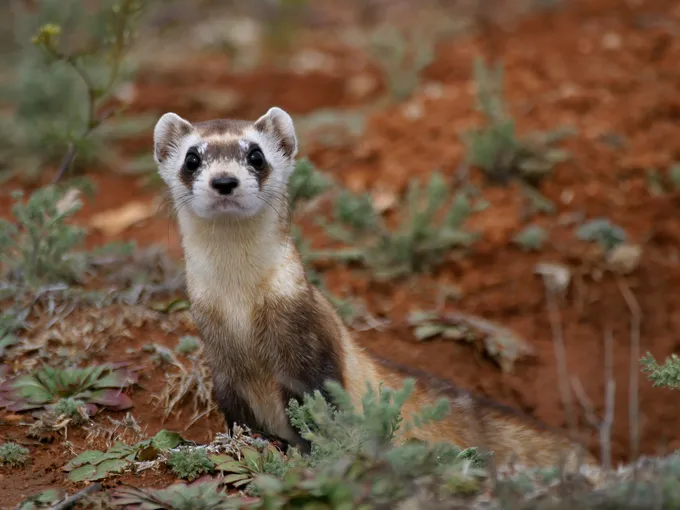
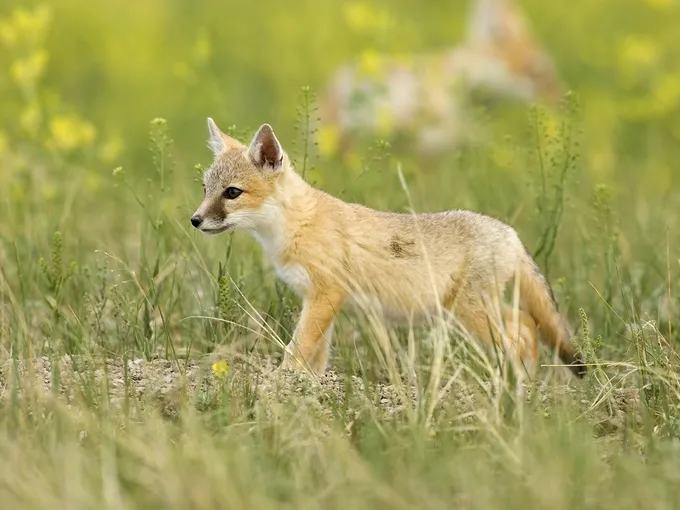
Prairie dogs aren’t the only animals that benefit from these complex burrows—their colonies create expansive ecosystems that support many species, justly earning them the titles of ecosystem engineers and keystone species. Burrows provide shelter for other plains animals like cottontail rabbits, burrowing owls, tiger salamanders, and even some predators like swift foxes, rattlesnakes, and endangered black-footed ferrets. Many of these predators also depend on prairie dogs for sustenance, including foxes, black-footed ferrets, coyotes, badgers, eagles, and hawks.
Other non-predatory species also rely on prairie dog towns for food, often foraging around the colonies where constant grazing creates more diverse, nutritious vegetation and clear sightlines for spotting danger. These visitors include numerous bird species (both resident and migratory), as well as grazers like pronghorn and bison. Some birds, like mountain plovers, even use these areas as their nesting grounds.
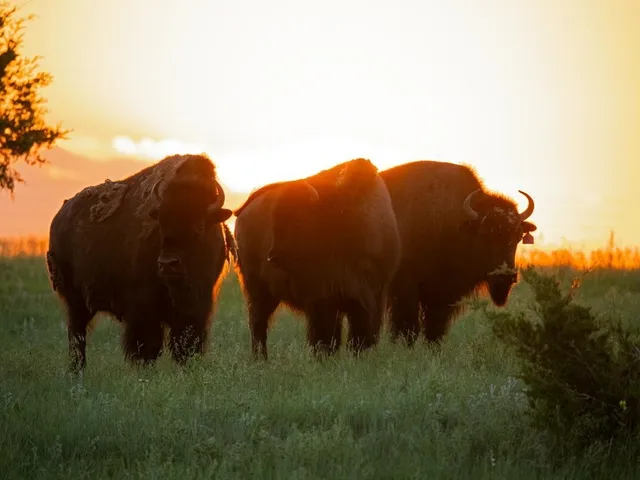
© WWF-US/Clay Bolt
Support Tribes restore buffalo to the Great Plains
The Indian Buffalo Management Act would strengthen support for Tribal Nations who are working to bring buffalo back from the brink of extinction.
Yipping and yapping
As if prairie dogs needed to be more impressive, they boast a communication system so sophisticated that some scientists consider it a language. Complete with an extensive range of vocal calls and body signals, prairie dogs communicate detailed messages about predators, with unique phrases for hawk, coyote, and even humans. They can also distinguish the differences in clothing color and body size when it comes to describing people. While scientists still have a lot to learn about prairie dog language, it’s safe to say these critters are cleverer than most people realize.
Protecting prairie dogs
Despite their charm, ecological importance, and undeniable wit, prairie dog populations across North America are in decline. Disease, habitat loss, and conflict with humans have caused their range to shrink dramatically. Today, prairie dogs occupy only about 2% of their historic habitat.
Yet there is hope. WWF works to secure a brighter future for prairie dogs by monitoring colonies, partnering with local communities to support coexistence, and reducing the impacts of disease through targeted treatments and innovative new technologies. By protecting these tiny prairie architects, we protect our Great Plains and all its stunning biodiversity.
Prairie dogs reveal an astounding depth of character. They are masterful architects, essential stewards of prairie ecosystems, and socially sophisticated animals. They remind us just how much wonder nature holds when we pause long enough to notice.
Learn more about the Great Plains

© Shutterstock/vs-kov