The climate case for the not-so-big bad wolf
Facts about nature’s misunderstood hero
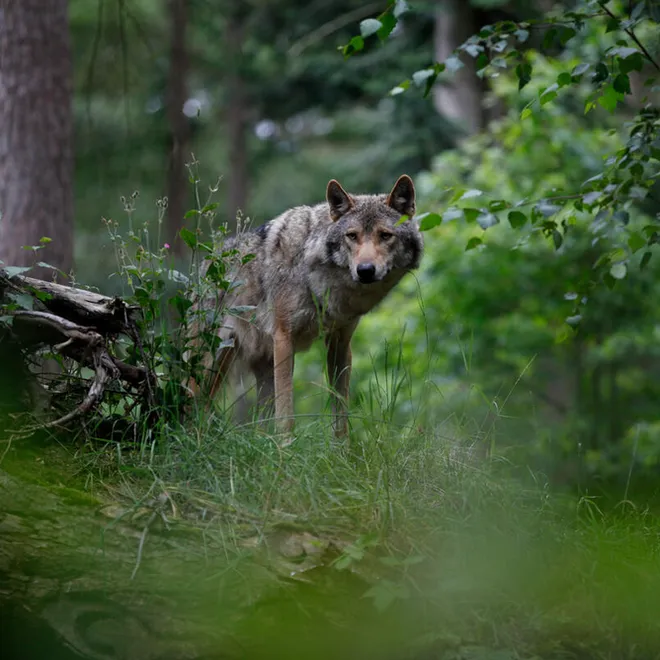
© WWF / Marielle van Uitert
Wolves roam some of our world’s wildest, most rugged landscapes, including mountain ranges, dense forests, and open tundra. Currently, these special ecosystems are experiencing unprecedented threats from climate change, resulting in rapidly rising temperatures, shifting prey patterns, and habitat loss, disrupting their natural balance.
In common folklore and media, wolves are often miscast as devious or malicious. But they are more than mere predators: they also play a critical role in ensuring the health and resilience of Earth’s climate.
Wolves benefit plants, wetlands, and carbon
As apex predators, wolves are integral to ecosystems wherever they are naturally found. Like most species at the top of the food chain, wolves have few natural competitors. As a result, they help maintain healthy populations of other animals and even many of the plants that share their habitats. A famous example concerns wolves and Yellowstone National Park. When wolves were removed from the park during the late 1920s, populations of elk and other prey species surged, which led to overgrazing resulting in negative cascading impacts throughout the greater Yellowstone ecosystem.
Wolves were reintroduced to Yellowstone in 1995. Since then, there has been a notable resurgence of woody plants like willow and aspen. Because of the increase in their food plants, the beaver population in the park has also increased, resulting in healthier wetlands. When researchers documented the cascading effects of wolf reintroduction, they found there was about a 1,500% increase in larger willows with a greater capability for carbon storage. Additionally, browsing on young aspens dropped to less than 25% in upland areas and under 20% in transitional areas between land and water by 2010, which helped increase aspen growth and recruitment.

© McDonald Mirabile / WWF-US
The (real) big, bad wolf
The polarizing nature of wolves stems not only from folklore but the real-world concerns of ranchers, hunters, and farmers. The opposing viewpoints between wolf advocates and rural communities often create social tensions that reduce opportunities for developing shared goals and strategies. In turn, these conflicts often lead to increased hunting and trapping based on fears that more wolves and increased protections for them will rob producers of resources, including livestock and hunting opportunities. It seems that the real “big bad wolf” is often not the animal itself but rather the polarizing viewpoints that allow little space for conversation and shared planning. Today, US wolves are found in Montana, Idaho, Wyoming, eastern Oregon, eastern Washington, and a small section of northern Utah, where they are no longer federally protected.1 However, there are ranchers and other landowners who have learned to live with wildlife for the betterment of the land. The Blackfoot Challenge in western Montana is one example: this ranching community has not only learned to live with wolves, but grizzlies, mountain lions, and the many other species that are native to the region.
“Research continually shows that when ecosystems are intact, including their native species from the smallest bees to wolves and other top predators, they are undeniably more resilient to climate change and the ever-growing pressures that are placed on the natural world,” says Patrick Lendrum, director of science for WWF’s Great Plains Program.
Perhaps it is time to accept both perspectives: Living alongside wolves is complicated, and yet they are also key to keeping many ecosystems—and the services they provide—healthy and resilient. Today, as has been the case across much of our existence, humans continue to struggle to find ways to co-exist with these powerful animals. And despite successful reintegration efforts in regions like Yellowstone, wolves continue to need our help. To protect them, we must continue to examine our relationships with predators. We can help by funding coexistence programs, which help ranchers and wolves live together more harmoniously, by educating others about the positive impact wolves have on the environment, and, of course, by supporting science-based conservation policy and initiatives, like the Endangered Species Act. These conservation efforts safeguard the ecosystems wolves rely upon and provide the necessary training, education, and innovation for communities on the front lines with wolf populations, ensuring a healthier future for all. In our search for solutions to climate change, wolves may be one of nature’s most unexpected heroes.
Learn more about other wildlife climate heroes
Resources
1Robbins, Jim. "As Wolf Populations Rebound, an Angry Backlash Intensifies." Yale Environment 360, December 12, 2024. https://e360.yale.edu/features/wolves-united-states-europe.