Where do rhinos live? And eight other rhino facts
Facts about rhinos and what WWF is doing to help protect the species.
© Martin Harvey / WWF
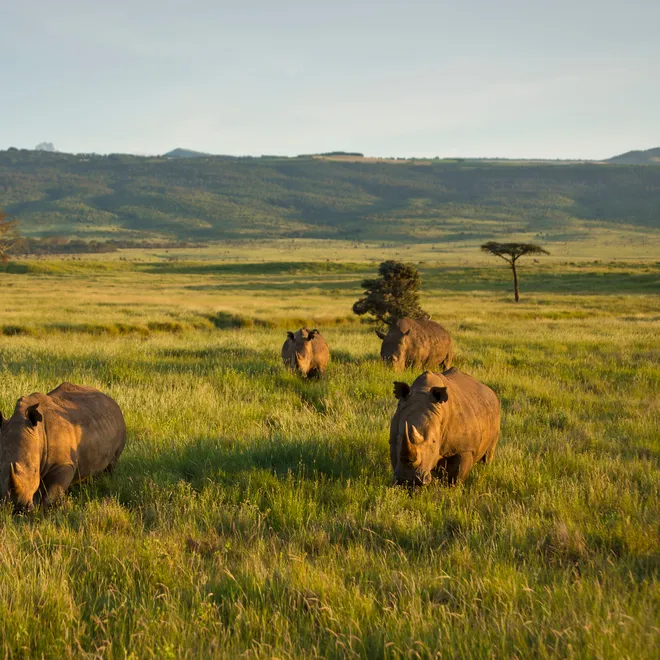
Rhinos are one of Asia and Africa’s oldest groups of mammals. With a population of around half a million at the beginning of the 20th century, there are now only an estimated 27,000 left in the wild. Despite the conservation challenges that rhinos continue to face, initiatives to recover their populations are paying off, with three of the five remaining rhino species' populations increasing. WWF is working with governments, communities, and partners to recover and grow rhino populations and to end the illegal trade of rhino horn that’s threatening these vital flagship species.
In Asia and Africa, WWF is working to conserve rhinos by building capacity and supporting the development and execution of strategic conservation actions designed to help these iconic creatures survive in the face of multiple challenges.
Where do rhinos live?
There are five species of rhino found in the world—two in Africa, and three in Asia.
What species of rhinos live in Asia?
There are three species of Asian rhinos—the greater one-horned rhino found in India and Nepal; the Sumatran rhino found on the islands of Sumatra and Borneo; and the Javan rhino that is only found in one protected area on the island of Java, Indonesia.
What are their population statuses?
The greater one-horned rhino is listed as Vulnerable by the International Union for Conservation of Nature (IUCN), with around 4,075 individuals left in the wild. There were only around 200 individuals at the beginning of the 20th century, but strict protection and management actions from Indian and Nepalese wildlife authorities and partners have brought the species back from the brink of extinction.
Black rhino populations have also made a remarkable recovery since the end of the 20th century, thanks to persistent conservation efforts. Although listed as Critically Endangered, black rhino numbers have more than doubled from their historic low of less than 2,500 to almost 6,500 in the wild today.
Javan and Sumatran rhinos are also Critically Endangered, with only around 76 Javan rhinos and around 40 Sumatran rhinos. According to the IUCN, white rhinos are Near Threatened, with approximately 16,800 individuals.
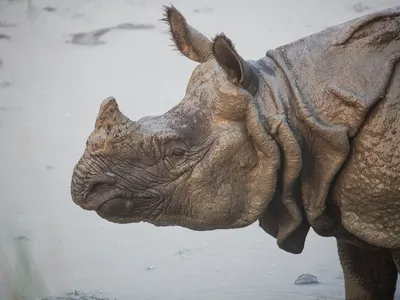
Greater one-horned rhinos (or “Indian rhino”) are the largest of the rhino species
© Karine Aigner / WWF-US
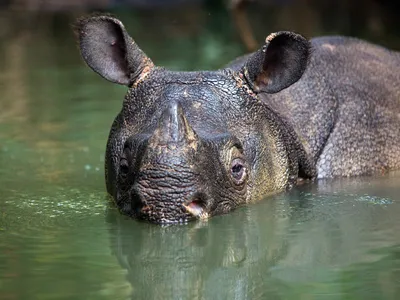
Javan rhinos are the most threatened of the five rhino species
© Stephen Belcher Photography / WWF
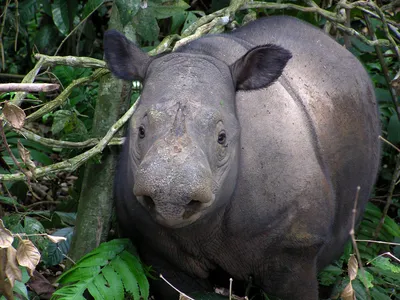
Sumatran rhinos are the smallest of the living rhinoceroses and the only Asian rhino with two horns.
© WWF-Indonesia / Gert Polet
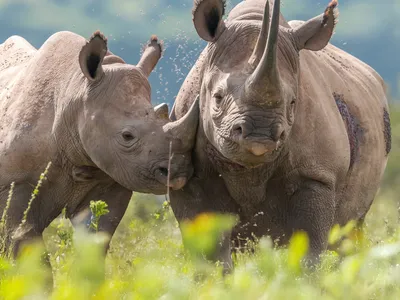
Black rhinos are smaller than white rhinos and have a hooked upper lip.
© naturepl.com / Tui De Roy / WWF
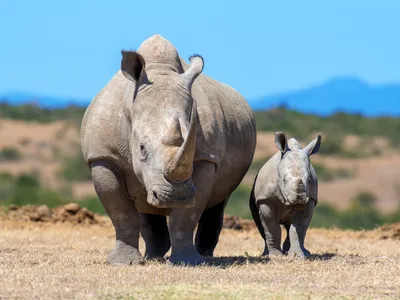
African white rhinos have a square upper lip with almost no hair.
© Shutterstock / Volodymyr Burdiak / WWF-Sweden
What are the differences in appearance among the rhino species?
Among Asian rhinos, the greater one-horned rhino is the largest rhino species, identified by its single horn and a gray-brown hide with skin folds that give it an armor-plated appearance. The Javan rhino has a similar appearance to the greater one-horned rhino, but is smaller in size, has a much smaller head, and has fewer apparent skin folds. It is also known as the lesser one-horned rhino. The Sumatran rhino is the smallest and hairiest rhino. Its skin is reddish-brown in color, and it is the only Asian species of rhino that sports two horns.
Black rhinos are the smaller of the two African rhino species. Both black and white rhinos have two horns, and while there are several visual characteristics that differentiate them, the easiest way is by looking at the shape of the mouth. As grazers, white rhinos have a square upper lip, while black rhinos, who are browsers, have a hooked upper lip.
What are the biggest threats to rhinos?
Habitat loss and degradation, and poaching are the main threats facing Asian and African rhinos. Despite a ban on international trade in rhino horn since 1977, illegal demand in Asia remains high and fuels poaching in both continents. The Sumatran rhino faces an additional threat: genetic isolation. This species—of which only around 40 survive in about a dozen non-viable subpopulations in Indonesia—is simply too scattered to find mates to breed.
Why are rhinos so important to the environment?
Rhinos are ecosystem engineers. For instance, grassland habitats with access to water are important for greater one-horned rhinos, and they help maintain the health of these grasslands and the waterholes in which they wallow. As one of the few remaining megaherbivores in the world, rhinos disperse the seeds of plants and fruit they’ve eaten through their dung. This helps maintain the diverse and resilient ecosystems on which numerous other plant and animal species also depend.

© Michel Terrettaz / WWF
What are rhino horns used for?
Rhino horn is often ground up and used in traditional Asian medicines because the horns are believed to treat a range of ailments, ranging from fevers to cancer. Its use as a status symbol to display success and wealth is also increasingly common. Unfortunately, the illegal trade of rhino horn throughout Asia, principally in China and Viet Nam, continues to persist and threaten wild rhinos despite the international ban on the trade of their horn.
Can rhino horns grow back?
Rhino horn is made of keratin, the same substance as human hair and fingernails. Rhinos are born without horns, but within just a couple of months, a tiny stub appears—and their horns continue to grow for the rest of their lives.
Why should we protect rhinos?
Protecting rhinos safeguards entire ecosystems that countless other species and people depend on for survival. Without rhinos, grassland, savanna, and forest habitats would lose much of their plant diversity, triggering a cascade of negative effects throughout these ecosystems, diminishing species richness and resilience.
Beyond their ecological contributions, rhinos also support economic growth through tourism and help create job opportunities for communities that live near and with them. Rhino protection supports community livelihoods and demonstrates how conservation can benefit both people and wildlife.
What is WWF doing to help rhinos?
There are three key things that can be done to conserve rhinos: protect the individuals, protect their habitat, and establish new populations through translocation back to areas where rhinos lived in the past. WWF supports these conservation actions through community-based conservation approaches. We do this by building support for rhino conservation in local communities and increasing the conservation capacity of communities that want to do more to help these magnificent animals.
WWF is also working to ensure ecosystem health for rhinos, partnering with governments and other partners to expand rhino range, conducting rhino disease surveillance and research, and supporting human-rhino conflict management.
Lastly, to tackle the illegal trade and demand for rhino horn, WWF is working in India on RhoDIS DNA research to address poaching, educating consumers through demand reduction campaigns, and collaborating with international governments to strengthen local and international law enforcement and protection efforts.