
© naturepl.com / Doug Allan / WWF | WWF-Netherlands / Vincent Kneefel
Belugas
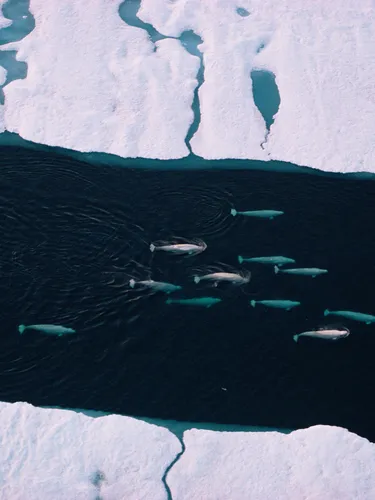
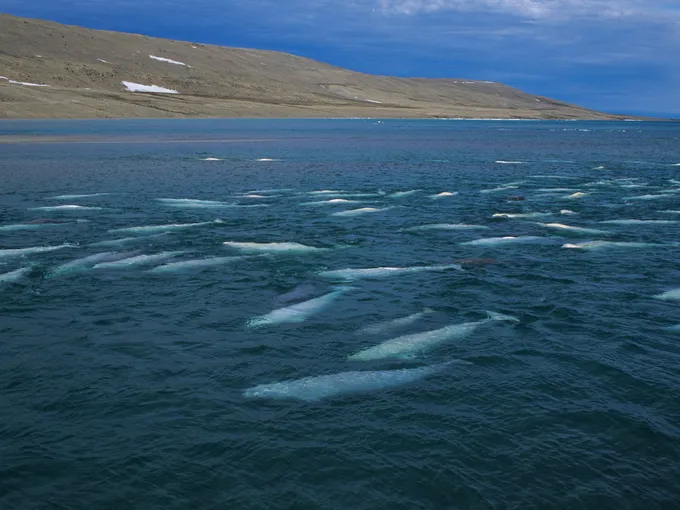
Belugas are extremely sociable mammals that live, hunt and migrate together in pods, ranging from a few individuals to hundreds of whales. Their bulbous forehead, called a "melon”, is flexible and capable of changing shape. This allows them to make different facial expressions. Belugas can produce a series of chirps, clicks, whistles and squeals, which give the beluga its other name, "the canary of the sea." They may sound like music or even nonsense to us, but to fellow belugas they convey important information.
Many populations of belugas migrate as the sea ice changes in the Arctic. They move south in the fall as the ice forms and then return to feed again in the spring, as the ice breaks up. They can also be found near river mouths, and sometimes even venture up river. Belugas feed on a variety of fish species, such as salmon and herring, as well as shrimp, crabs and mollusks.
Beluga facts
- Status Learn more about endangered status categories and explanation
- Near threatened
- Population
- Over 150,000
- Scientific name
- Delphinapterus leucas
- Weight
- 1,500–3,500 lbs.
- Length
- 8.5–22 ft.
- Habitats
- Oceans
News and stories
-
WWF worked with Kotlik and Emmonak community members to capture underwater audio of whales
Why beluga whales matter
© David Merron / WWF-US
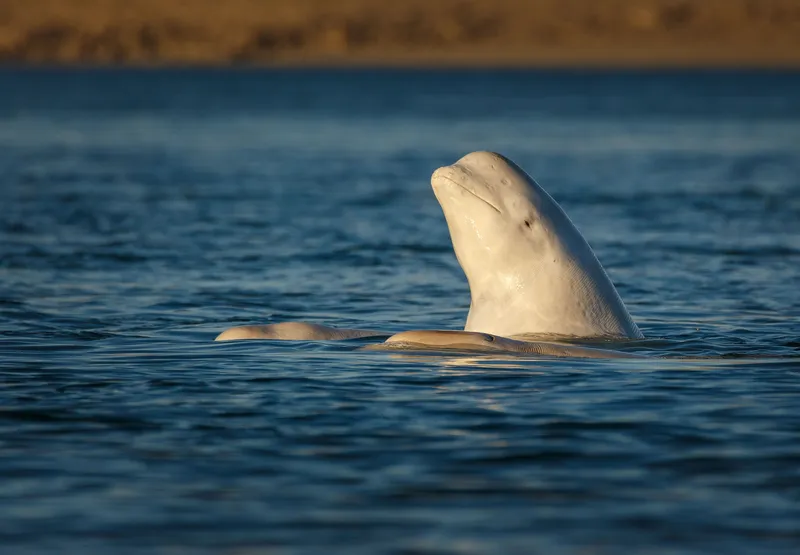
Whales, like the beluga, are at the top of the food chain and have an important role in the overall health of the marine environment. Beluga whales are also culturally important to indigenous communities in the Arctic. Like polar bears, the beluga depends on sea ice for its existence and can be directly impacted by climate change.
Threats to beluga whales

© naturepl.com / Sue Flood / WWF-Canon
Climate change
Thousands of years of evolution have prepared Arctic species like the polar bear, walrus, and beluga for life on and around the sea ice. Because of climate change, the ice cover has been changing rapidly, in both extent and thickness, and shrinking far too quickly for these species to adapt. A beluga’s entire life is connected to sea ice, both as a place to feed and a place to take refuge. Slow-swimming beluga whales rely on sea ice as a place to hide from predators like orcas.
Oil and gas development
Vessels that support oil and gas development mean increased shipping in sensitive areas. Increased shipping means more noise that can mask communications for many Arctic marine species, and it increases the potential for collisions with marine mammals, especially whales. It also brings more pollution and a greater possibility of oil or fuel spills.
Ocean noise
Shipping, industrial extraction, marine construction, and military activities cause underwater noise pollution. Since whales depend on sound to communicate, any interference by noise pollution can negatively affect their ability to find food and mates, navigate, avoid predators, and take care of their young.
How WWF is taking action to protect beluga whales

© naturepl.com / Doc White / WWF
In the Arctic, WWF is working to influence shipping guidelines that will protect marine animals, such as beluga whales. We are advocating for better oil spill prevention and response measures.
Monitoring whale health
In the Beaufort Sea of Canada, WWF supported a community-based monitoring program of beluga health. This project was a collaboration between Canada's Department of Fisheries and Oceans and local communities.
Improving whale protection
The International Whaling Commission (IWC) is the body in charge of regulating whaling and addressing the vast number of other threats to whales, dolphins and porpoises in our oceans such as shipping, climate change, and bycatch. WWF is pushing to make the IWC more effective at reducing these threats that go beyond whaling.
Protecting whales from ocean noise
WWF partnered with Natural Resource Defense Council and Ocean Conservation Research to raise awareness of and address the threat of ocean noise on marine animals like the beluga. Our Don’t Be a Buckethead initiative shares the story of the many different Arctic marine species which depend on sound for survival and the harmful effects of underwater noise pollution.
How you can help

© WWF-US / WWFGifts
Adopt a beluga whale
Support WWF’s global efforts to protect wild animals and their habitats and choose from kits with plush and more.