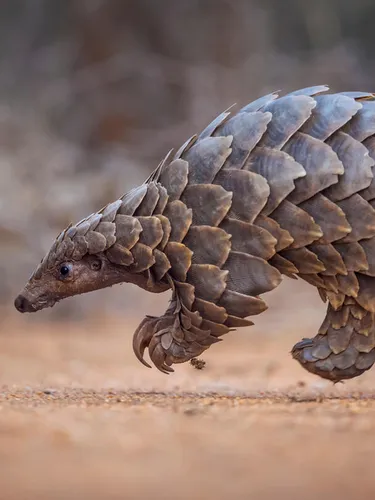
© naturepl.com / Neil Aldridge / WWF
Pangolins
What’s scaly from tip to tail and can curl into a ball?
Pangolins!
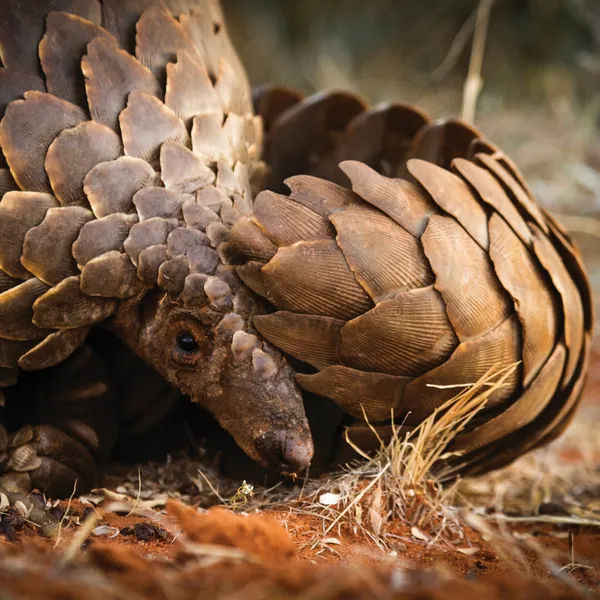
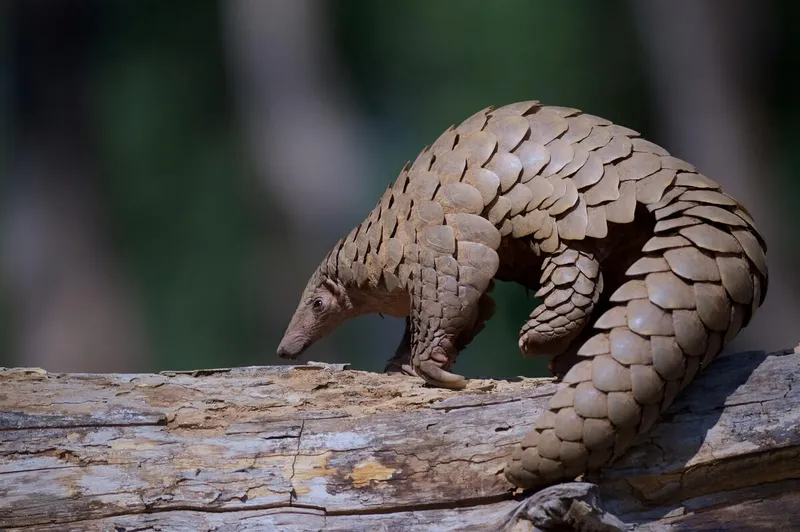
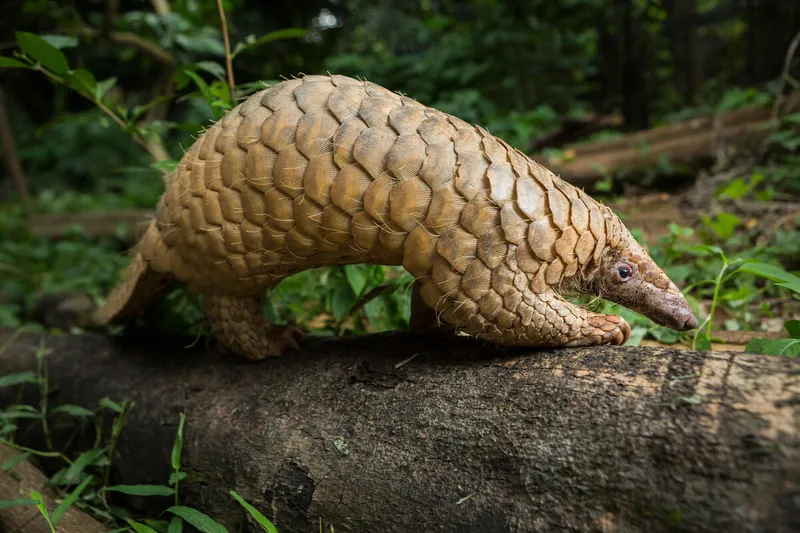
These solitary, primarily nocturnal animals are easily recognized by their full armor of scales. A startled pangolin will cover its head with its front legs, exposing its scales to any potential predator. If touched or grabbed, it will roll up completely into a ball, while the sharp scales on the tail can be used to lash out.
Also called scaly anteaters because of their preferred diet, pangolins are the most trafficked mammal in the world—with demand primarily in Asia and in growing amounts in Africa—for their meat and scales. There is also demand in the United States for pangolin products, particularly for their leather to be used in boots, bags, and belts.
There are currently eight species of pangolin recognized by the International Union for Conservation of Nature (IUCN), ranging from vulnerable to critically endangered. However, recent research indicates there could be more pangolin species.
The eight pangolin species are found on two continents and are protected under national and international laws, including being banned from the international commercial trade.
Four species live in Africa: Black-bellied pangolin (Phataginus tetradactyla), White-bellied pangolin (Phataginus tricuspis), Giant Ground pangolin (Smutsia gigantea), and Temminck's Ground pangolin (Smutsia temminckii).
Four species are found in Asia: Indian pangolin (Manis crassicaudata), Philippine pangolin (Manis culionensis), Sunda pangolin (Manis javanica), and the Chinese pangolin (Manis pentadactyla).
In recent years, two new species have been discovered: the Asian mysterious pangolin (Manis mysteria) and the Indo-Burmese pangolin (Manis indoburmanica). More research is needed to understand their genetic and taxonomic differences from other Asian pangolin species.
Since 2020, China has increased protection for the native Chinese Pangolin (Manis pentadactyla) to the highest level, which closed an important loophole for consumption of the species in-country. Additionally, the government will no longer allow the use of pangolin scales in traditional medicine, a big win given that an estimated 195,000 pangolins were trafficked in 2019 for their scales alone (Challender, et. al, 2020).
China recently removed Guilingji, a traditional medicine containing pangolin ingredients, from its latest pharmacopoeia. The Chinese Pharmacopoeia is the official standard for clinical prescriptions, and the removal of Guilingji reflects the country’s shift away from the use of wildlife in traditional medicine.
Pangolin facts
- Weight
- 4.4–7 lbs
- Habitats
- Forests, grasslands
News and stories
Why pangolins matter
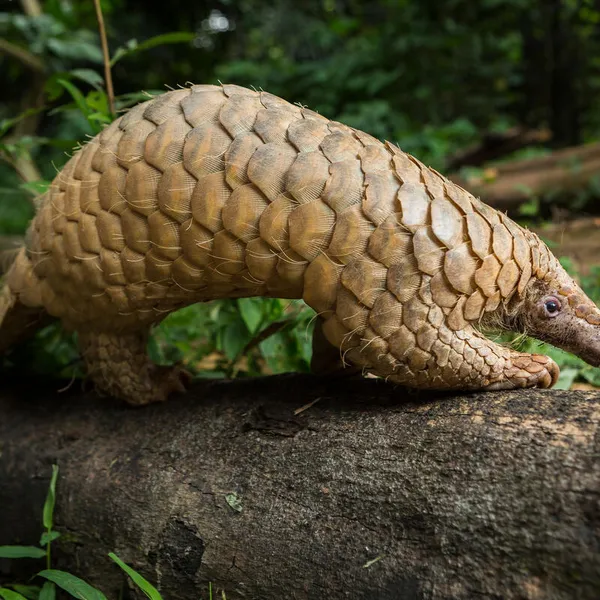
© Dr Sanjay K Shukla / WWF-International
Pangolins are sometimes mistaken as reptiles, but they are actually scaly-skinned mammals. When in danger, the pangolin can roll into a ball, exposing only the tough scales for protection. Little is known about this elusive creature, so it’s difficult to estimate wild population sizes. But given the demand for pangolin meat and scales, and the massive seizures of pangolin scales that occurred in 2019 and 2020, the population is believed to be in decline.
Threats to pangolins

© Shutterstock
Are pangolins the most trafficked mammal in the world?
Pangolins are the most trafficked mammals in the world, with most trafficking in African species smuggled to Asia. Pangolins are in high demand in countries like China and Viet Nam. Their meat is considered a delicacy, and pangolin scales are used in traditional medicine and folk remedies to treat a range of ailments from asthma to rheumatism and arthritis. There is also demand in the Americas for their skins used to make leather products like boots, bags, and belts. All eight IUCN-recognized pangolin species are protected under national and international laws, but that is not stopping the massive international illegal trade in pangolins, which has increased in recent years due to growing demand.
More than 1,000,000 pangolins were trafficked over a 10-year period, with 2019 data indicating that a pangolin is poached every three minutes.
Illegal wildlife trade
West and Central Africa are hot spots for pangolin poaching and illegal wildlife trafficking, with an estimated 8.5 million pangolins taken from the wild for the illegal trade from 2014-2021.
Recently, seven metric tons of pangolin scales were confiscated in Ogun state in Nigeria. The Chinese national arrested is suspected of being behind a transnational smuggling operation of pangolin scales.
Although the number of seizures of illegally traded pangolin scales has decreased significantly in China due to strengthened law enforcement and increased public awareness of their protected status, the illegal wildlife trade is still the greatest threat to pangolins.
How WWF is taking action to help pangolins
© naturepl.com / Jak Wonderley / Wild Wonders of China / WWF
WWF is working in Asia and Africa to protect pangolins and other species from wildlife crime. We are actively trying to reduce the demand for illegal wildlife products in countries like China and Viet Nam. We are also helping governments mount a strong defense against the poaching crisis. And WWF is lobbying for strong national laws and stronger enforcement to ensure that wildlife crime is deterred. To help reduce the trade in pangolin products online, WWF co-convenes the Coalition to End Wildlife Trafficking Online, along with conservation organizations IFAW and TRAFFIC, and over 40 global tech companies comprising more than 50 digital platforms to identify and block illegal listings.
You can help report pangolin products for sale online through the member company’s reporting links or the Coalition to End Wildlife Trafficking Online’s reporting form. See what these products look like on the Coalition’s Look Out Online page.
How you can help
© George Walsh
Strengthen the Endangered Species Act
More than 99% of the species listed under the Endangered Species Act have avoided extinction due to the law’s protections. Today, those protections are under threat — at the exact moment wildlife needs them most.