© naturepl.com / Doc White / WWF-Canon
Yellowfin tuna
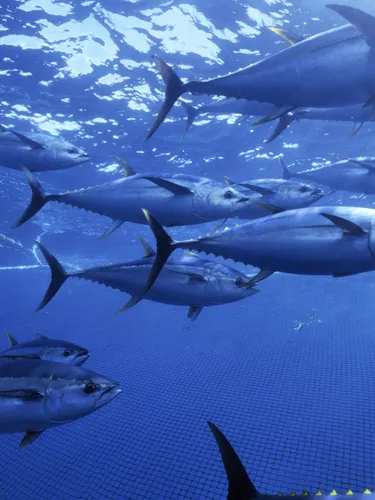
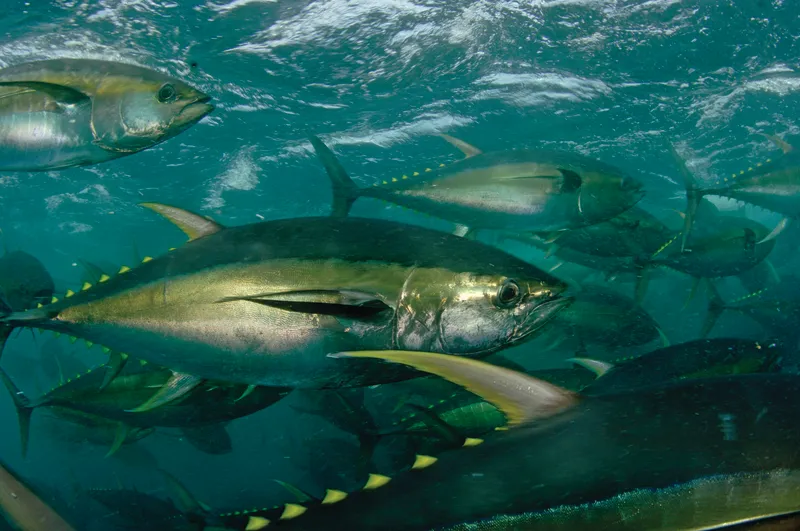
Yellowfin tuna are torpedo-shaped with dark metallic blue backs, yellow sides, and a silver belly. They have very long anal and dorsal fins and finlets that are bright yellow. Yellowfin can live up to six or seven years. They are highly migratory and are found throughout the Pacific, Atlantic and Indian Oceans. They form schools with other tunas like skipjack and bigeye, and are also known to associate with dolphins. Yellowfin are able to breed year-round.
Yellowfin tuna facts
- Status Learn more about endangered status categories and explanation
- Near threatened
- Scientific name
- Thunnus albacares
- Weight
- up to 450 pounds
- Length
- up to 7 feet
- Habitats
- Oceans
Why yellowfin tuna matter
© _
Yellowfin are an important commercial tuna species, particularly the raw sashimi market. Although tuna do provide food and livelihoods for people, they are more than just seafood. Tuna are a top predator in the marine food chain, maintaining a balance in the ocean environment.
Threats to yellowfin tuna

© Hélène Petit / WWF-Canon
Overfishing
According to information collected by the ISSF Scientific Advisory Committee, the Eastern Pacific stock of yellowfin is overfished and some overfishing is occurring in the Indian Ocean.
Bycatch
Since juvenile yellowfin school with adult skipjack, they are increasingly caught as bycatch by vessels that target skipjack. The removal of these juveniles before they have a chance to spawn could lead to fewer yellowfin in the long term.
How WWF is taking action to protect yellowfin tuna

© Jürgen Freund / WWF-Canon
Tuna are integral parts of the entire marine ecosystem and our goal is for populations to be healthy and well-managed. We partner with governments and regional fisheries management organizations to advocate for stricter plans to recover depleted tuna stocks, combat pirate fishing and reduce bycatch.
WWF works with other organizations and the fishing industry to transform tuna fishing into a sustainable business, particularly through certification of tuna fisheries by the Marine Stewardship Council (MSC). WWF helps ensure that tuna are harvested responsibly and sustainably managed through work with the International Seafood Sustainability Foundation (ISSF). We encourage retailers to source from fisheries that are MSC-certified and work to raise consumer awareness about sustainably caught tuna.
How you can help
© WWF-US / WWFGifts
Ocean-themed gifts
Support WWF's global conservation efforts and choose from symbolic adoptions, apparel, and more!