How fast are Amur leopards? And 9 other Amur leopard facts
The Amur leopard can run at remarkable speeds of up to 37 miles per hour
© _
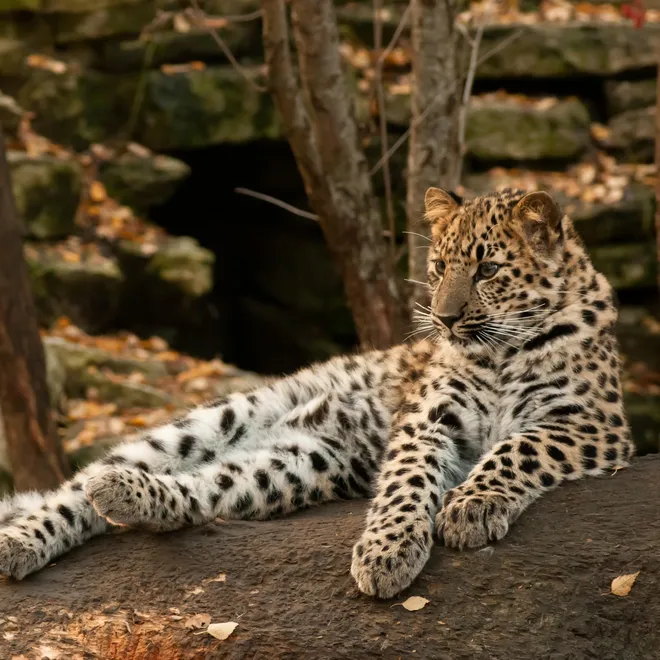
The Amur leopard, also known as the Far East leopard, is the world’s rarest big cat. A subspecies of the leopard, these animals are found in the forested transboundary region that spans the Russian Far East and China. They are critically endangered, and WWF works with local communities, regional authorities, government, and other non-governmental organizations to save the Amur leopard and ensure the long-term conservation of the region.
Take a look at some questions and answers about these majestic cats:

© _
1. How fast are Amur leopards?
Similar to other leopards, the Amur leopard can run at speeds of up to 37 miles per hour. This incredible animal has been reported to leap more than 19 feet horizontally and up to 10 feet vertically.
2. Where do Amur leopards live?
Amur leopards live in the Amur Heilong Landscape, which spans both the Russian Far East and adjacent areas of China. This rare subspecies of leopard has adapted to life in the temperate forests that make up the northernmost part of the species’ range.
3. How many Amur leopards are left in the wild?

© Ola Jennersten / WWF-Sweden
In an amazing tale of recovery related to concerted conservation efforts, the number of Amur leopards in Russia has increased from 27-32 to 70-75 in the last 15 years, while China has recorded an increase of 13-15 individuals in bordering provinces.
4. How do Amur leopards differ from other leopards?
© _
© WWF-Russia / ISUNR
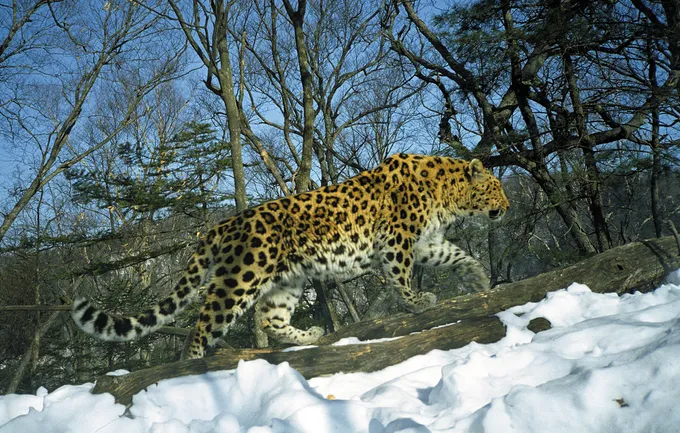
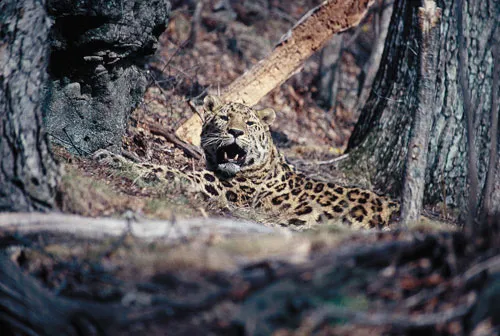
Amur leopards have a paler coat than most subspecies of leopards, and large, dark, widely spaced rosettes with thick, unbroken rings. They weigh 70-105 pounds. Since they are so well adapted to living in the harsh, cold climate of the Russian Far East, they have a thick coat that can grow as long as 7 centimeters in winter.
5. What threats do Amur leopards face?

© naturepl.com / Vladimir Medvedev / WWF
The Amur leopards are poached largely for their beautiful, spotted fur. They also suffer from prey scarcity because the prey they feed on, such as roe deer, sika deer, and hare, are hunted by local communities for both food and income. They are also threatened by habitat loss.
6. How do Amur leopards raise their cubs?
Amur leopards have one to four cubs. They are weaned at the age of three months. Some males stay with females after mating and may even help with rearing the young. Cubs typically leave their mothers around the age of one and a half to two years. Often, siblings maintain contact during their early years of independence.
7. What is WWF doing to protect Amur leopards?
Amur leopards received a safe haven in 2012 when the Russian government declared a new protected area called Land of the Leopard National Park. The park is 650,000 acres and includes much of the Amur leopard’s breeding areas and about 60% of their remaining habitat. The park is also home to 10 endangered Amur tigers. WWF had lobbied for the establishment of this park since 2001. Conservationists are also working toward monitoring leopard populations as they disperse from the park into other parts of the region, as well as across the border and into neighboring Chinese nature reserves, and hope to establish a Sino-Russian transboundary nature reserve.
8. Why do Amur leopards matter?

© naturepl.com / Lynn M. Stone / WWF-Canon
Amur leopards are important ecologically. They are top predators, meaning they play an important role in maintaining a healthy balance of species in their habitat. This influences the condition of the forest and ecosystem, which supplies wildlife and people with food, freshwater, and many other resources. Conservation of Amur leopard habitat also benefits other species, including Amur tigers and prey species like deer.
9. What do Amur leopards sound like?
Leopards are silent most of the time, but sometimes they give hoarse, rasping coughs to advertise their presence or to announce territorial boundaries. Some leopards purr while feeding.

© Ola Jennersten / WWF-Sweden
10. How do Amur leopards hunt?
Leopards are nimble-footed and strong. They often hide unfinished kills high in tree branches to prevent scavengers and other predators from taking their food. They are said to be the most accomplished stalkers and climbers of the big cats, and their immense strength allows them to tackle prey up to 10 times their own weight.