New eDNA lab will expand biodiversity monitoring efforts in Bhutan
By
-
Whitney Kent

© WWF-Bhutan/Nima
Bhutan may be one of the world’s smallest countries, but it’s home to an incredible range of biodiversity. From tigers and snow leopards to Asian elephants and countless rare plant species, the country’s rich wildlife thrives across its remarkably varied ecosystems. Stretching across the Eastern Himalayas, Bhutan’s geography spans everything from humid subtropical forests to alpine meadows and towering peaks that can reach over 20,000 feet. The dramatic and rough terrain—while stunning—also makes it difficult to study and monitor biodiversity using traditional methods like camera traps or on-foot surveys.
Despite these obstacles, Bhutan is leveraging an innovative biodiversity monitoring tool called environmental DNA (eDNA) to create its first nationwide biodiversity assessment without the need for thousands of hours surveying through harsh and inaccessible terrain. However, analyzing these samples brings new challenges—eDNA samples have to be sent abroad for analysis, which is expensive, time-consuming, and can raise concerns about sharing a country’s genetic material internationally.
What is eDNA?
Environmental DNA, or eDNA, is genetic material that organisms naturally shed in their environment through sources like feces, skin, and hair. By sampling the air, water, or soil, we can extract this DNA to identify the presence of different species, including rare and elusive ones, assess biodiversity, and monitor ecological changes.
Another milestone in Bhutan’s continued investment into eDNA
The opening of Bhutan’s first eDNA lab at the College of Natural Resources in April 2025 will now enable analysis to be done in the country. Developed by ETH Zurich, with support of WWF Bhutan, Bhutan for Life, and Bhutan Trust Fund, the lab will not only reduce cost and time to generate results, it will also build up local capacity and support continued biodiversity monitoring efforts in Bhutan and the region at large.
Groundbreaking findings from Bhutan’s Eastern Himalayas
Just over a year ago, in late spring 2024, a WWF and Nature Conservation Division team ventured high into Bhutan’s Jigme Dorji National Park, ascending over 13,000 feet to collect eDNA samples from the Paa Chhu River. The goal was not only to uncover what wildlife was present in this remote, high-altitude, but also to find evidence of the elusive snow leopard.
The results uncovered much more than we expected. For the first time ever, eDNA further confirmed the presence of not just snow leopards, but also Pallas’s cats, a small, rarely seen wild cat with a resting grumpy face, in this region. It also reconfirmed for only the second time ever in Bhutan the presence of the woolly flying squirrel, thought to be extinct for 70 years until its rediscovery in Pakistan in 1994, and officially recorded in Bhutan for the first time in 2020.
Another groundbreaking finding: sambar deer were detected at the highest elevation ever recorded. Leopard cats, and potentially tigers, were also found at some of the highest altitudes within their known range. While further analysis of the sample is needed, if confirmed, this would represent one of the highest elevations ever recorded for tigers using eDNA, matching previous records from camera trap data.
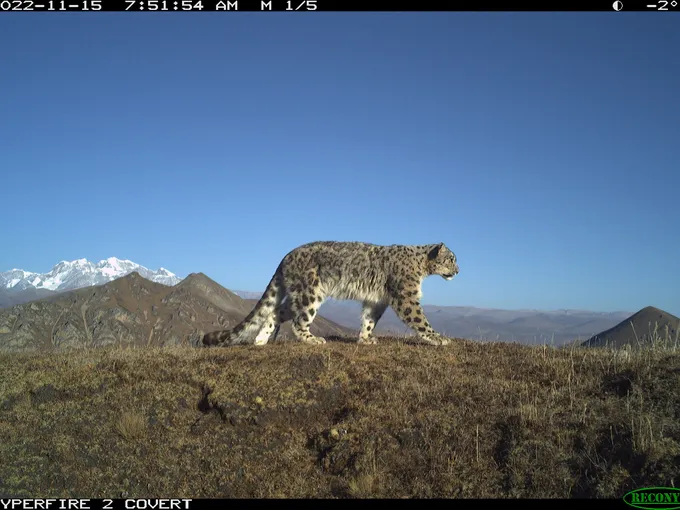
© Department of Forests and Park Services, MoENR Bhutan
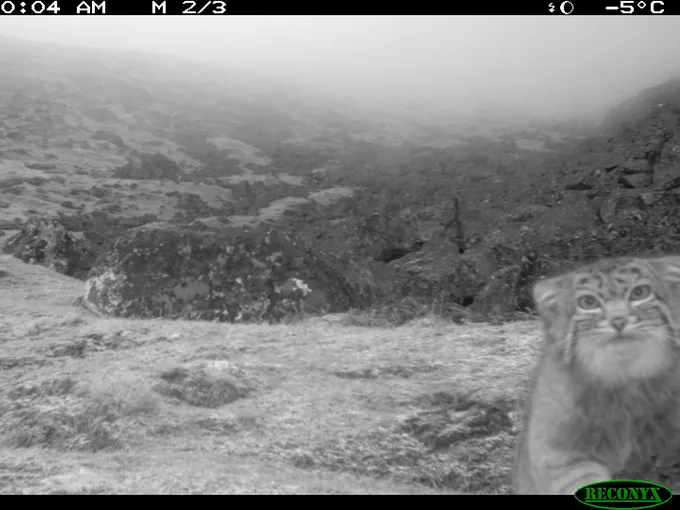
© Wangchuck Centennial Park and WWF-Bhutan
Changing the future of biodiversity conservation
These discoveries aren’t just important for contributing to Bhutan’s biodiversity database—they demonstrate the powerful potential of eDNA technology to revolutionize how we survey and protect wildlife, especially in hard-to-reach, high-altitude environments.
Now with Bhutan’s new eDNA lab, data analysis will be faster and more affordable, enabling ongoing monitoring of the country’s rich biodiversity and diverse ecosystems. This helps conservationists understand how species are faring over time, ensuring that Bhutan’s remarkable natural heritage remains protected for generations to come.
“I feel like a gold miner for life’s invisible traces—just sitting still for an hour beside a stream, its crystal-clear water flowing through a filter,” said Arnaud Lyet, lead specialist for Wildlife Conservation. “That’s all it takes for eDNA to reveal biodiversity gems we never imagined, transforming how we understand and protect the natural world.”

© WWF-Bhutan/Nima
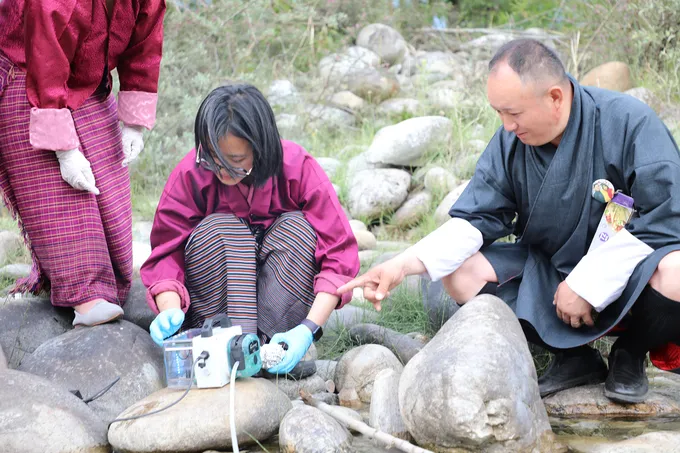
© WWF-Bhutan/Nima