Walking with giant tortoises in the Galápagos
By
-
Sarah Wilson

© M. HILLMAN/NATURAL HABITAT ADVENTURES
SANTA CRUZ, GALÁPAGOS ISLANDS :: ECUADOR
Early morning at Tortoise Camp was cool and foggy. As I made my way down a rocky, sloping path, a drizzly rain fell, filling the air with the scents of damp earth and cedar. Across the mountainside, dozens of sleeping giant tortoises dotted the landscape, their heads tucked into their shells. I waded closer through the long, wet grass, taking care not to startle them. Our guide, Gustavo, told us the animals are notoriously shy, and that if you move too quickly, they’ll hiss with a loud gasp and retract their limbs.
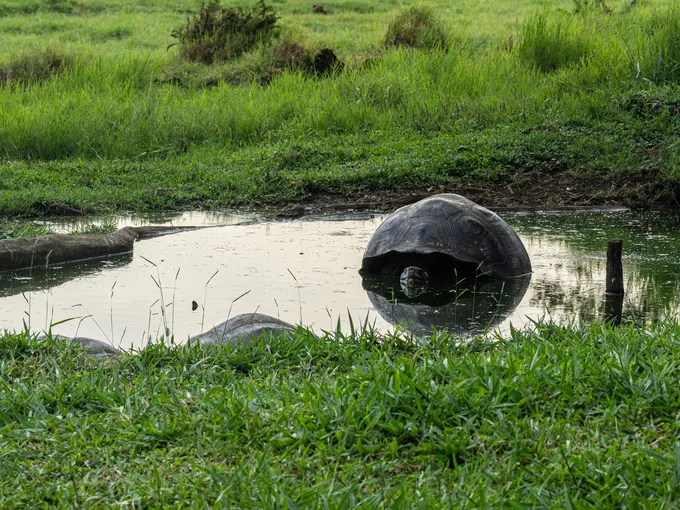
Stepping off the path, I arrived at a small pond beneath a copse of trees, where I spotted one large male perched on the bank. His dome-shaped carapace was wider than the wingspan of my arms. I readied my camera, breathed in the muggy air, and settled in to watch his languid movements.
Santa Cruz Island’s highlands are lush and green, surrounded by endemic, old-growth Scalesia trees dripping with lichen and moss. Giant tortoises pass through this protected habitat on their pilgrimage from the top of the island’s inactive volcano—where they live most of the year—to the arid lowlands, where they reproduce. Nearly two hundred years ago, Charles Darwin observed their ponderous migration up and down the Galápagos Islands’ formidable terrain.
Very slowly, the male tortoise inched his head out of his armor to reveal a wizened, narrow-eyed face. He dipped into the pond to drink, submerged up to his eyes. The subtle movements of his head and the curl of his claws against the earth filled me with breathless awe.
The tortoise lifted his head, green algae rimming his face. I snapped one final picture and returned to the path. It was time for both of us to continue on our way.
© M. BRIEF/ NATURAL HABITAT ADVENTURES
© G. BOREHAM/NATURAL HABITAT ADVENTURES
© J. RYAN/ NATURAL HABITAT ADVENTURES
© R. DE GOUVEIA/ NATURAL HABITAT ADVENTURES

© M. HICKEY/NATURAL HABITAT ADVENTURES
© Andy Rouse / naturepl.com / WWF
Explore more
Keep reading this issue of World Wildlife magazine