Small wonder
With grace, and determination, Bhutan builds a harmonious future for people and nature
By
-
Phuntsho Wangdi
Photographer
-
Aaron Gekoski
Illustrator
-
Ishita Jain

© WWF-US/Aaron Gekoski
One November evening in 2021, as daylight was beginning to fade, a team of rangers was returning to their station from a survey site in Phibsoo Wildlife Sanctuary, in the most southern reaches of Bhutan.
They had driven along a dirt track, passing through teak and sal forests draped with moss and orchids before descending to the grasslands surrounding a dry riverbed. As the densely forested foothills on the other side of the floodplain came into view, someone tapped the cabin and whispered: “Tiger.”
About 150 feet ahead, at the far edge of the riverbed, a lean tigress stood still, her light orange coat and dark stripes contrasting sharply with the pale expanse of sand and rock. Focused on something in the undergrowth and poised to leap, she hadn’t noticed the approaching vehicle. The rangers could not see her target. A spotted deer, a sambar, a wild boar?
The tigress remained still for several minutes; no one said a word. One ranger offered a silent prayer. Another took photos. Then, someone in the back of the truck moved, drawing the tiger’s attention. She briefly gazed at the pickup before vanishing into the forest.
It took some moments for the rangers to collect themselves. Everyone was smiling.
Novice ranger Khandu Tshomo was barely three months into wearing the olive-green uniform and had never before seen a tiger in the wild. Even veteran rangers may never spot one. “I felt connected to my role as a ranger,” Tshomo recalls. “It was a most auspicious moment.”

© WWF-US/Aaron Gekoski
© WWF-US/Aaron Gekoski
© WWF-US/Aaron Gekoski
Rare beauties
In 2017, camera traps installed in Phibsoo Wildlife Sanctuary had revealed the presence of a tiger, but actual sightings remained few and far between; that night’s sighting was a monumental confirmation of the impact of Bhutan’s conservation efforts. The presence of the big cat, an apex predator and umbrella species, signified a healthy forest ecosystem and the flourishing of other threatened wildlife. A year later, the 2022–23 national tiger survey—which deployed more than 1,200 camera traps—counted seven tigers in Phibsoo, including several young cubs.
Today, visitors to the sanctuary are greeted by herds of spotted deer, an important tiger prey species. Their white-speckled, golden-brown coats blend in with the lowland grasslands that have been cleared of exotic and invasive species and planted with tall, tufted clumps of reddish brown Themeda grass. Restoring native vegetation is part of Bhutan’s strategy to make the sanctuary more functional and secure. In addition to restoring grasslands, waterholes, and saltlicks (exposed patches of soil that provide wildlife with easy access to key minerals), the reserve has supplied rangers with essential infrastructure, training, and equipment.
Ensuring Bhutan’s tigers have the right conditions to thrive also means making sure they have room to roam. Thankfully, a tigress like the one the rangers spied has the option of traversing the entire country using a unique network of biological corridors—wildlife “highways” of intact habitat that connect the country’s 10 protected areas. She could, for example, journey from moist subtropical forests, where India’s plains fold themselves into Bhutan’s foothills, up through the cool, mist-laden central valleys to the crisp, open alpine meadows in the country’s far north.
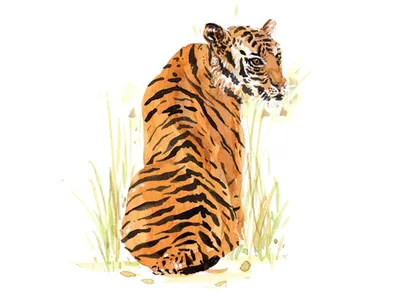
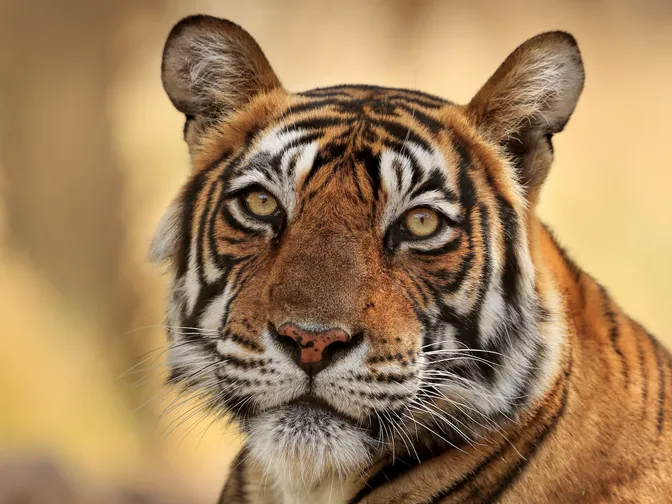
Tiger
Tigers are venerated in Bhutan but they are also threatened by habitat loss, poaching, and human-tiger conflict. Concerted conservation efforts are paying off, however: A 2021–22 national survey estimated the country harbors 131 wild tigers—a 27% increase over the 2015 count.
© Ishita Jain
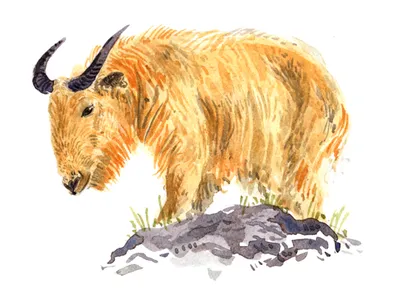
Takin
The national animal of Bhutan, this horned herbivore can be found grazing in forests at altitudes of 3,000 to 15,000 feet. Legend has it a Buddhist monk created the unique-looking ungulate by combining a goat and a cow.
© Ishita Jain

Red Panda
Slightly larger than domestic cats, red pandas are tree-dwellers, using their semi-retractable claws and bushy tails to move between branches. Threats, including the loss of nesting trees and key food sources like bamboo, landed them on the endangered species list in 2008.
© Ishita Jain
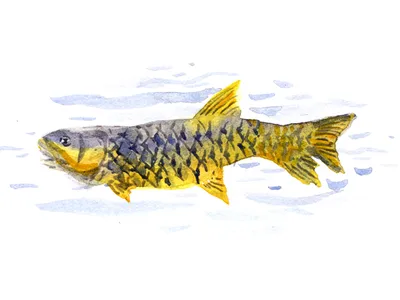
Golden Mahseer
The golden mahseer is a fish of mythic proportions, armored in large scales and growing up to 9 feet long. One of the eight auspicious symbols of Buddhism, this powerful species represents happiness and fearless living and has become a powerful draw for fly fishers worldwide.
© Ishita Jain
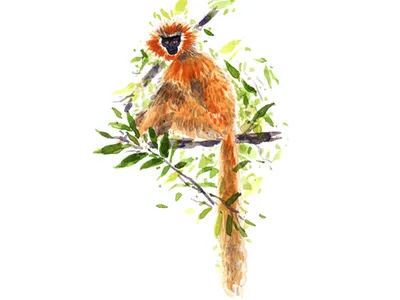
Golden Langur
The golden langur is endemic to Bhutan and India. The shy, endangered primate spends most of its time swinging in tree canopies; its long tail helps it balance as it leaps from branch to branch.
© Ishita Jain
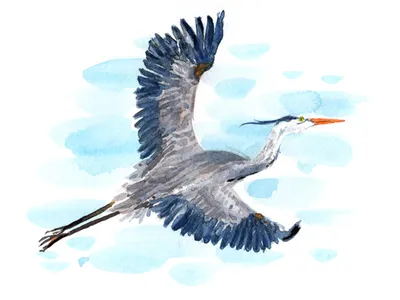
White-Bellied Heron
The Critically Endangered white-bellied heron is one of the world’s rarest birds, with fewer than 250 estimated to survive globally, and roughly 30 in Bhutan. It’s also the second-largest heron species, with a wingspan of up to six and a half feet.
© Ishita Jain
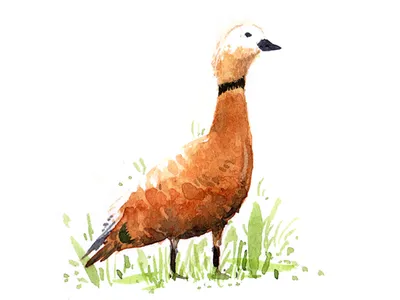
Ruddy Shelduck
The ruddy shelduck is revered for its rusty orange plumage, which resembles the color of a Buddhist monk’s robe. In 2017, WWF supported Bhutan’s first study on the movements of these migratory ducks, which revealed that their overwintering areas fall outside the country’s existing protected area system, highlighting the importance of a holistic approach to conservation.
© Ishita Jain
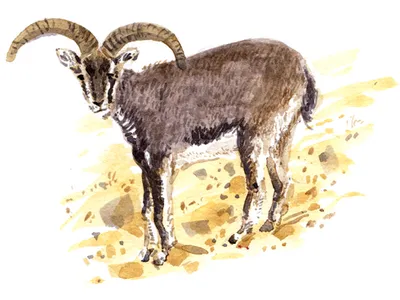
Blue Sheep
Blue sheep, also known as bharal, are neither blue nor sheep. Grayish brown and more closely related to goats, these impressive climbers found on rocky Himalayan cliffs are a snow leopard’s primary prey.
© Ishita Jain
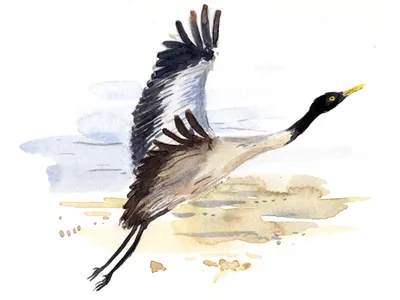
Black-Necked Crane
The black-necked crane is endemic to the Tibetan Plateau, where it is considered a symbol of peace. The crane winters in the wetlands of Bhutan, but pressures from human development and overgrazing are causing numbers of this vulnerable bird to dwindle.
© Ishita Jain
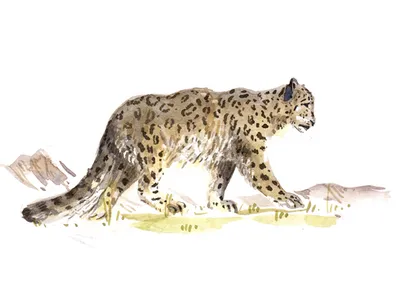
Snow Leopard
Known as the “ghost of the mountain,” the snow leopard blends seamlessly into its alpine surroundings. But rising temperatures and human encroachment have reduced the big cat’s habitat and the availability of its prey. Bhutan’s commitment to protecting the species has seen snow leopard numbers increase almost 40% since 2016.
© Ishita Jain

Asian Elephant
Elephants are nature’s landscape designers, creating paths, dispersing seeds, and fertilizing soil as they travel. Once populous throughout Asia, they are now restricted to isolated pockets. A 2016 survey confirmed 678 elephants in Bhutan, with a significant population along its southern border.
© Ishita Jain

© WWF-US/Aaron Gekoski
Clear priorities, growing impact
Bhutan’s national network of protected areas—envisioned by the nation’s monarchs and guided by the Royal Government of Bhutan—is a key strategy of the country’s commitment to environmental conservation and one of the four pillars of the country’s laudable development philosophy: Gross National Happiness. Alongside the pillars of cultural preservation, sustainable and equitable socioeconomic development, and good governance, this commitment to steward Bhutan’s rich natural heritage also aims to preserve the Bhutanese way of life.
Bhutan’s protected areas were first designated in the 1960s when, after centuries of geographic isolation, the country began to open up and build its first roads, schools, and hospitals. In the following decades, groups like WWF helped the country implement and operationalize its conservation vision, particularly its protected area network.
“WWF has been present in Bhutan’s conservation journey right from the start, working with and training our people, bringing in new technology and supporting many other initiatives,” says Karma Tenzin, director of forests and park services for the Royal Government of Bhutan. “These have greatly contributed to the country’s conservation initiatives.”
And even though Bhutan is one of the world’s smallest countries, with less than 10 million acres and fewer than a million people, its conservation efforts have an impact far beyond its borders.
For example, a constitutional mandate to maintain forest cover at 60% (it’s currently at nearly 70%) helped to make it the first carbon-negative country in the world. These forests play a crucial role in mitigating the impacts of climate change and regulating the flow of the country’s abundant water resources for drinking, irrigation, and other uses, including hydroelectricity, Bhutan’s primary source of revenue.
The country’s extensive forest cover and network of protected areas also establish it as one of the Earth’s most biodiverse places, a haven for some of the world’s rarest flora and fauna, including red pandas, snow leopards, Asian elephants—and tigers. The 2021–22 national survey’s estimate of 131 individuals in the wild—a 27% increase from 2015—provided further evidence that the big cats use the protected area network to travel long distances, venture into new territories, and cross international borders, confirming Bhutan’s critical role in repopulating tigers across Asia.
Bhutan for Life

© WWF-US/Aaron Gekoski
Even as Bhutan reports rising wildlife numbers, the country is changing fast, and balancing conservation and development is increasingly difficult. For example, thousands of young Bhutanese have left the country for economic opportunities abroad. Human-wildlife conflict is a pressing issue. And the environmental changes wrought by a changing climate pose considerable risks to Bhutan’s fragile ecosystems and economy.
To address these tensions, in 2018 the Royal Government of Bhutan and WWF—among a host of partners—launched Bhutan for Life (BFL) to foster climate-smart, forward-looking conservation and economic development. The initiative seeks to ensure Bhutan’s protected areas are fully functional and permanently secured through effective and sustainable forest and wildlife management. It also aims to boost the resilience of local communities and ecosystems that benefit from the protected area system. BFL provides access to renewable energy and nature-based livelihoods for local communities and includes measures to curb wildlife trade, address human-wildlife conflict, and safeguard protected area landscapes.
Bhutan for Life is the first Project Finance for Permanence initiative in Asia, bringing together diversified funding sources to support the country’s conservation initiatives over a projected 14-year period, after which Bhutan will assume sole, long-term responsibility for funding its protected areas. In essence, BFL secures durable funding for conservation in Bhutan. Financing partners for the US $118 million initiative include the Royal Government of Bhutan, the Green Climate Fund, the Global Environment Facility as implemented by the United Nations Development Programme, the Bhutan Trust Fund for Environmental Conservation, and multiple foundations and private donors.
Since 2019, BFL’s reliable and consistent funding has enabled protected areas to make sustained improvements and develop habitat management plans—from grassland management to the creation and management of water holes—among other efforts. Bhutan for Life also vastly expanded patrolling using a software solution (the Spatial Monitoring and Reporting Tool, or SMART) that allows real-time monitoring to combat poaching and illegal wildlife trade. And when the COVID-19 pandemic hit, BFL funds shored up people-friendly conservation efforts when protected areas globally faced devastating funding cuts.
“Bhutan for Life represents a reliable funding solution for conservation efforts,” says Pema Wangda, executive director of the BFL Fund Secretariat in Thimphu. “It also emphasizes the central importance of fostering sustainable livelihoods. Communities,” he adds, “need ownership over managing their own natural resources.”
And that’s where it all comes together. “We engage local communities in habitat restoration to complement our other activities,” says Khandu Tshomo, now a seasoned ranger and the BFL liaison for Phibsoo Wildlife Sanctuary. “Together, habitat restoration, SMART patrolling, and community engagement have made it conducive for wildlife here to thrive.”
The impact of Bhutan for Life
In its first seven years of implementation, Bhutan for Life has established a strong presence in the country’s 10 protected areas, nine biological corridors, and the Royal Botanical Park. Funds have allowed for the construction of guard posts, ranger offices, staff quarters, visitor centers, and park headquarters, and provided patrol vehicles and field equipment. Bhutan for Life has also supported national tiger and snow leopard surveys, a national forest inventory, and climate-smart conservation plans for rare lady’s slipper orchids and the endangered golden mahseer. Other notable achievements include:
52% of the country’s territory permanently protected and sustainably managed
2,600+ acres of alpine meadows and lowland grasslands under improved management
6,700 acres of degraded land restored to health
6,100+ households benefited from electric fencing and insurance to address livestock predation
10,000+ rural households trained in participatory conservation activities like natural resource management and sustainable harvesting of non-timber forest products
Protecting people and wildlife
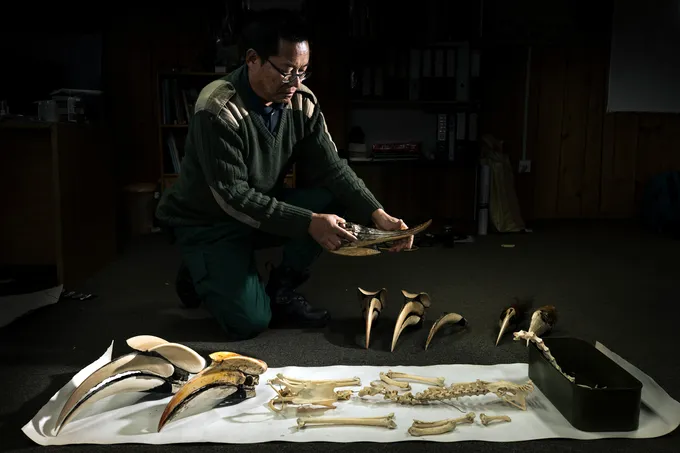
© WWF-US/Aaron Gekoski
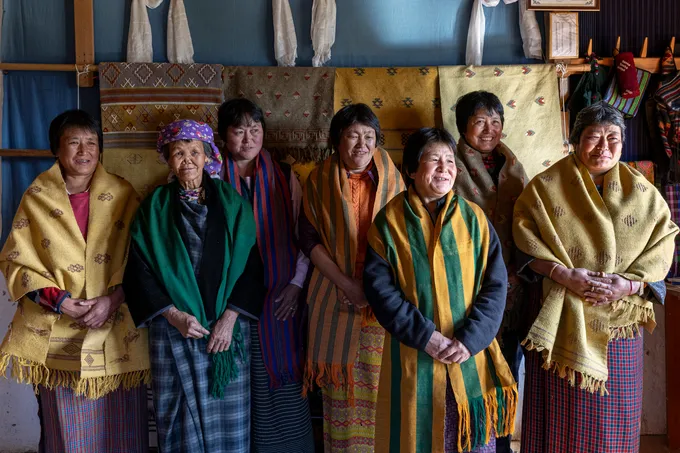
© WWF-US/Aaron Gekoski
As efforts to bolster protected areas succeed and wildlife numbers grow, Bhutan for Life is keeping Gross National Happiness in mind and helping communities adapt, benefit, and thrive.
Royal Manas National Park, for example, has among the highest tiger densities in the world and is a hot spot for birds. Here, local ecotourism operators conduct rafting and birding tours; more recently, they’ve begun guiding fly fishers hoping to land a golden mahseer, a prized fish that swims the fast-moving Manas River. Fly fishing was legalized here after Bhutan for Life, WWF, and the Fisheries Conservation Foundation conducted groundbreaking research on the mahseer’s population, movement, and life history, as well as the threats it faces, including pollution and habitat loss. As a community-based conservation initiative, locals take ownership of efforts to protect a species that attracts high-end anglers in turn.
On another front, BFL and its many partners are helping to manage human-wildlife conflict, one of the biggest threats to conservation and food security efforts in Bhutan. Take, for example, Jongthang village, located at the edge of the country’s largest protected area, Wangchuck Centennial National Park. Jongthang is adjacent to a biological corridor where predation of cattle and other livestock has increased.
“When we were children, the tiger was like a mythical animal that elders would speak of when it passed along the ridges high above the village,” explains Pema Lhamu, the elected community leader of the area. “Today, those rare stories of tigers have become real stories of fear and loss.”
Yet despite the danger and economic losses, Pema Lhamu notes, there have been no reported retaliatory killings of big cats in the area “because of communal and spiritual values that discourage the taking of life.”
To address the loss of livestock to predators, the partners have distributed machinery and tools, and introduced community-based insurance programs. They have also enclosed grazing land with solar-powered electric fencing to create community pastures, while ensuring wildlife movement pathways aren’t blocked.
Additional funds have supported the installation of solar-powered fencing to prevent elephants from entering croplands in the low-lying Sarpang district, where farmers grow corn, vegetables, and fruit. There, Bhutan for Life supports Community Quick Response Teams (QRTs), who share information and coordinate efforts in driving elephant herds away from people’s homes and crops—offering community members safety and the chance to cultivate commercial crops for sale.
“This area we live in is actually elephant habitat,” says TP Homagai, the QRT chairperson for the area. Although his banana plantations in the flatlands were damaged by elephants looking for food, he still believes in the importance of sharing the land. “Any long-term measures for human safety must also consider a safe zone for the elephants, because if they are not disturbed,” he says, “they will not disturb us.”
Big vision
Bhutan for Life was made possible through the collaboration and generous commitment of global partners, private philanthropists, and public institutions, including those listed below. Their visionary leadership is helping to ensure the enduring health of Bhutan’s natural heritage and a more sustainable future for the Eastern Himalayas and our planet.
Anonymous Donors
The Bhutan Foundation
- Daphne Hoch Cunningham and John T. Cunningham*
- Eric D. Lemelson*
- Michael J. Mars*
- Marshall Family Foundation*
- Philipp Family Foundation*
- William Tacon*
- Gérard and Anne Tardy*
- Sukey N. Wagner, in honor of Rodney B. Wagner*
Bedari Collective
Bhutan Trust Fund for Environmental Conservation
Carmen Busquets
Tammy and Bill Crown
Brenda and Swep Davis
Dhanin Tawee Chearavanont Foundation
Cindy and John Ford
Julia and David Foster-Bates
Global Environment Facility
Green Climate Fund
Neville and Pamela Isdell
Diane and Michael Moxness
Mycorrhizal Fund
Anne Reece
The Royal Government of Bhutan
Roger Sant
United Nations Development Programme
Karen and Donald Wagoner
* Given through The Bhutan Foundation

© WWF-US/Aaron Gekoski
Inspired action
Now in its seventh year, Bhutan for Life is deep into implementation of its ambitious goals. In addition to investing in ecotourism and managing human-wildlife conflict, work is underway to improve watersheds in the protected area network, to ensure that conservation management plans consider both nature and its benefits to people, and to improve access to nature-based livelihoods and income-generating opportunities for at least 80% of the households living in protected areas.
But the country’s commitment to conservation goes far beyond Bhutan for Life. In fact, Bhutan is already developing innovative financing mechanisms to fund ongoing efforts after the program phases out.
One example lies deep in Sarpang, in a stretch of land nestled between Phibsoo Wildlife Sanctuary and Royal Manas National Park, where a new embodiment of Bhutan’s vision is taking shape the more than 600,000-acre development called Gelephu Mindfulness City.
Announced in December 2023 by King Jigme Khesar Namgyel Wangchuck, the nascent city aspires to propel Bhutan on a new economic journey by attracting sustainable global businesses, increasing Bhutan’s participation in regional and international markets, and generating meaningful employment and education opportunities for the next generation of Bhutanese people—all while ensuring conservation and sustainability remain integral parts of how the country grows and prospers.
As plans for the city develop, forest officials are tracking the movement of elephant herds to ensure wildlife corridors between Phibsoo and Royal Manas remain undisturbed. The city’s master plan includes opening parts of Phibsoo to low-impact tourism, as well. To this end, Bhutan for Life has supported ecotourism development in the sanctuary, including wildlife-focused activities like birdwatching and jeep tours, and building amenities like restrooms and camping infrastructure.
By making intentional, holistic choices for its wildlife, natural systems, and people—and welcoming investors, businesses, professionals, and visitors who share in its vision—Bhutan looks to show how one small country can be a beacon of hope for the world.
© WWF-US/Aaron Gekoski
Where the wild things are
One of the biggest challenges in wildlife conservation is obtaining accurate information on the whereabouts of species. Data collection methods like transect surveys and camera traps require significant time and resources.
To address this challenge, Bhutan is employing environmental DNA (eDNA) technology—a method for detecting the presence of species by extracting DNA from environmental samples like soil, water, air, and snow.
In 2021 and 2022, Bhutan collaborated with WWF, ETH-Zurich, and Spygen on a successful pilot study on the effectiveness of eDNA sampling. Researchers collected water samples in Bhutan’s Royal Manas National Park, comparing the DNA they extracted with that of an existing reference database. They identified 325 species consisting of mammals, birds, fish, amphibians, and reptiles.
“Within a short span of time and from a small area, we were able to detect significant biodiversity,” says Kuenley Tenzin, WWF-Bhutan senior program officer.
Bhutan is now poised to become a global leader in using eDNA. In April, foresters collected water samples from 100 strategically selected sites as part of a national biodiversity survey that will inform Bhutan’s new National Biodiversity Strategies and Action Plans (NBSAP). Bhutan is developing the NBSAP to support its commitment, as a party to the 2022 Kunming-Montreal Biodiversity Framework, to halting and reversing biodiversity loss by 2030.
“Transect surveys and camera traps generally focus on big mammals and birds, but the new NBSAP is also targeting baselines on invertebrates, fish, and lesser-known taxa,” says Tashi Dhendup, head of the Bhutan Tiger Centre, which recently began using eDNA to study the presence and distribution of the big cats. “And eDNA can also confirm the presence of invasive species,” he says. “It is a very important tool.”
© Andy Rouse / naturepl.com / WWF
Explore more
Keep reading this issue of World Wildlife magazine