Community-first conservation in Alaska
The Arctic is warming nearly four times faster than the rest of the planet. Communities, like those in Alaska, often bear the brunt of these changes. WWF has been helping local people by supporting several Alaska Native-led initiatives through both its Arctic Community Wildlife Grants and robust youth programming that supports climate change adaptation, coastal ecology, local livelihoods, and Arctic wildlife.

© PAUL COLANGELO/WWF-US
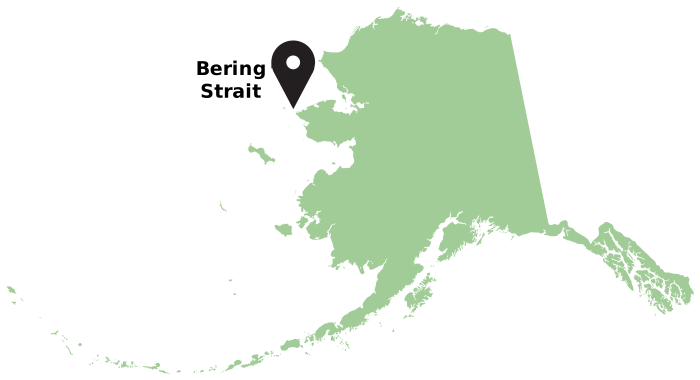
BERING STRAIT
Polar bear conflict reduction
With sea ice forming later and melting earlier than it once did, polar bears are spending more time near communities around the Bering Strait, raising the risk of human-wildlife conflict. In response, WWF works with the Indigenous-led Alaska Nannut Co-Management Council to develop and fund deterrence plans that blend local knowledge with specific regional concerns—building on existing projects in Alaska’s North Slope and enabling people to feel more comfortable living alongside polar bears.

© WWF-US/ELISABETH KRUGER
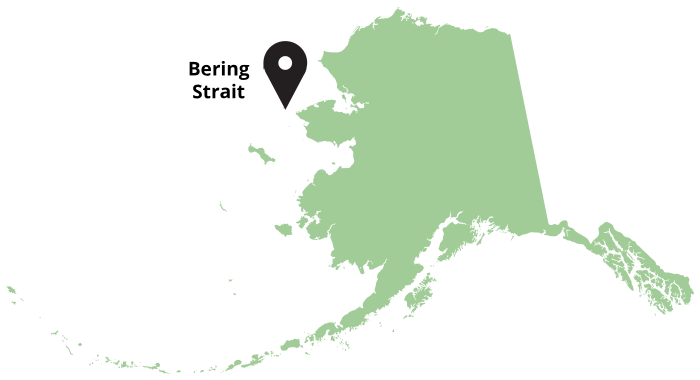
BERING STRAIT
Shipping alerts
The Bering Strait hosts over 1 million marine mammals, including whales, seals, and walruses. But as diminishing sea ice opens up new shipping channels, threats like ship strikes, oil spills, and noise pollution can harm animals and the people who rely on healthy marine resources. Now, WWF and the Arctic Watch program are broadcasting alerts to vessels, with specifics about critical wildlife habitats and speed measures, to make sea traffic safer for all.

© CREATE IMAGE/GETTY IMAGES
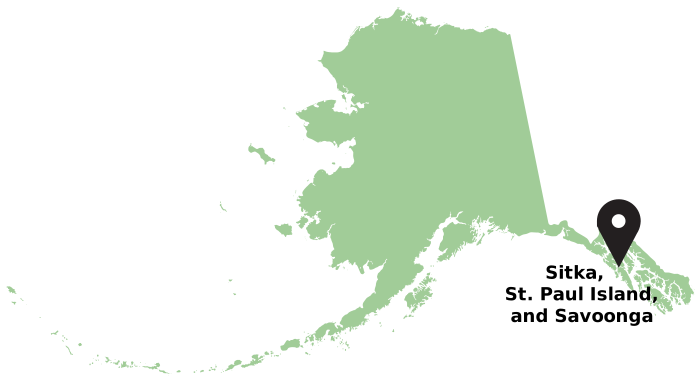
SITKA, ST. PAUL ISLAND, AND SAVOONGA
Working with youth
Since 2021, WWF has participated in the Sitka Sound Science Center’s Scientists in the School program, which connects hundreds of students with hands-on learning opportunities and professional scientists. WWF staff also co-lead a Seabird Camp on St. Paul Island and support the Arctic Youth Ambassador program. And in 2025, WWF introduced a science camp in the Native Village of Savoonga—a multidisciplinary program combining scientific research, Indigenous knowledge, and art for Alaska Native youth.

© TOM INGRAM/ALAMY STOCK PHOTO
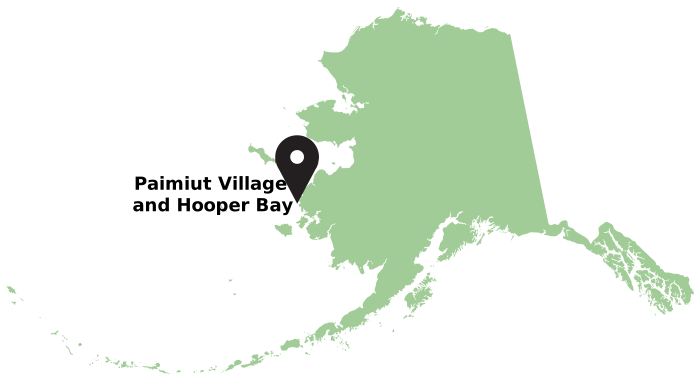
PAIMIUT VILLAGE AND HOOPER BAY
Shorebird monitoring
Arctic shorebirds have long flocked to the Yukon-Kuskokwim Delta, but their numbers are shrinking as erosion and habitat loss alter this low-lying tundra region. With WWF’s support, Paimiut community members are pairing Indigenous knowledge with radio telemetry to better understand the birds’ movements, habitat use, and breeding success—data that will help fill critical knowledge gaps and inform conservation strategies.

© ALL CANADA PHOTOS/ALAMY STOCK PHOTO
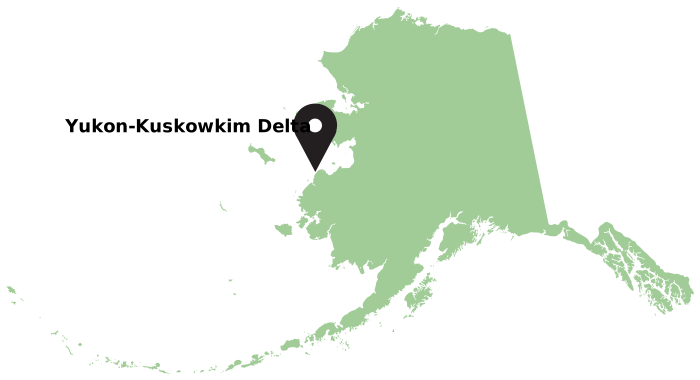
YUKON-KUSKOWKIM DELTA
Beluga monitoring
Belugas are culturally important to Alaska’s Yup’ik communities and are a vital subsistence food source. To study how these whales use the lower Yukon River, Alaska Native hunters worked with WWF and the National Oceanic and Atmospheric Administration to deploy hydrophones along stretches of the waterway. Two listening stations recorded their presence; this intel will help guide the co-management of subsistence hunting protocols and ensure that beluga populations remain in balance.

© WWF-Netherlands / Vincent Kneefel
Supporting Indigenous artists
Walrus ivory is economically important for local communities in Alaska and, unlike elephant ivory, poses no conservation threats. That’s why WWF supported the ARTIST Act—a bill passed by the US Senate in 2025—to protect Alaska Native artists’ enduring rights to continue creating authentic walrus ivory handicrafts and bringing them to market.

© ROUNDEX - STOCK.ADOBE.COM
© Sarah Mosquera / WWF-US
Explore more
Keep reading this issue of World Wildlife magazine