In the Amazon, the Indigenous Paiter Surui community leads lessons in conservation
By

© Chris Weaver / WWF
As a first-time visitor to Brazil, I had imagined a lush, untouched Amazon rain forest. Instead, the eight-hour drive to Sete de Setembro Territory revealed the stark reality of pressures on the region. What once were dense rain forests now made way for crowded, high-speed highways slicing through vast fields of soybeans and corn intertwined with cattle pastures - not exactly the Amazon I had envisioned.
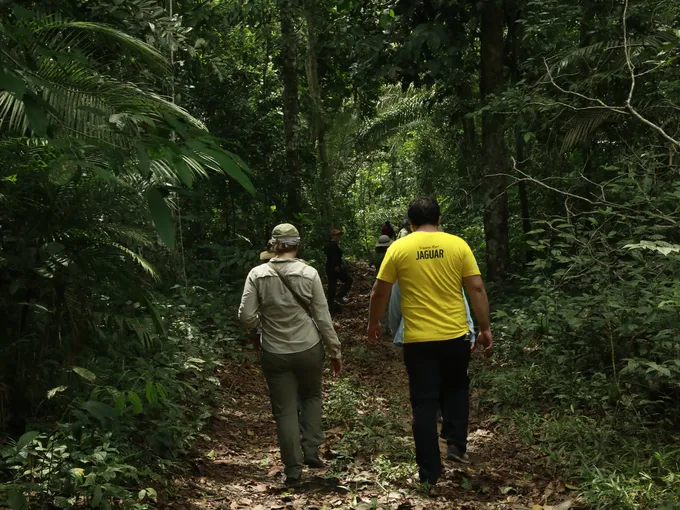
By the time we reached the Sete de Setembro Indigenous Territory, home of the Paiter Surui people, blue and scarlet macaws flew overhead, while toucan calls whispered from a distance. Dozens of tree species formed canopies that swallowed us in silent green foliage broken by calls of birds that flitted through the forest treetops and underbush. The ground was covered by layers of decaying leaves but somehow allowed space for the sharp eyes of our guide to spot the tracks of a tapir. Yes, this was indeed the Amazon I had imagined.

© Jacqueline Lisboa / WWF - Brazil
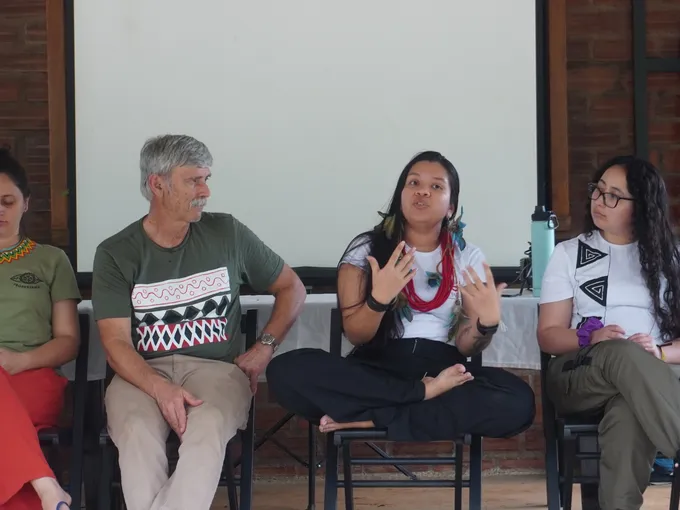
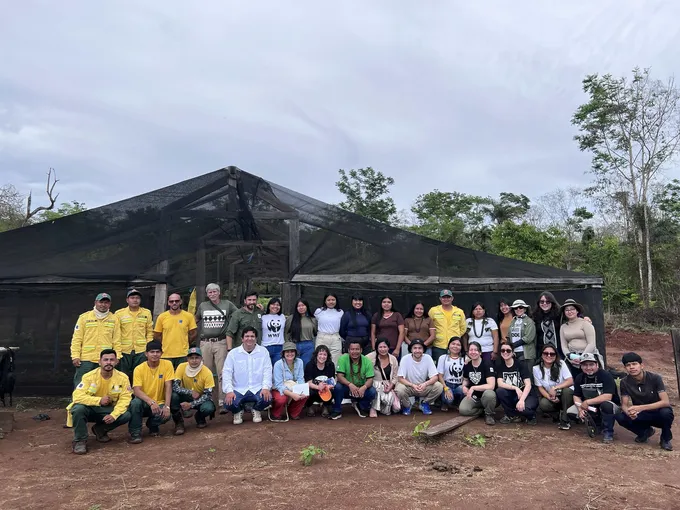
I was visiting the Paiter Surui community as part of a 15-person team of WWF and partner organization staff from Bolivia, Chile, Peru and the US. We wanted to meet the Paiter Surui and learn how they integrated traditional knowledge and culture with science and market-based approaches so successfully, especially in the face of mounting threats.
The Sete de Setembro Territory stretches more than 600,000 acres and is home to approximately 1,200 Paiter Surui people, who maintain a deep spiritual and practical connection to the forest. Their Ethno-Environmental Management Plan blends traditional forest livelihoods—such as hunting, fishing, Castana (Brazil) nut harvesting, and small-scale agriculture—with a range of alternative income-generating enterprises such as tourism and coffee production.
© Chris Weaver / WWF
© Denisse Mardones / WWF-Chile
On a drive deeper into the forest, we disembarked at the end of a road to follow a narrow footpath, stopping at the base of a giant Castana (Brazil nut) tree. Every Castana tree in the Territory has been geo-referenced in the name of individual families who hold the right to harvest the nuts for home consumption or sale to the Paiter Surui Castana nut processing plant—an enterprise that seasonally employs 180 community members to crack, process, and package approximately four tons of nuts a year, adding a 30-fold value to the nut sales.
Along our walk, we saw camera traps strategically placed to monitor the movements of forest-dwelling species such as jaguar, ocelot, tapir, deer and more. Upon reaching a clearing, a drone demonstration showed how potential threats to the forest—such as illegal logging or human settlements—were quickly identified.
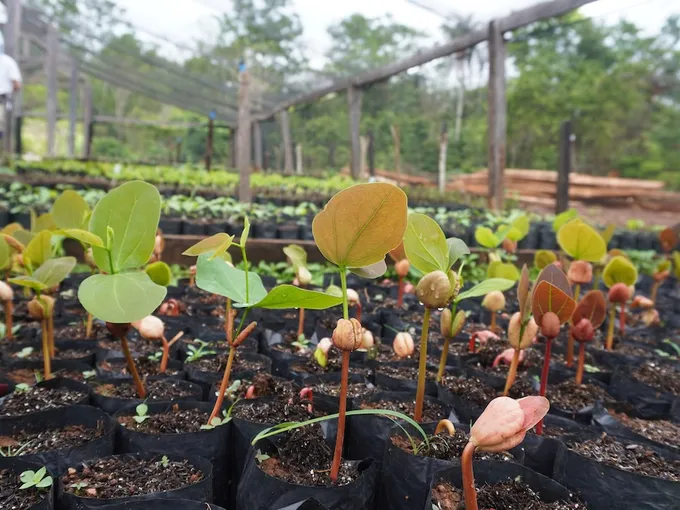
Our Paiter Surui hosts were proud to share their achievements, including an organic coffee plantation, where a woman from the community oversees production and marketing processes for its highly sought-after product. We saw how seeds harvested by community members are grown into seedlings to restore degraded forest areas.
© Denisse Mardones / WWF-Chile
© Denisse Mardones / WWF
Eliza Surui Lobo and Vania Surui Joaquin, two of the original group of five women seed collectors, shared stories about their work and the ways it further connects their families to the forest. By-products of hunting and gathering are used to generate income through handicrafts and jewelry. Today, the collection team has grown to 35 members, gathering seeds from 22 native species to help restore the forest.
More than 14,000 seedlings have been planted so far, and demand for these seedlings is growing—sought to restore other parts of the Amazon. The income helps Patei Surui families buy essentials and reconnects children with nature—part of a shared intergenerational understanding of the importance of the forest.
On the last evening of our visit, the community's traditional leaders led us arm-in-arm through an honorary traditional dance to celebrate the unity of people from four countries coming together to learn from the wisdom and resilience of the Paiter Surui.
How you can help
© WWF-US/Clay Bolt
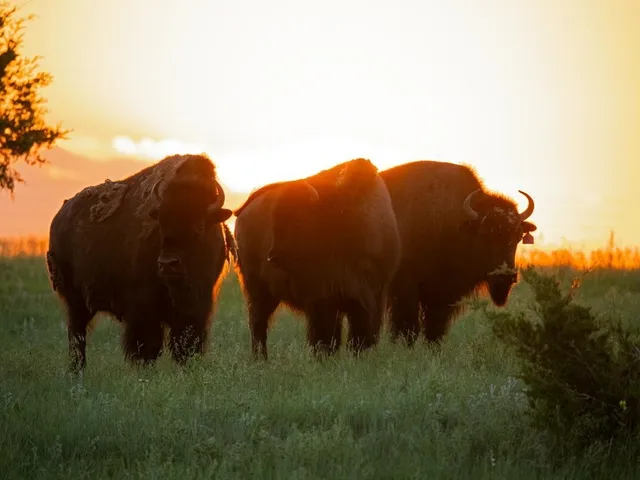
Support Tribes restore buffalo to the Great Plains
The Indian Buffalo Management Act would strengthen support for Tribal Nations who are working to bring buffalo back from the brink of extinction.