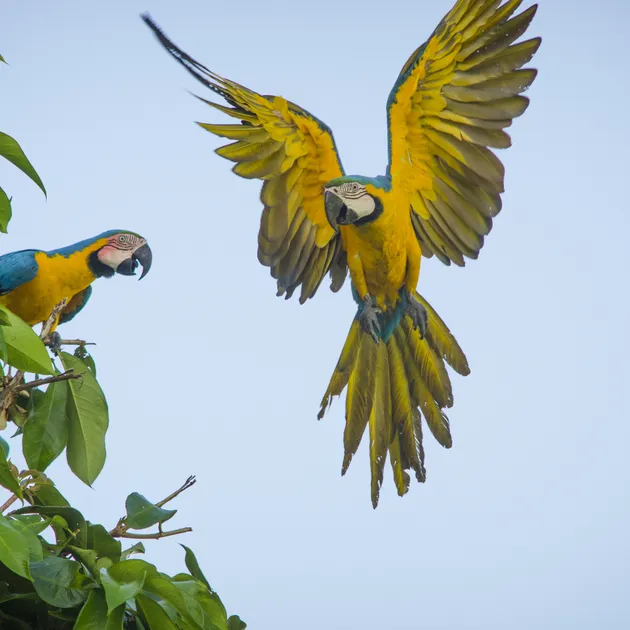
© Shutterstock / Gustavo Frazao / WWF | WWF-US / Ricardo Lisboa
Amazon
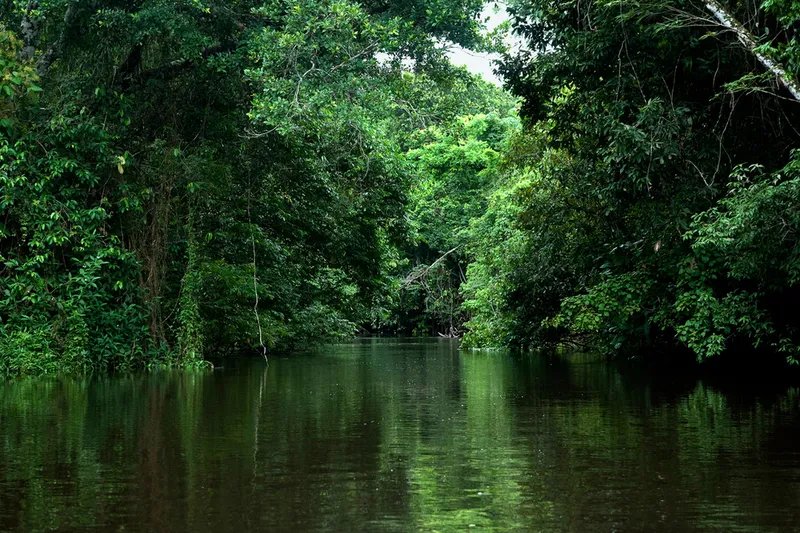
The Amazon rainforest is one of Earth's most vital ecosystems—teeming with a dazzling array of wildlife and plants. As development and other pressures mount, conservation efforts are crucial to safeguarding this critical landscape.
The Amazon is a vast biome that spans eight rapidly developing countries—Brazil, Bolivia, Peru, Ecuador, Colombia, Venezuela, Guyana, and Suriname—and French Guiana, an overseas territory of France.
The Amazon biome contains:
- About one in 10 known species on Earth
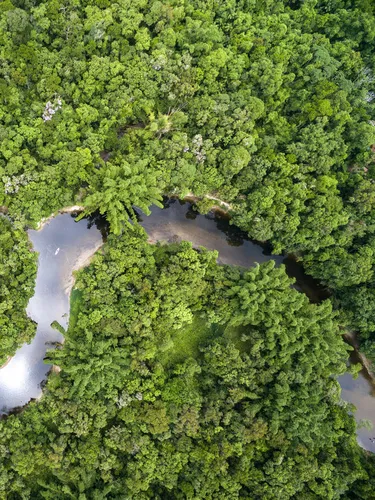
- 2.2 million square miles of dense forests
- 20% of the world's liquid freshwater
- 2.7 million square miles in the Amazon basin, about 40% of South America and two-thirds the size of the United States
There is a clear link between the health of the Amazon and the health of the planet. The rainforests, which contain an estimated 150 billion–200 billion tons of carbon, help stabilize the local and global climate and regulate water cycles, creating clouds that make weather around the world.
Deforestation releases significant amounts of carbon, which is having negative consequences on global warming. This places additional stress on the region, resulting in longer dry seasons and reduced precipitation that make forests more vulnerable to fires.
About 17% of the total forest in the Amazon biome has been deforested, and about one-third of the remaining forest has been degraded, including from the impacts of extreme drought.
Wildlife of the Amazon
Millions of species live here—many of which remain undescribed
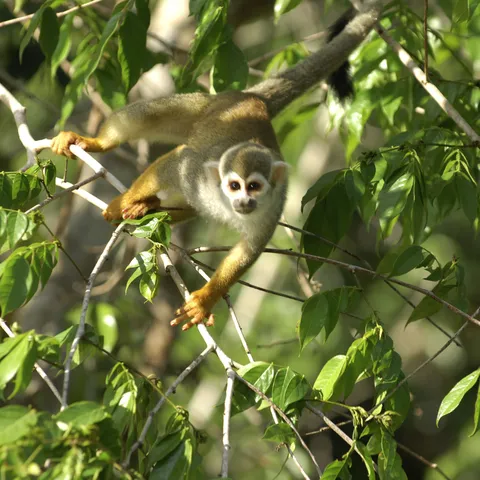
The Amazon contains millions of species, most still undescribed, and some of the world's most unusual wildlife. It is one of Earth's last refuges for jaguars, harpy eagles, and pink river dolphins, and home to thousands of birds and butterflies. Tree-dwelling species include southern two-toed sloths, pygmy marmosets, saddleback and emperor tamarins, and Goeldi's monkeys.
The diversity of the Amazon is staggering.
-
50,000 plant species
Nearly 50,000 plant species grow in the Amazon, some of which play a role in modern medicine.
-
2,400 freshwater fish species
These include piranhas, freshwater eels, and pirarucu.
-
370 types of reptiles
From boas to caimans, reptiles occupy a wide range of Amazon habitats.
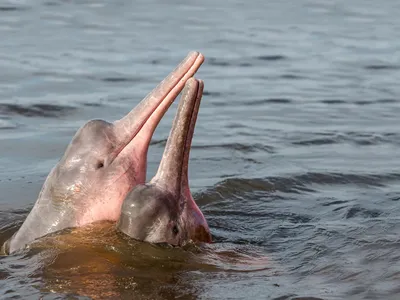
Amazon River dolphins
Also known as the boto or ‘pink river dolphin,’ the Amazon River dolphin swims throughout much of the famed South American river basin and the neighboring Orinoco river basin that stretches through Colombia and Venezuela.
© Shutterstock / COULANGES / WWF-Sweden
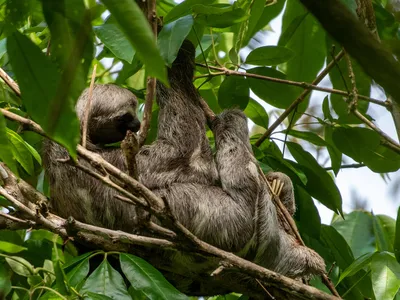
Sloths
Sloths are an integral part of tropical rainforest ecosystems, and the health of their population is wholly dependent on the health of their habitat.
© Chris J Ratcliffe / WWF-UK
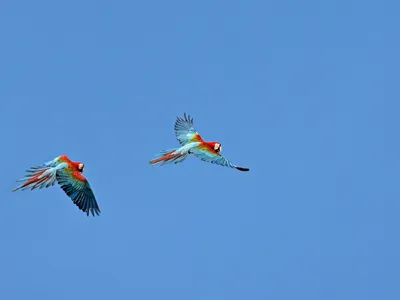
Macaws
Macaws are highly intelligent, mate for life, and can live up to 60 years
© Adriano Gambarini / WWF Living Amazon Initiative
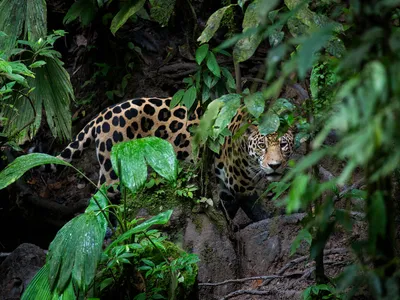
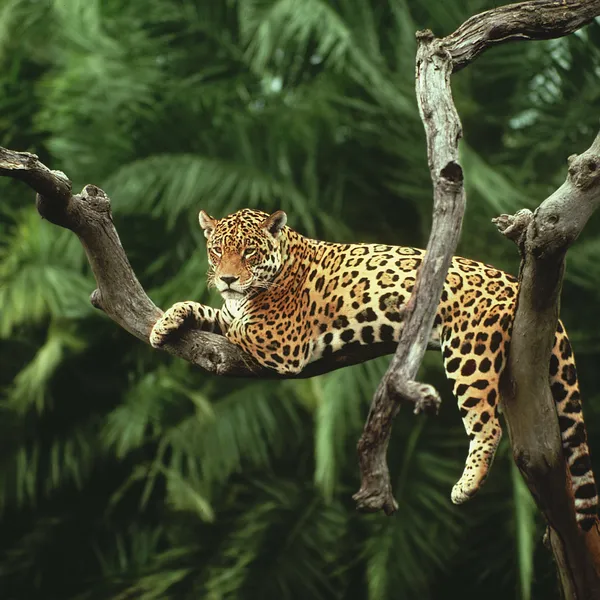
Jaguars
Jaguars play an important role in maintaining the structure and function of the ecosystems they inhabit.
© Karine Aigner / naturepl.com / WWF
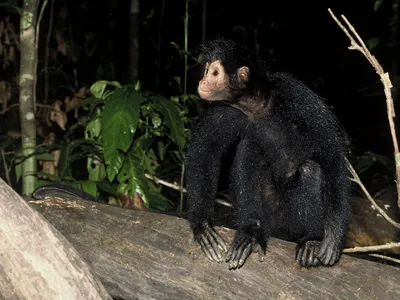
Black spider monkeys
Black spider monkeys play a key role in seed dispersal, allowing their forest environment to continue to grow and thrive.
© Roger Leguen / WWF-Canon
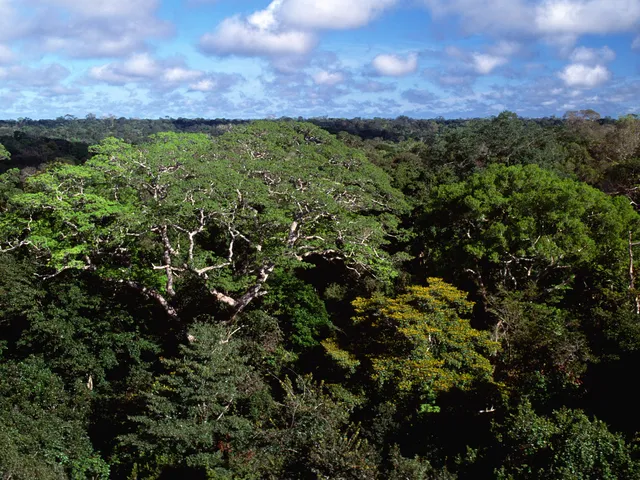
To protect these species, WWF works with local communities, partner nongovernmental organizations (NGOs), corporations, and governments to contain deforestation and forest degradation.
© naturepl.com / Luiz Claudio Marigo / WWF
Protect the Amazon
Forests are disappearing at an alarming rate. Send a message to global leaders asking them to protect the tropical forests that make our lives possible.
People and communities of the Amazon

© WWF/Tatiana Cardeal
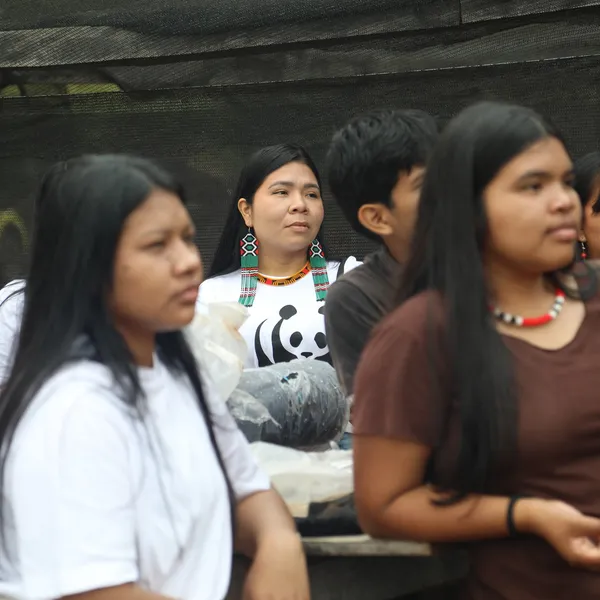
Around 47 million people live in the Amazon region and depend on it for their livelihoods, including 2.2 million Indigenous Peoples.
Indigenous Peoples and local communities living in the Amazon rely on nature for food, energy, materials, and traditional medicines. More than 60% of the total population live in urban centers, which maintain economic and cultural ties to their surrounding forest areas.
While cities’ expansion leads to growing local demand for food and materials that can contribute to habitat loss, they can also create market opportunities for communities to generate sustainable incomes.
Amazon under threat
Despite its mighty splendor, the Amazon’s forest and freshwater systems are fragile and at risk

© Andre Dib / WWF-Brazil
Unsustainable infrastructure
Transportation and energy infrastructure are essential for national and regional development, but when they are designed without nature in mind, negative impacts can exceed short-term benefits. For example, building new roads can expose previously inaccessible areas of forest to illegal and unsustainable logging, as well as illegal or unplanned settlements and agricultural expansion.
Hydropower is now used to meet the region's growing demand for energy, but many dams are being constructed in areas of high conservation value. The dams:
- Disrupt river connectivity
- Block the range of many aquatic species, including migratory fish and river dolphins
- Interfere with some subsistence and commercial fisheries
To minimize the impacts of hydropower, WWF is promoting scenario planning that explores alternative energy options and promotes transboundary cooperation for river basin management. WWF has also mapped out freshwater connectivity corridors across the basin. This work has allowed us to pinpoint stretches of river that are most critical for connectivity to be maintained for the future health of the Amazon basin, its communities, and flagship freshwater species.
Land speculation and agricultural expansion
There are several economic incentives in place that contribute to deforestation in the Amazon. Tenure insecurity and weak land enforcement stimulate the encroachment of public lands for speculative purposes, with the expectation that the land will increase in value with agricultural production.
Amazon forests also suffer as domestic and global demand for beef grows, leading to more forest being converted into cattle pasture. And increasing global demand for soy for feed production, which often expands on pasture lands, places indirect pressures on forest expansion.
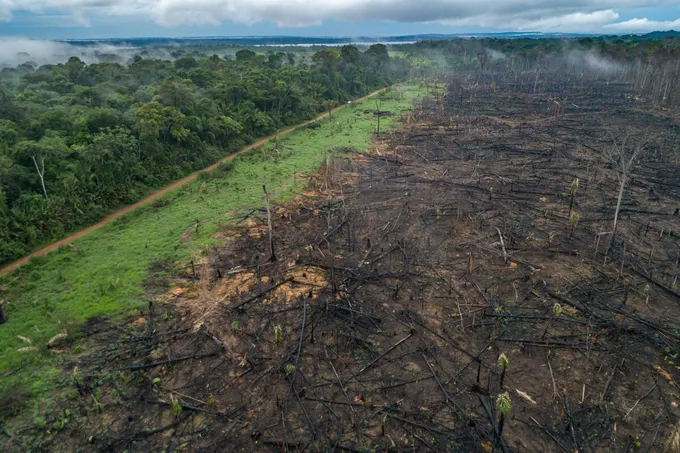
Cattle pastures occupy about 80% of deforested areas in the Amazon. Pasture runoff contaminates rivers. Fire used to manage fields often spreads into the remaining forests. And the deforestation caused by ranching also contributes to climate change.
© Andre Dib / WWF-Brazil
© Jacqueline Lisboa / WWF-Brazil
Illegal and unsustainable natural resource extraction
There is high demand for the natural resources found in the Amazon, including wildlife, timber, and minerals, but weak law enforcement to safeguard them. In addition, inefficient extraction processes lead to the destruction of nature and wildlife. For example, mining activities contribute to soil erosion and water contamination. Mercury contamination of Amazonian waters from artisanal mining is of particular concern, given the consequential impacts on human health and contamination of the food chain for fish and wildlife.
WWF works to promote best practices and decrease environmental damage from:
- Illegal logging
- Overharvesting of fish and other aquatic species
- Oil exploration
- Gold mining
Climate change
The Amazon is critical to our efforts to avoid a climate catastrophe. Water vapor released from the Amazon creates vast “flying rivers” in the atmosphere, which influence rainfall and thus agricultural production in central and southern South America. And the billions of tons of carbon stored in the Amazon rainforest are of global importance to slowing climate change.
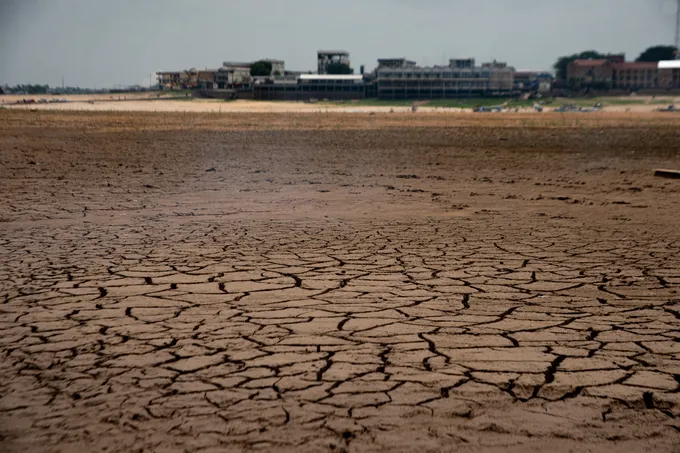
But the Amazon is threatened by rising deforestation. Unprecedented droughts are happening with growing frequency. Dry seasons are hotter and longer. Long dry spells wither crops, decimate fisheries, and lead to forest fires, which are growing in intensity. This can result in significant shifts in the makeup of ecosystems and a loss of species.
According to many notable scientists, including longtime friend of WWF Tom Lovejoy, the Amazon is close to a tipping point past which it will no longer be able to sustainably support itself. To ensure the Amazon’s future, for its people and biodiversity, deforestation in the region should not exceed 20%–25%, and it is already at approximately 17%.
Pledge for Our Planet
The diversity of life on our planet faces major challenges from threats like climate change, deforestation, overfishing, and illegal wildlife trade.
Together, we can take action to create lasting solutions and protect the future of nature.
© Zig Koch / WWF
WWF is taking action to protect the Amazon
We work alongside partners to safeguard this magnificent rainforest

© WWF-US/Yawar Films
Our vision is zero net deforestation in the Amazon to safeguard this globally important ecosystem.
Protecting and conserving the Amazon is a big job. WWF has been working in the Amazon since the 1970s and is at the forefront of efforts to protect the forests and species that call it home. We engage Indigenous Peoples, local communities, and partner with governments at national and subnational levels to identify solutions that bridge the needs of economic development and conservation.
Confronting drivers of deforestation and resulting habitat loss
We direct our efforts to influence the main drivers that lead to deforestation, including the following:
Soy farming
WWF works with the Soy Roundtable—made up of soy producers, processors, and exporters—to improve the sustainability of the participants’ practices and minimize the impact on the Amazon and its wildlife. Brazil’s Amazon Soy Moratorium, implemented in 2006, was an agreement under which commodities traders committed to avoid the purchase of soybeans from areas that were deforested after 2008. While the moratorium resulted in significant leakage—or deforestation then being shifted—to the Cerrado biome, it was still highly effective at stopping conversion of Brazilian Amazon forest to soy cultivation. Unfortunately, in January 2026, the association of Brazil’s largest grain traders announced its departure from the Amazon Soy Moratorium. This decision increases the threats of conversion of Amazon forests for soy production exponentially.

© Pierina Bellota / WWF-Perú
Cattle ranching
WWF works with the beef industry to create standards that increase efficiency and reduce waste. This includes working with ranchers to adopt sustainable ranching practices and other actions that can increase profits without the need to convert more forests. WWF works through the Global and US Beef Roundtables to develop principles and criteria that increase the productivity of existing cattle ranches and prevent the establishment of new ranches in high conservation value forests. Beginning with support from the Moore Foundation and now with an additional grant from the Tapestry Foundation, WWF is also working with brands and tanneries around the world to develop deforestation- and conversion-free sources of hides coming from South America, catalyzing efforts to ensure that hides don’t come from deforested land.
Hydropower
Improperly sited dams can have significant impacts on fisheries, wildlife, and people who depend upon them. WWF supports low-carbon, low-cost, and low-conflict energy sources, particularly through energy scenario planning that considers alternative development options and siting of needed energy infrastructure in locations that minimize impacts on people and nature.
Illegal and unsustainable logging
High demand for timber products, weak laws, and poorly implemented trade rules lead to logging that destroys nature. WWF works to create market conditions that conserve the world’s forests but also provide economic and social benefits for businesses and people. To do so, WWF works to strengthen the US government’s ability to prosecute illegal timber cases; stop illegal logging in countries that export high volumes of timber; and ensure full implementation of the Lacey Act, a US law that prohibits illegal timber and timber products from entering the US market.
Infrastructure
In Colombia, WWF partnered with the government to create participatory, ecologically sustainable road development processes. In February 2021, the government of Colombia announced the Green Road Infrastructure (GRI) Guidelines, a set of national government guidelines for building sustainable and resilient road transport infrastructure. The Ministry of Transport, the Ministry of Environment and Sustainable Development, WWF-Colombia, and the Colombian NGO Foundation for Conservation and Sustainable Development collaborated to design the guidelines. The guidelines are a major achievement for the people of Colombia and the Amazon, taking into consideration the needs of local people as well as the health of this critical region.

© WWF/Tatiana Cardeal
Developing a sustainable forest economy
Regional and global demand for natural resources, including timber and fish, can be met without devastating the environment. We work with the agriculture and timber sectors to eliminate waste and increase production efficiency.
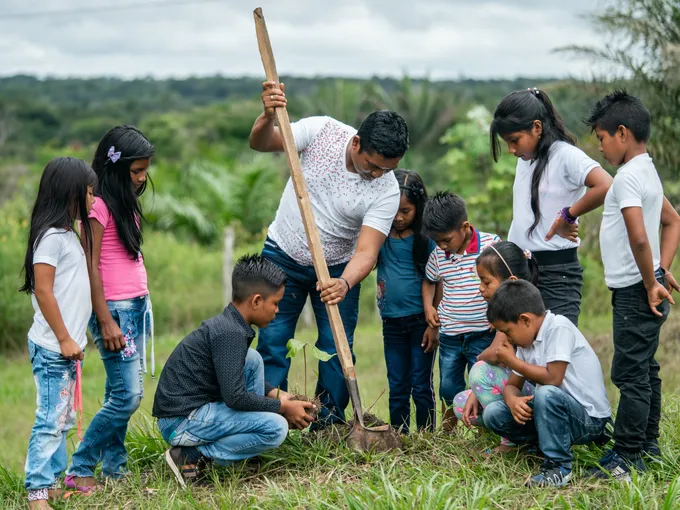
We also seek to promote demand for sustainable forest products. WWF engages local Indigenous communities and governments to manage protected areas and supports local communities in maintaining their well-being and ways of life. For example, WWF has focused on encouraging the development and scaling of Indigenous enterprises based on the sustainable use of forest products, fisheries management, and aquaculture. And WWF supports training and organic certification for sustainable Brazil nut harvesting, beekeeping, ecotourism, and more.
© Luis Barreto / WWF-UK
© WWF-Brazil / Adriano Gambarini
© WWF-Brazil / Adriano Gambarini
Protecting forests
WWF collaborates with governments across the Amazon to create, manage, and permanently fund protected forest areas using the Project Finance for Permanence (PFP) approach.
In Brazil, through the Amazon Region Protected Areas (ARPA) program, the Brazilian government and partners, including WWF, worked to support and expand a network of parks covering 154 million acres of forest. This area is over 50% larger than the US National Park System. Between 2008 and 2020, the protected areas supported by ARPA prevented 1,000 square miles of deforestation, equivalent to 104 million tons of avoided CO2 emissions.
ARPA is supported by two PFP initiatives, ARPA for Life and ARPA Comunidades. ARPA for Life, launched in 2014, secured $215 million for the program along with necessary policy changes to expand, consolidate, and maintain Brazil’s vast network of protected areas. Launched in 2025, ARPA Comunidades strengthens community resilience and promotes the sustainable use of natural resources in 60 protected areas and supports the creation and consolidation of 7.4 million acres of new protected areas, resulting in improved biodiversity conservation, increased sustainable community livelihoods, and reduced deforestation in the Brazilian Amazon.
In Colombia, an ambitious effort by organizations, including WWF, and the government is protecting approximately 79 million acres of ocean and forest, including Serranía de Chiribiquete National Park, the world’s largest national park protecting a tropical rain forest. This initiative, called Herencia Colombia (Heritage Colombia or HECO), is helping Colombia achieve its forest conservation goals and 30x30 target to protect 30% of its ocean by 2030.
In Peru, the Peruvian government-led effort, known as Patrimonio Natural del Peru (National Parks: Peru’s Natural Legacy), will permanently protect nearly 41 million acres in the Peruvian Amazon and secure 7.5 billion metric tons of carbon. The initiative supports greater resilience to climate change and benefits 1.4 million people who depend on Peru’s rainforests for food, medicines, and clean energy.
Taken together, ARPA for Life, ARPA Comunidades, Heritage Colombia, and Peru's Natural Legacy permanently protect more than 13% of the entire Amazon rainforest.
Featured WWF projects in the Amazon

© Day’s Edge Productions/WWF-US
© naturepl.com / Luiz Claudio Marigo / WWF
Protect the Amazon
Forests are disappearing at an alarming rate. Send a message to global leaders asking them to protect the tropical forests that make our lives possible.